
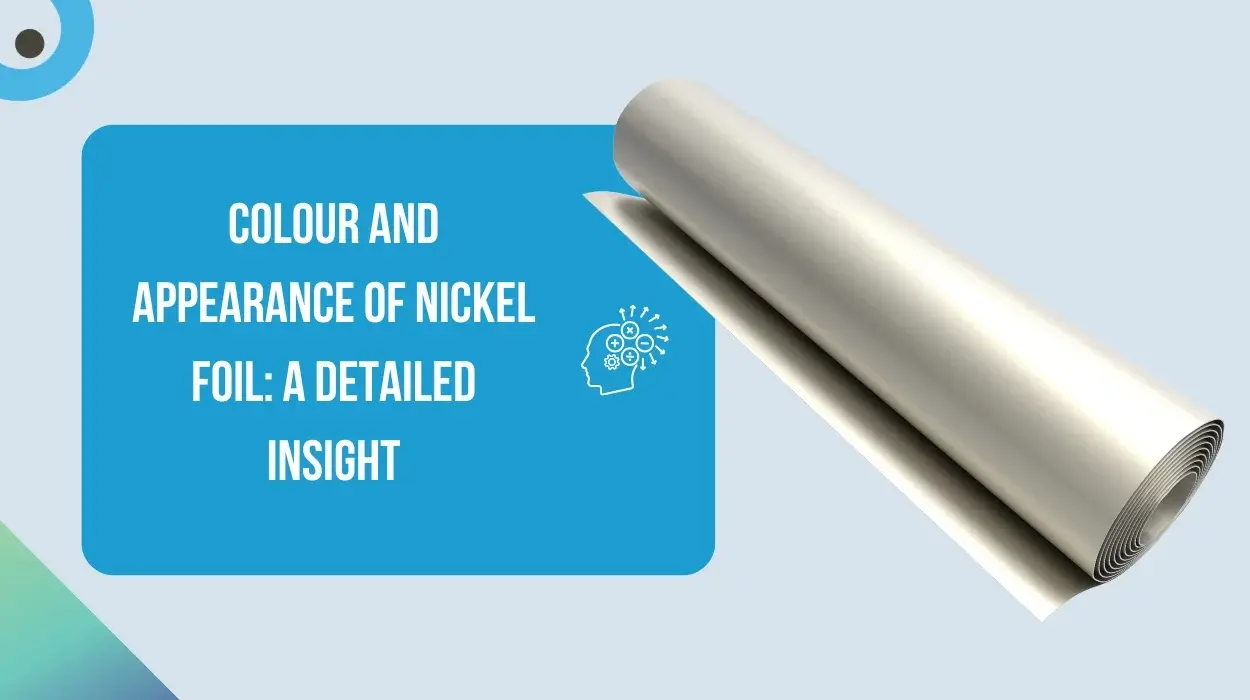
Nickel foil is widely used across industries for its excellent mechanical strength, corrosion resistance, and thermal stability. However, beyond its functional properties, the colour and appearance of nickel foil play an equally important role—especially in quality inspection, product presentation, and specialized applications.
Natural Colour of Nickel Foil
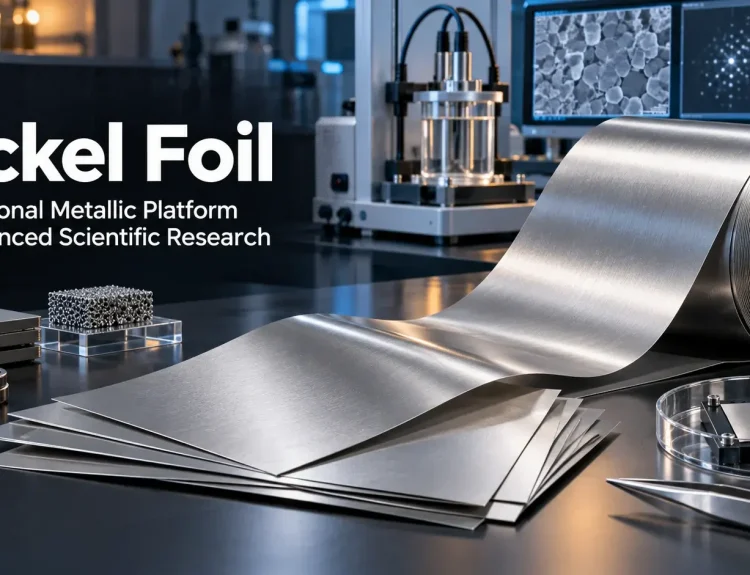
Nickel foil typically exhibits a silvery-white to light grey metallic colour. This characteristic appearance comes from the base metal itself—Nickel—which naturally has a lustrous finish.
- Freshly manufactured nickel foil often has a bright, reflective surface
- The colour may slightly vary depending on purity and processing methods
- High-purity nickel tends to have a cleaner, more uniform metallic shine
Surface Finish Variations
The appearance of nickel foil can differ significantly based on its surface finish. Common finishes include:
Bright Finish
- Highly reflective, mirror-like surface
- Smooth and visually appealing
- Often used in decorative or precision applications
Matte Finish
- Dull, non-reflective surface
- Reduces glare and light reflection
- Suitable for technical and industrial environments
Rolled Finish
- Shows slight directional lines due to rolling process
- Uniform but less reflective than bright finish
- Common in standard industrial-grade foils
Factors Affecting Appearance
Several factors influence the final look of nickel foil:
- Manufacturing Process: Rolling, annealing, and polishing impact surface texture
- Thickness: Thinner foils may appear more translucent or less reflective
- Surface Treatment: Coatings or passivation can alter colour tone
- Oxidation: Exposure to air may cause slight dulling over time
Although nickel is corrosion-resistant, a thin oxide layer can form, subtly changing the surface from bright silver to a slightly greyish tone.
Visual Quality Indicators
The appearance of nickel foil is often used as a quick quality check:
- Uniform Colour: Indicates consistent composition and processing
- Absence of Spots or Stains: Suggests proper handling and storage
- Smooth Surface: Reflects high manufacturing precision
- No Cracks or Scratches: Essential for performance in sensitive applications
Any visible discoloration or irregularity may point to contamination or defects.
Industrial and Commercial Importance
In many applications, the visual characteristics of nickel foil are not just aesthetic—they are functional:
- In electronics, a clean and uniform surface ensures better conductivity
- In chemical and laboratory uses, surface purity is critical
- In decorative applications, brightness and finish directly impact product appeal
Storage and Handling Considerations
To maintain its original colour and appearance:
- Store in a dry, controlled environment
- Avoid direct contact with moisture or chemicals
- Use gloves to prevent fingerprints and surface contamination
- Keep foil properly packed to avoid scratches
Conclusion
Nickel foil’s colour and appearance are more than just surface traits—they reflect its quality, processing, and suitability for various applications. Whether bright and reflective or matte and functional, the visual characteristics of nickel foil provide valuable insights into its performance and usability.
A well-finished nickel foil not only performs efficiently but also represents the precision and care involved in its manufacturing.