
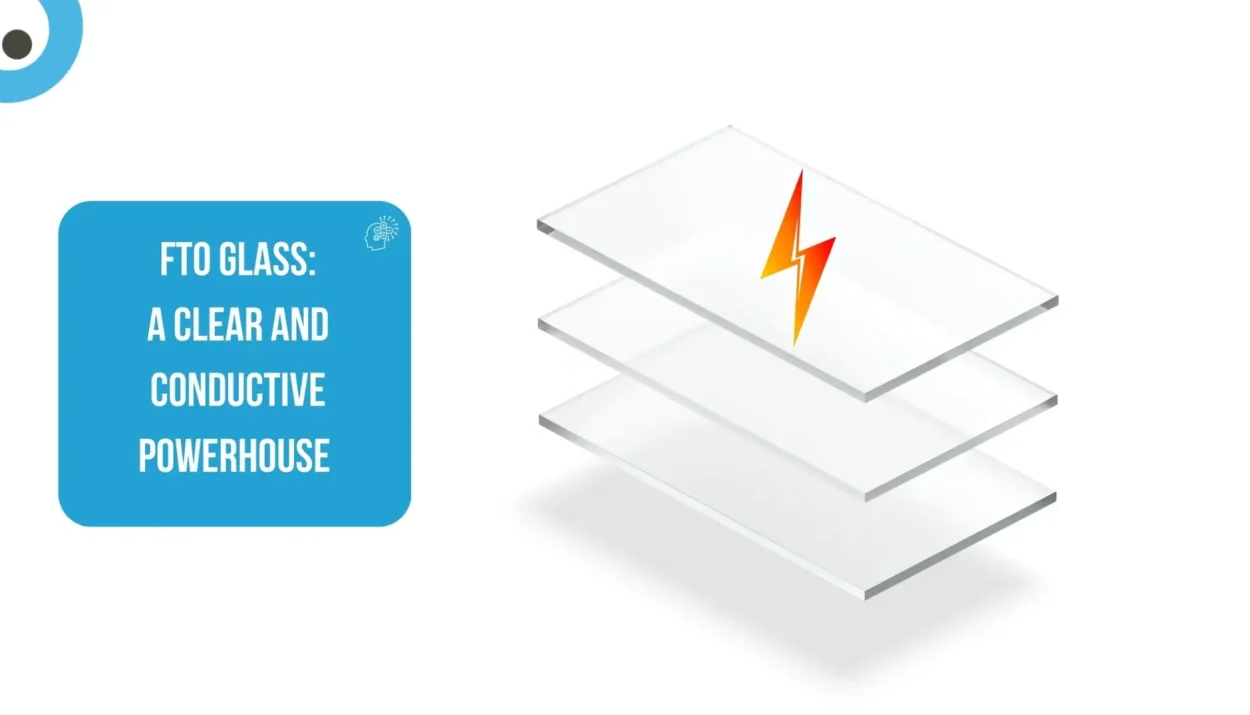
Many advanced technologies need materials that can both transmit light and conduct electricity. This is where FTO glass comes in. Fluorine-doped tin Oxide (FTO) coated glass is a unique material that serves both purposes. It appears like clear glass but is capable of carrying an electrical current. This special ability makes it a key player in solar cells, bright windows, and scientific research.
What is FTO Glass Made Of?
FTO glass starts as a standard sheet of glass, like the kind in windows. A skinny, invisible coating is then added to one side. This coating is made of tin oxide with small amounts of fluorine mixed in.
How It’s Made
Manufacturers use a process called chemical vapor deposition. They heat the glass to a very high temperature (over 500°C) and expose it to special gases containing tin and fluorine. These gases react to form a solid, conductive film that sticks tightly to the glass surface.
The Magic of Doping
The fluorine is the secret ingredient. When added to tin oxide, it creates extra free electrons. These free electrons are what allow electricity to flow through the otherwise insulating coating. This process, called “doping,” transforms the coating from a simple layer into a functional, conductive surface.
The Special Properties of FTO Glass
It Conducts Electricity
The doped coating lets electrical current pass through. We measure this as “sheet resistance.” Typical FTO glass has a sheet resistance of 7-15 ohms per square. This is low enough to work well as an electrode in many devices.
It Stays See-Through
Despite the coating, FTO glass lets about 75-85% of visible light pass through. You can see right through it. It does, however, reflect infrared light (heat), which is helpful for some energy-saving applications.
It has a Textured Surface
If you looked at FTO glass under a powerful microscope, you’d see it’s not perfectly smooth. It has a delicate, gritty texture. This roughness is intentional and helpful. It scatters light, trapping it inside solar cells and giving other materials something to grip onto.
It’s Tough and Stable
FTO coatings are very durable. They can handle temperatures up to 600°C without damage. They are also resistant to most chemicals and won’t scratch easily during handling. This makes them reliable for long-term use.
Why Choose FTO Glass Over Other Materials?
The most common alternative is ITO (Indium Tin Oxide) glass. Here’s how FTO compares:
- Cost: FTO is usually cheaper because tin is more common than indium.
- Heat Resistance: FTO is much better for high-temperature processes. ITO can degrade when overheated.
- Surface: FTO’s naturally rough surface is often better for making solar cells. ITO is usually smoother.
- Conductivity: ITO is slightly more conductive, but for most applications, FTO’s conductivity is more than enough.
Where is FTO Glass Used?
Solar Energy Research
FTO (fluorine-doped tin oxide) glass is mainly utilized in solar energy applications. It is the standard base material for developing next-generation solar cells in laboratories, especially for dye-sensitized and perovskite solar cells. Its conductive surface effectively collects electricity, while its transparency permits sunlight to pass through.
Smart Windows and Displays
FTO glass can be utilized in windows that can switch from clear to tinted with the press of a button, a feature found in electrochromic devices. It is also used in some touch screens and displays.
Transparent Heaters
When electricity passes through FTO glass, it heats evenly. This property is ideal for producing transparent heated surfaces, such as anti-fog mirrors and de-icing panels for car windows and scientific instruments.
A Foundation for Research
Scientists use FTO glass as a versatile platform. They grow tiny nanostructures on it, use it to test new chemical sensors, or study reactions in fuel cells. Its stability makes it ideal for experimental setups.
What to Look for When Buying FTO Glass
If you’re in the market for FTO glass for a project, keep these key specifications in mind:
- Sheet Resistance:Look for lower values, such as 7-10 Ω/sq, as these indicate better conductivity.
- Light Transmission: Ensure the glass is sufficiently transparent for your needs, typically requiring a light transmission of over 80% in the visible spectrum.
- Surface Roughness: Please provide the RMS roughness value to assess the surface texture.
- Glass Type: Borosilicate glass (such as Pyrex) is more resistant to heat and chemicals, while soda-lime glass is a more cost-effective and standard choice.
- Coating Quality: A reputable supplier should ensure a uniform coating throughout the entire sheet, with no weak spots.
Conclusion
FTO glass is more than just a coated glass; it serves as a fundamental building block for modern optoelectronics. By effectively merging the common characteristic of transparency with the unique ability to conduct electricity, FTO glass fosters innovation in renewable energy, advanced materials, and scientific research. Its effective balance of performance, durability, and cost-effectiveness makes it a popular choice among engineers and researchers. Whether you are developing an advanced solar cell or designing a new smart device, understanding FTO glass is crucial for unlocking its full potential.