

What is a Quartz Crucible?
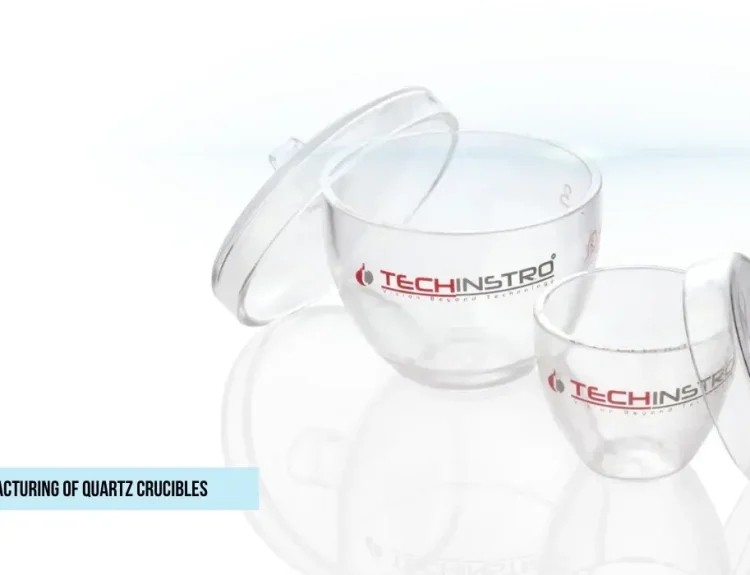
A quartz crucible with a lid is a high-purity fused silica container (typically >99.9% SiO2), valued for its low thermal expansion and high melting point. It’s the standard for melting precious metals, chemical analysis, and semiconductor processing.
Key Technical Properties:
- Thermal Stability: Continuous temperatures up to 1100°C and short-term peaks up to 1300°C.
- Thermal Shock Resistance: Can be heated and then quenched in water without cracking.
- Chemical Inertness: Resistant to most acids (except hydrofluoric and phosphoric at high temperatures).
- High Purity: Minimal trace element contamination, ensuring sample integrity.
Variations: Finding the Right Fit Quartz Crucible
Not every experiment requires the same type of quartz. We offer several variations to match specific industrial needs:
Transparent (Clear) Fused Quartz
These crucibles are manufactured from naturally occurring or synthetic silica and are transparent, allowing reactions inside the container to be observed.
Best For: Spectroscopic applications and chemical reactions requiring visual monitoring.
Opaque (Milky) Quartz
Produced using a unique fusion process that traps minute air bubbles, these crucibles exhibit a white, opaque appearance and offer cost-effectiveness for large industrial applications.
Best For: Large-batch metal melting and heat treatment of powders.
Different Shapes and Lids
Tall Form vs. Low Form: Tall crucibles prevent splashing during volatile reactions; low form crucibles offer a larger surface area for evaporation.
The Importance of the Lid: A matching quartz lid is vital for preventing atmospheric contamination and reducing the loss of volatile samples during heating.
How to Choose a Supplier
When sourcing a Quartz Crucible with Lid, look for these three quality markers:
Dimensional Precision
In automated laboratory settings, tolerances matter. Ensure your manufacturer provides consistent wall thickness and a flat base to prevent wobbling in the furnace.
Purity Levels
For semiconductor and solar applications, even parts-per-million (ppm) contamination can ruin a batch. Always verify that your chosen supplier provides certificates demonstrating their use of high-grade silica with minimal metal impurities.
Customization Capabilities
Standard sizes (10ml, 50ml, 100ml) are common, but niche industrial processes often require custom diameters or heights. Choose a supplier that can manufacture to your specific CAD drawings.
Best Practices for Longevity
To get the most out of your quartz investment, follow these maintenance tips:
Avoid Devit: Prolonged heating at high temperatures can cause devitrification (the quartz reverting to a crystalline state). Keep the exterior clean of fingerprints and oils, as salts act as catalysts for this process.
Cleaning: Use a 10% HCl or nitric acid bath to remove residues; never use hydrofluoric acid unless you intend to etch the surface.
Pre-heating: While quartz handles thermal shock well, gradual heating extends the crucible’s overall life.
Conclusion:
Contact us now to discuss your needs or request a custom quote for quartz crucibles and lids. Secure the results your lab deserves with proven quality. Reach out today.
Choose fused silica for durability, purity, and precision in demanding applications.