

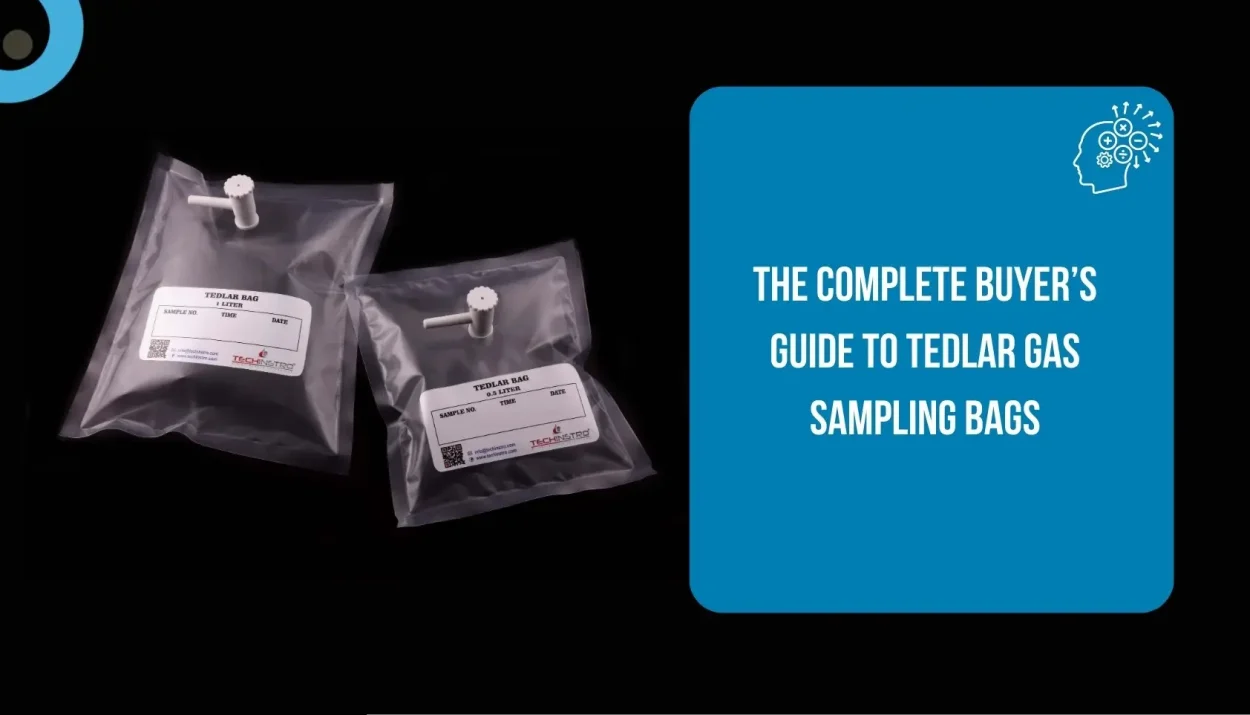
If you work in environmental testing, industrial hygiene, or laboratory research, you know that capturing a breath of air for analysis is harder than it looks. You can’t just use a plastic grocery bag or a glass jar. You need something that won’t leak, won’t break, and most importantly, won’t contaminate the sample.
Enter the Tedlar Gas Sampling Bag. This guide will explain what these bags are, how they work, and why they are the industry standard for air sampling.
What is a Tedlar Bag?
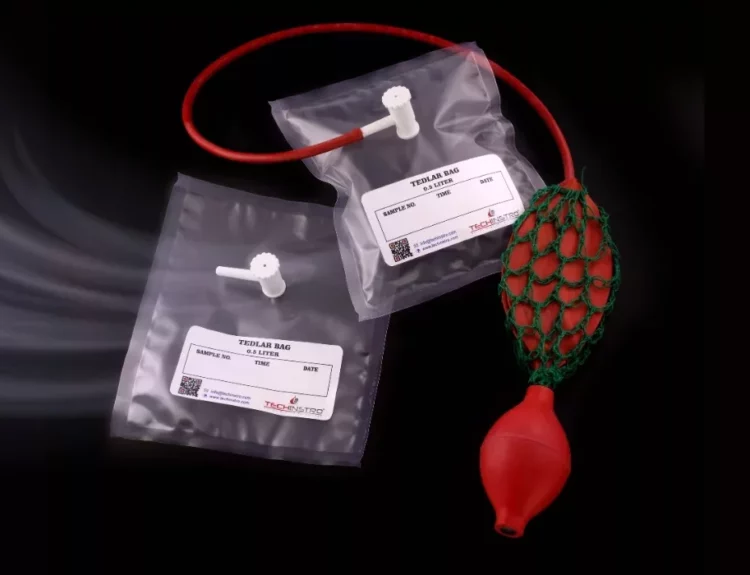
A Tedlar Bag is a specialized container used to collect and store gas samples. It is made from a unique plastic film called Polyvinyl Fluoride (PVF), branded by DuPont as Tedlar.
Unlike household plastics, Tedlar is chemically inert. This means it doesn’t react with the gases you put inside it. It acts like a vault for air, keeping the chemical fingerprint of your sample exactly the same from the moment you collect it until it reaches the lab.
Why Choose Tedlar Bag for Your Sampling?
Unlike standard household plastics, Tedlar bags are engineered for high-stakes data collection:
- Chemical Inertness: Tedlar is chemically inert, meaning it doesn’t react with the gases stored inside.
- No Leaching: Standard plastic bags release chemicals into your sample, ruining your data.
- No Absorption: Tedlar prevents the bag material from soaking up the gases you are trying to measure.
- High Strength: These bags have high tensile strength (they don’t rip easily) and low permeability, ensuring gas stays pure.
Understanding Variations & Components
When selecting a bag, you will encounter different configurations based on your specific research needs:
Valve & Fitting Types
The valve serves as the inlet for gas and the port where a syringe or pump attaches to withdraw the gas for testing.
- Stainless Steel Valves: Preferred for high-durability and industrial environments.
- Polypropylene Valves: A lightweight, cost-effective choice for indoor air or medical research.
- Septum Ports: Allows for easy syringe sampling without losing gas pressure.
Size and Capacity
The Complete Buyer’s Guide to Tedlar Gas Sampling Bags
- Small (0.5L – 2L): Best for breath analysis or medical research.
- Medium (3L – 10L): The standard for indoor air quality and soil gas sampling.
- Large (25L+): Ideal for stack testing and measuring emissions from factory chimneys.
How to Select the Right Tedlar Bag
Keep these critical factors in mind before making a purchase:
- Indoor Air Quality: Testing for mold, carbon monoxide, or sick building syndrome.
- Stack Testing: Measuring emissions coming out of factory chimneys.
- Soil Gas Sampling: Checking for hazardous vapors rising from contaminated ground.
- Breath Analysis: Used in medical research to study exhaled gases.
Why Choose Our Sampling Bags?
Our Tedlar bags are the unsung heroes of environmental science. By choosing our products, you ensure:
- Precision: We provide a reliable means of transporting invisible gases from the field to the lab without losing vital information.
- Purity: Our bags are made from genuine PVF film to ensure your results are untainted.
- Reliability: Designed to handle high-stakes industries, our bags are the industry standard for air sampling.
- Safety: Whether testing a local school or monitoring industrial emissions, our equipment is built for accuracy.
Conclusion
Tedlar Gas Sampling Bags provide a simple, cost-effective, and highly reliable solution for modern gas analysis. By selecting the right size and valve type for your specific application and following best practices, such as the 80% fill rule, you ensure that your environmental or industrial data remains precise and untainted from the field to the laboratory.