
We are building a world where devices connect at terahertz speeds—a 6G future driven by smart cities, autonomous systems, and immersive reality. However, this high-frequency landscape faces a significant challenge: electromagnetic interference (EMI). The same signals that enable rapid communication can also create disruptive noise. Traditional metal shields are too bulky and inflexible for modern needs. The answer has emerged from the nanomaterial’s lab in the form of ultrathin, conductive graphene sheets. EMI Shielding 2.0 means protection that is invisible, flexible, and adaptive.
Why Our Old Shields Will Fail in the 6G World?
Imagine trying to stop a laser beam with a brick wall. That’s essentially the problem with using traditional metal shielding, like copper foils or conductive paints (materials made of tiny metallic particles that can block electromagnetic waves), for 6G frequencies. The physics changes at the terahertz scale (meaning extremely high-frequency electromagnetic waves, usually above 0.1 terahertz, or 100 billion cycles per second). Electromagnetic waves at these extreme frequencies interact only with the outermost surface of a material, in which high-frequency currents flow only on the very surface of conductors rather than throughout their bulk. This means the thick, heavy metal sheets we’ve used for decades become 99% useless dead weight. They add bulk, limit design, trap heat, and are impossible to integrate into the flexible, microscopic electronics that 6G demands. We need a shield that works at the surface, on the same scale as the waves themselves.
Graphene’s Atomic Superpower: The Thinnest Shield on Earth
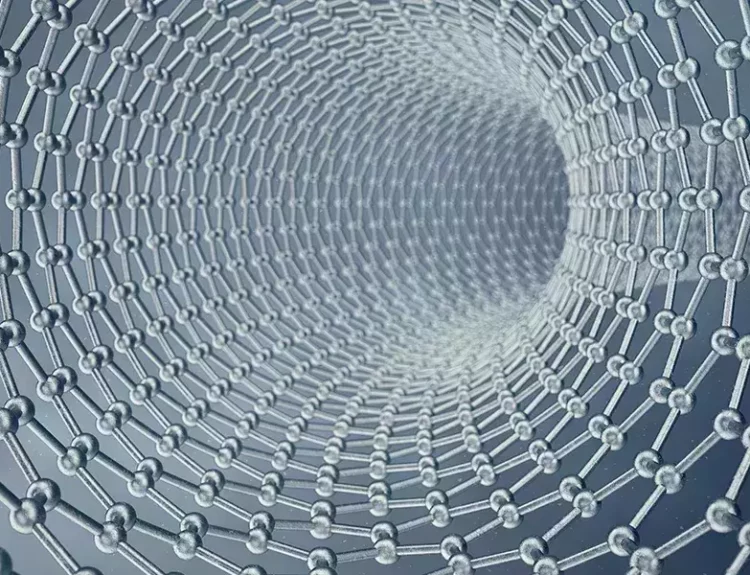
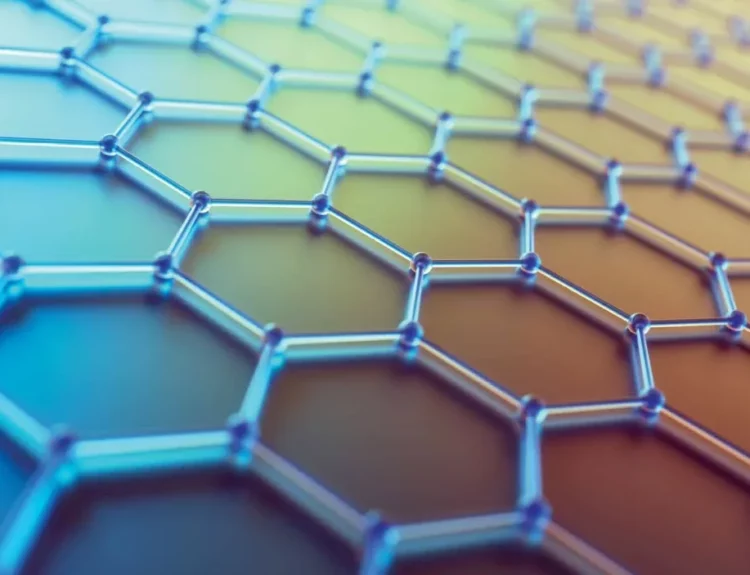
A single layer of graphene is just one atom thick, the closest thing to a two-dimensional material, a structure with length and width but almost no height possible in our three-dimensional world. Yet, this atomic film conducts electricity better than copper. When engineered into multilayer sheets, graphene achieves something revolutionary: it becomes a perfect shield for the terahertz realm. (Terahertz frequencies refer to electromagnetic waves above 0.1 terahertz, or 100 billion cycles per second, which are much higher than those used in previous generations of wireless technology.)
Its effectiveness comes from a dual mechanism. First, its high electrical conductivity reflects incoming electromagnetic radiation, similar to conventional metals. Second, graphene’s hexagonal structure and quantum properties enable it to absorb electromagnetic energy by directly converting wave energy into heat. Unlike metal shields that only reflect and redirect EM noise within a device, graphene mitigates interference through heat dissipation. Rather than simply reflecting, absorption-dominant shielding allows graphene to neutralize unwanted signals. This transition to absorption-based shielding significantly reduces crosstalk, undesirable signal coupling between adjacent circuits, and challenges dense, high-speed electronics.
The Three Revolutions Graphene Brings to Shielding
- The Weightless Revolution. Graphene shields, measured at the nanometer scale, introduce negligible mass. This makes them optimal for next-gen ultra-light drones, advanced aviation electronics, and wearables where every gram is critical.
- The Flexible Revolution. A graphene sheet bends, folds, and stretches without cracking or losing conductivity. This lets engineers create flexible smartphones, rollable displays, and electronic fabrics where the shield conforms like a second skin.
- The Invisible Revolution. Graphene’s transparency enables shielding of critical components such as antennas and sensors without visual obstruction. This facilitates streamlined, all-glass device architectures by allowing shields to be placed directly over displays or sensors without performance loss.
Guarding the 6G Frontier: Real-World Shields in Action
Graphene enables EMI solutions customized for specific applications. Examples include:
- Inside Your Body: 6G-enabled pacemakers and neural implants require robust protection from electromagnetic interference (such as MRI machines), while maintaining reliable wireless connectivity. A biocompatible graphene coating creates a seamless, interference-resistant shield that preserves device function and biocompatibility.
- In Your Hand: The metal cage in your phone takes up valuable space. Replacing it with a sprayed-on graphene layer frees up space for a larger battery or better sensors, and enables foldable or stretchable device designs.
- For hospital rooms, autonomous vehicles, or protective equipment, ultrathin graphene films can be applied to interior surfaces. This creates local EMI-shielded zones, ensuring reliable operation of 6G electronics in high-interference environments.
Conclusion: The Silent Guardian of Our Connected Future
Transitioning to 6G requires rethinking electromagnetic compatibility (EMC), or how well devices can operate without interfering with one another. Conventional shields do not meet emerging criteria for integration, performance, or form factor. Graphene conductive sheets are the only current material addressing the combined need for high effectiveness and minimal system footprint.
They are more than a better shield. They enable 6G’s most ambitious promises, from medical bots to ambient intelligence. As we step into the terahertz future, our devices will be cloaked in an armor thinner than a wavelength of light—quiet, flexible, and strong. The age of the invisible shield has arrived.