

If you work in environmental testing, industrial hygiene, or lab research, you have likely stared at a quote for gas sampling bags and wondered, “Why does this plastic bag cost more than my lunch?” You are not alone.
Among the top contenders in gas sampling is the Kynar bag, a tough, clear alternative to the well-known Tedlar bag. But what exactly is it, and does it justify the price?
Before we dive in, let’s outline what you’ll find in this guide: a breakdown of Kynar bags, why they’re priced the way they are, and when to use them.
What is a Kynar bag?
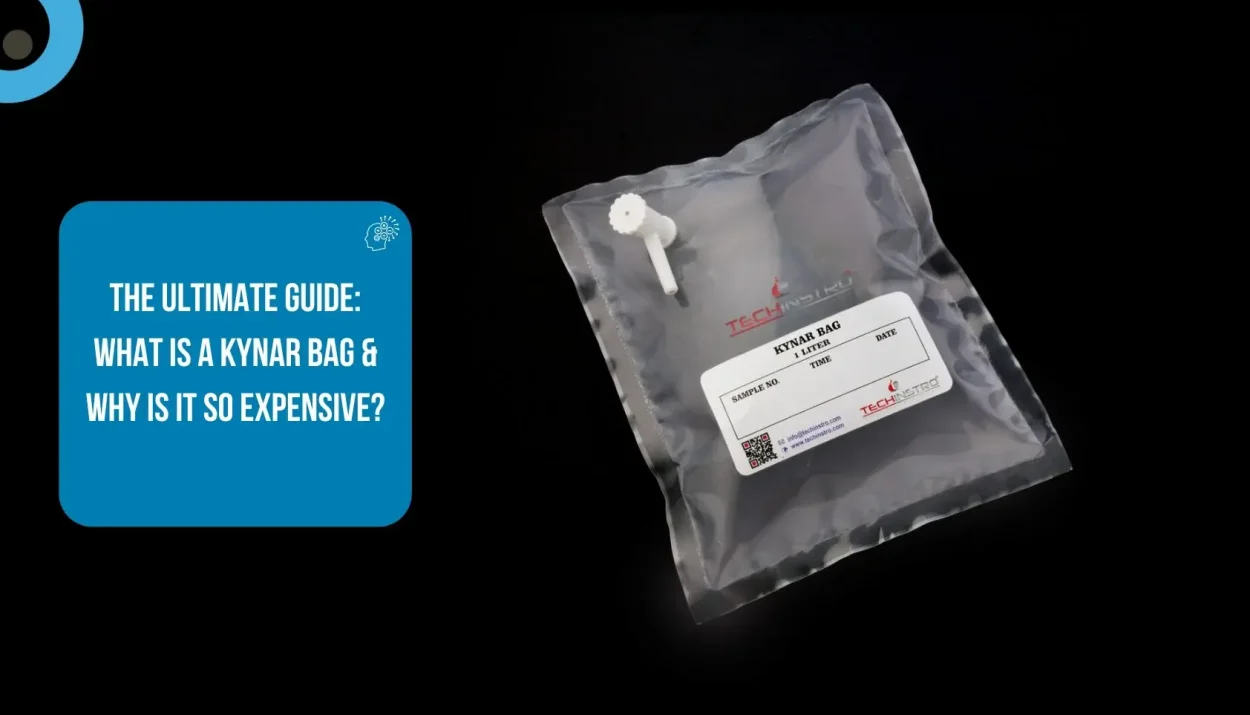
A Kynar bag is a specialized container used to collect air or gas samples. Unlike a sandwich bag you might buy at the grocery store, these bags are engineered to hold unstable chemical gases without allowing them to escape or react with them.
The Secret Material: PVDF
The name “Kynar” is actually a brand name for Polyvinylidene Fluoride (PVDF).
Think of PVDF as a superhero version of plastic. It is a “fluoropolymer,” which puts it in the same chemical family as Teflon (PTFE). This family of plastics is famous for being:
- Chemically Inert: They don’t react with other chemicals.
- Tough: They resist abrasion and tearing.
- Heat Resistant: They can handle high temperatures without melting.
When you buy a Kynar bag, you are buying a vessel made from this high-performance film, usually 2 to 3 mils thick.
Why does it cost more than it looks?
It’s a common question: if it looks like a simple plastic bag, why the high price? Here are three reasons.
The Cost of “Nothingness.”
The most important feature of a gas sampling bag is what it doesn’t do. It must not add anything to your sample or take anything away.
- Standard plastics (like polyethylene) “off-gas,” meaning they release their own chemical smells into your sample. This ruins your data.
- Kynar (PVDF) is manufactured to be ultra-pure. Creating a film that has zero background noise (no chemical residue) requires expensive, high-precision manufacturing. You are paying for purity.
The Manufacturing Process
PVDF is an “engineering thermoplastic.” Processing it is difficult. It requires higher temperatures and more specialized machinery than standard plastics. Additionally, the seams of these bags aren’t just glued; they are often heat-sealed or chemically bonded to ensure they are leak-proof under pressure.
The Valve is Key
The bag is only half the cost. The other half is the fitting (the valve). Kynar bags often come with high-quality Polypropylene or even Stainless-Steel valves. These valves must be:
- Airtight.
- Easy to open/close.
- Equipped with a septum (a rubber bit you can stick a needle through) that re-seals itself.
A single high-quality valve can sometimes cost nearly as much as the bag’s film itself. This is due to the materials used (such as Polypropylene or Stainless Steel) and the precision required to manufacture valves that prevent leaks and maintain airtightness, which significantly increases the overall price.
When is a Kynar bag the right tool for the job?
You don’t need a Kynar bag for every application. But in these three scenarios, you do:
- For testing solvents, paint fumes, or pollutants, Kynar is excellent. It won’t absorb VOCs, ensuring accurate lab results.
- Auto Emissions & Breath Analysis
- Kynar’s chemical stability makes it ideal for capturing exhaust or breath samples for research.
- Stable Gas Storage
- Need to store Carbon Monoxide (CO), Nitrogen, or Sulfur Hexafluoride? Kynar bags retain these stable gases for up to 48 hours.
When NOT to use it:
- Light-Sensitive Samples: Kynar is clear. If your gas degrades in sunlight, you need a black or foil-layered bag.
- Certain Sulfur Compounds: While good for many, some sulfur compounds break down faster in Kynar than in multi-layer foil bags.
Conclusion:
A Kynar bag protects your data. Choosing a cheaper option may risk your sample and lead to higher costs due to lost time or failed tests.
Kynar is a practical choice for reliable sampling at a competitive cost.