

If you are looking into advanced materials, you have probably heard of carbon nanotubes. They are famous for being incredibly strong, lightweight, and excellent at conducting electricity. However, using them isn’t as simple as just dumping them into a mix. To get their amazing benefits, you need to master something called MWCNT Dispersion.
If you are new to nanotechnology, this comprehensive guide will explain what MWCNT dispersion is, why it matters, and how it works.
What are Multiwalled Carbon Nanotubes (MWCNTs)?
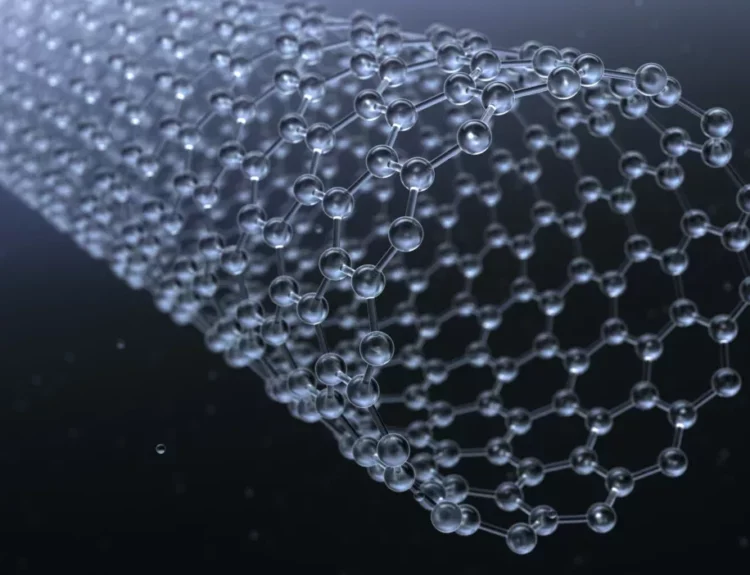
Before we talk about dispersion, we need to know what we are working with. Imagine a sheet of carbon atoms linked together like a chicken wire fence. Now, roll that sheet into a microscopic tube. That is a Single-Walled Carbon Nanotube.
A Multiwalled Carbon Nanotube (MWCNT) is simply several of these tubes stacked inside one another, like Russian nesting dolls. Because of this unique structure, MWCNTs are incredibly tough and can easily conduct electrical currents.
What is Multiwalled Carbon Nanotubes (MWCNT) Dispersion?
Dispersion means spreading things out evenly. MWCNTs naturally attract each other. Because they are so tiny, natural microscopic forces cause them to stick together in thick, tangled clumps. Think of them like a big bowl of sticky, cooked spaghetti.
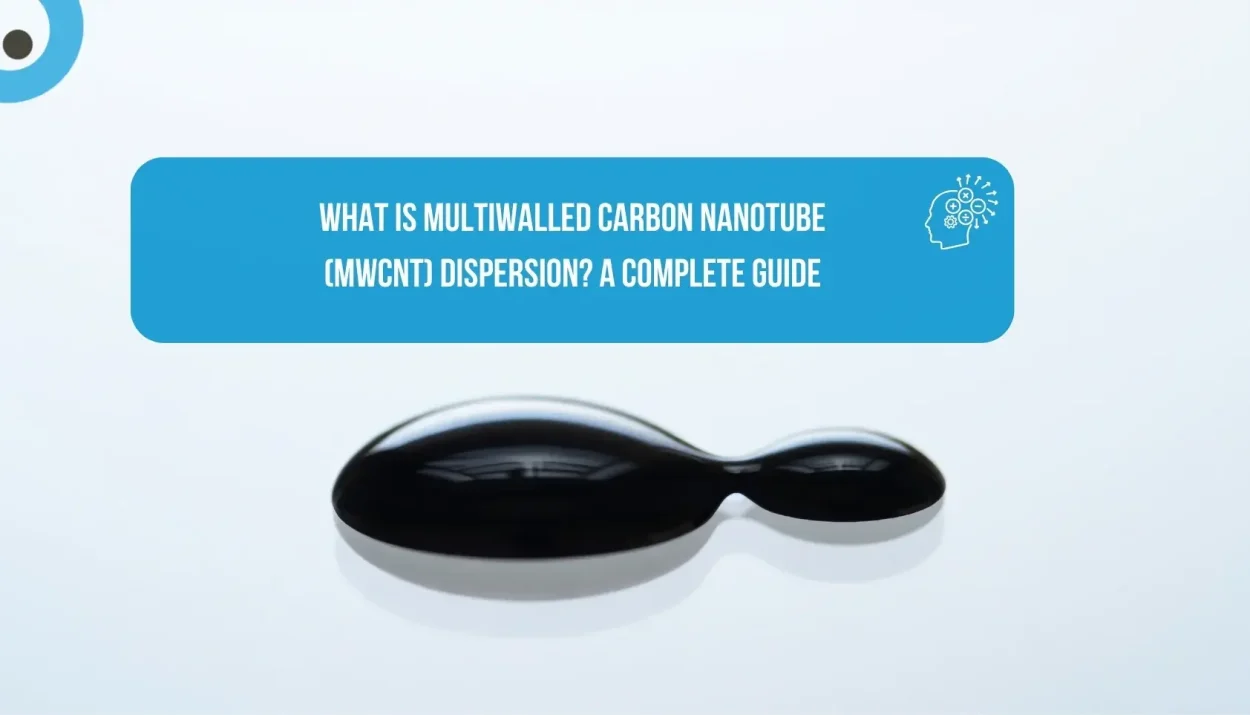
MWCNT dispersion is the scientific process of untangling these clumps and spreading the individual tubes evenly throughout a liquid (like water or a chemical solvent) or a solid (like plastic or rubber).
How is Multi Walled Carbon Nanotube Dispersion Done?
Untangling microscopic tubes is tricky. Scientists and manufacturers generally use a combination of methods:
- Mechanical Force (Sonication): This uses powerful sound waves to shake the liquid. The intense vibrations pull the tangled nanotubes apart.
- Chemical Helpers (Surfactants): These work like dish soap, coating individual nanotubes to make them slippery so they no longer stick together.
- Functionalization: This involves attaching specific chemicals directly to the nanotube surface to ensure they blend perfectly with specific liquids or plastics.
Product Variations & Categories
MWCNT dispersions are not one-size-fits-all. Depending on your project, you will need to choose the right variation:
- Aqueous (Water-Based) Dispersions: Ideal for environmentally friendly coatings, research, and applications where organic solvents are restricted.
- Solvent-Based Dispersions (NMP, Ethanol, Acetone): Commonly used in battery manufacturing and industrial coatings where fast drying or specific chemical compatibility is required.
- Resin-Based Masterbatches: Highly concentrated MWCNTs already mixed into epoxy or polyester resins, designed for manufacturers building ultra-strong composites.
The Impact of Proper Dispersion: Why It Matters in Real-World Use
The true power of Multiwalled Carbon Nanotubes is only unlocked when they are perfectly dispersed. Because nanotubes naturally clump together, proper dispersion is essential to prevent weak spots and ensure the material performs as intended.
- Unlocking Conductivity for Electronics: For nanotubes to conduct electricity, they must form a connected network. In Conductive Coatings, proper dispersion enables a thin, even layer that prevents static build-up and protects sensitive electronic components.
- Maximizing Strength in Aerospace & Sports: Clumps act as breaking points in solids. By evenly spreading individual tubes, we create Stronger Plastics and Composites for airplane wings and car parts that are tougher than steel yet incredibly lightweight.
- Enhancing Energy Storage: In Next-Generation Batteries, well-dispersed nanotubes ensure that each tube contributes to charge transport. This allows lithium-ion batteries to charge faster and hold power longer without wasting material inside clumps.
Quick Guide for Choosing the Right MWCNT Dispersion
When purchasing MWCNT dispersion for your lab or factory, keep these factors in mind:
- Check the Carrier: Ensure the liquid (water or solvent) or solid (plastic or rubber) used for the dispersion is compatible with your host material.
- Concentration vs. Ease of Use: Check the percentage of MWCNT by weight (e.g., 3% or 5%). Higher concentrations offer more material, but ensure your process can handle the increased thickness while maintaining an even spread.
- Purity and Aspect Ratio: Look for dispersions with high-purity nanotubes. Longer nanotubes (with a higher aspect ratio) generally exhibit better electrical conductivity.
- Method of Stabilization: Ask if the dispersion uses surfactants or functionalization, as this affects how the nanotubes will bond with your specific materials and their long-term stability.
Why Choose Us?
Selecting a nanotechnology partner requires trust in precision and consistency. Here is why our MWCNT dispersions are the industry choice:
- Industrial Precision: We provide high-quality, well-mixed dispersions that ensure every tube does its job, unlocking the material’s true superpowers.
- Ready-to-Use Solutions: Our products come pre-dispersed using advanced mechanical and chemical methods, saving you the complexity and expense of untangling clumpy raw materials in your own lab.
- Custom Formulations: We don’t just sell off-the-shelf products; we can tailor the solvent and concentration to match your specific manufacturing needs.
- Consistency and Reliability: We focus on stability and rigorous quality control. Every batch is tested for conductivity and particle size to ensure your final product performs flawlessly without re-clumping.
Conclusion
Multiwalled Carbon Nanotubes are a miracle material, but their performance depends entirely on proper dispersion. By untangling the tubes and spreading them evenly, engineers can create batteries that hold more power, plastics that are stronger than steel, and coatings that protect our electronics. Starting with a high-quality, well-mixed dispersion is an important step in ensuring your project’s success.