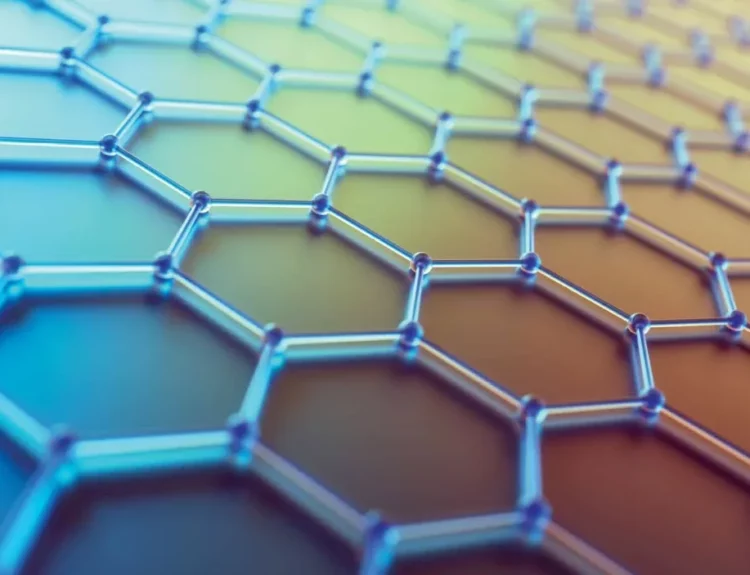

Some of the most important materials in modern science are not the ones we see every day. Hidden inside batteries, fuel cells, electrolyzers, and advanced laboratory devices are materials carefully engineered to solve complex scientific challenges. Among these, Nickel Foam has emerged as one of the most versatile and indispensable materials for researchers working on clean energy, electrochemistry, and advanced functional materials.
Unlike conventional metal sheets, nickel foam possesses a highly porous, three-dimensional structure that combines excellent electrical conductivity with a large surface area. This unique architecture allows researchers to design more efficient electrodes, improve catalytic reactions, and develop next-generation energy storage systems.As the demand for sustainable technologies continues to grow, nickel foam is becoming more than just a laboratory material—it is a platform for scientific innovation.
What Is Nickel Foam?
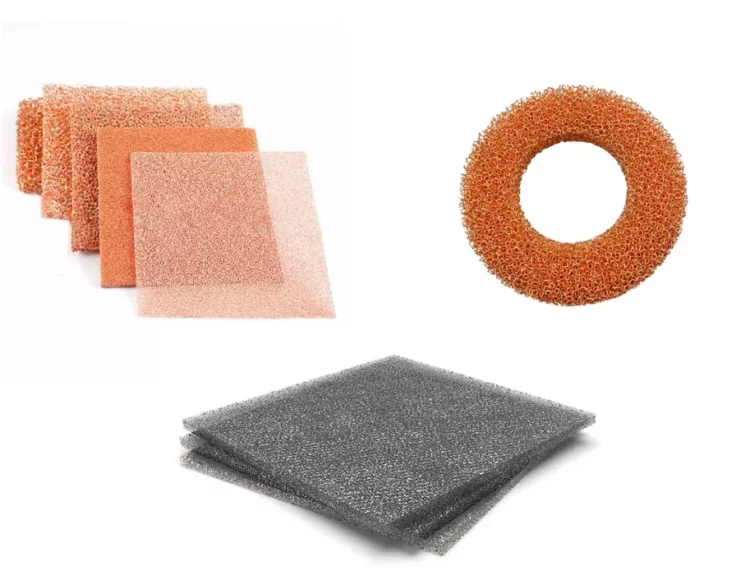
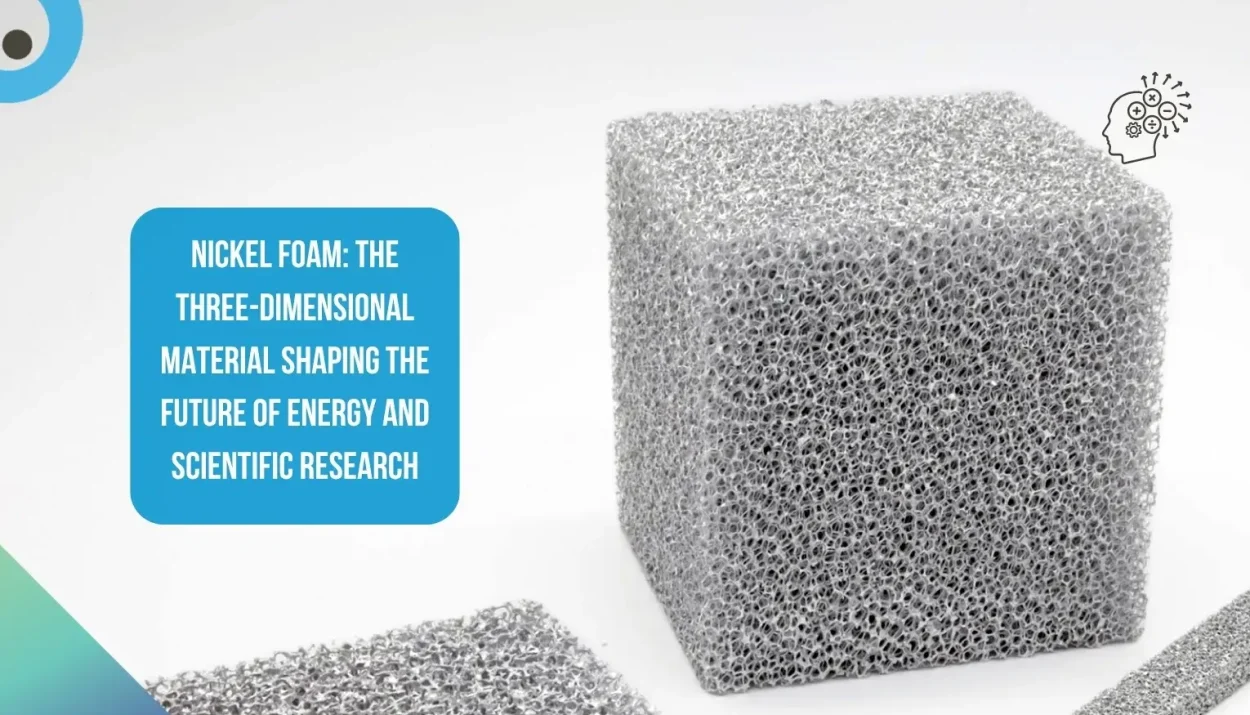
Nickel foam is a lightweight, open-cell metallic material manufactured from high-purity nickel. It contains thousands of interconnected microscopic pores that create an extensive internal surface while maintaining excellent mechanical strength and electrical conductivity.
The open-cell structure allows liquids, gases, and electrolytes to move freely through the material. This characteristic makes nickel foam particularly valuable in electrochemical systems where efficient interaction between electrodes and electrolytes is essential.
Available in various thicknesses, pore densities, and dimensions, nickel foam can be tailored to suit a wide range of research and industrial applications.
Why Researchers Prefer Nickel Foam
The popularity of nickel foam in research laboratories stems from its ability to perform multiple functions simultaneously.
Large Active Surface Area
The three-dimensional porous network dramatically increases the available surface for chemical reactions compared with flat metal substrates.
This expanded surface enables:
- Higher catalyst loading
- Improved electrochemical activity
- Enhanced reaction efficiency
- Better current distribution
Excellent Electrical Conductivity
Nickel provides reliable electrical conductivity, allowing efficient electron transport throughout the porous structure.
This property is essential for batteries, supercapacitors, fuel cells, and electrolyzers.
Mechanical Stability
Despite its porous nature, nickel foam maintains good structural integrity during repeated electrochemical cycling and high-temperature operation.
Chemical Compatibility
Nickel foam performs well in many alkaline electrochemical environments, making it suitable for energy conversion and storage research.
Easy Functionalisation
Researchers can readily coat nickel foam with nanomaterials, metal oxides, sulfides, phosphides, polymers, or carbon-based materials to create advanced functional electrodes.
The Material Behind Next-Generation Energy Technologies
- One of the biggest reasons nickel foam has gained widespread attention is its role in sustainable energy research.
- Scientists developing clean energy technologies frequently use nickel foam as a conductive scaffold because its porous structure supports efficient charge transfer while maximising contact between active materials and electrolytes.
- Its contribution extends across numerous renewable energy systems.
Applications of Nickel Foam in Scientific Research
Battery Development
Nickel foam serves as a current collector and electrode substrate in various battery technologies.
Researchers investigate its use in:
- Nickel-metal hydride batteries
- Lithium-ion batteries
- Zinc-based batteries
- Sodium-ion batteries
- Solid-state battery research
Its porous architecture improves active material utilisation and enhances battery performance.
Supercapacitors
- Energy storage devices require electrodes with high surface area and excellent conductivity.
- Nickel foam provides both.
- Scientists use it to fabricate high-performance supercapacitor electrodes capable of delivering rapid charging, high power density, and long operational life.
Water Splitting and Hydrogen Production
Hydrogen is expected to play a major role in future clean energy systems.
Nickel foam is widely employed as an electrode substrate for:
- Oxygen evolution reaction (OER)
- Hydrogen evolution reaction (HER)
- Overall water electrolysis
Its conductive framework allows catalytic materials to perform more efficiently during hydrogen generation.
Fuel Cell Research
Researchers developing fuel cells use nickel foam to improve catalyst distribution, gas transport, and electrochemical efficiency.
Its interconnected pores facilitate reactant flow while maintaining electrical connectivity throughout the electrode.
Electrocatalysis
Nickel foam provides an excellent support material for catalysts used in:
- Carbon dioxide reduction
- Nitrogen reduction
- Oxygen reduction
- Methanol oxidation
- Biomass conversion
Its high surface area enables greater catalyst exposure and improved reaction kinetics.
Sensor Development
The conductive porous structure of nickel foam makes it suitable for fabricating highly sensitive electrochemical sensors used for detecting:
- Glucose
- Heavy metals
- Environmental pollutants
- Biomolecules
- Industrial gases
Advantages Over Flat Metal Substrates
Traditional metal sheets offer conductivity but limited surface area.
Nickel foam introduces a three-dimensional architecture that provides several advantages:
- Larger reaction surface
- Improved electrolyte penetration
- Better catalyst utilisation
- Lower diffusion resistance
- Faster electron transport
- Higher electrochemical efficiency
- Lightweight construction
These characteristics make nickel foam significantly more effective in many electrochemical applications.
Choosing the Right Nickel Foam
Selecting the appropriate nickel foam depends on the research objective.
Researchers should consider:
Thickness
Thicker foams provide greater mechanical support and higher active surface area.
Pore Density
Pore size influences electrolyte flow, catalyst loading, and overall electrochemical performance.
Porosity
Higher porosity increases accessible surface area while reducing material weight.
Purity
High-purity nickel minimises contamination and improves reproducibility in sensitive experiments.
Sample Dimensions
Choosing appropriate dimensions simplifies device fabrication and reduces material waste.
Best Practices for Laboratory Use
To achieve reliable experimental results, nickel foam should be handled carefully.
Researchers are advised to:
- Clean the foam before catalyst deposition.
- Handle with gloves or tweezers to avoid contamination.
- Store in clean, dry conditions.
- Minimise mechanical deformation during handling.
- Characterise pore structure before critical experiments.
- Use compatible cleaning procedures for specific research applications.
These practices help maintain consistent electrochemical performance.
The Future of Nickel Foam
As global research focuses on carbon neutrality and renewable energy, nickel foam is becoming increasingly important.
Emerging applications include:
- Green hydrogen production
- Metal-air batteries
- Flexible energy storage
- Carbon capture technologies
- Advanced electrocatalysis
- Artificial photosynthesis
- Smart energy systems
- High-performance sensors
Researchers are also exploring hybrid structures where nickel foam is combined with graphene, carbon nanotubes, transition metal compounds, and other nanomaterials to achieve even higher performance.
These developments continue to expand the role of nickel foam in advanced materials science.
Conclusion
Nickel foam is far more than a porous metal. It is a carefully engineered material that enables scientists to design better batteries, more efficient catalysts, improved sensors, and cleaner energy technologies.
Its combination of high electrical conductivity, three-dimensional porous architecture, mechanical stability, and compatibility with advanced nanomaterials has established it as one of the most valuable materials in modern electrochemical research.
As laboratories continue to develop sustainable energy solutions and advanced functional materials, nickel foam will remain a trusted foundation for scientific discovery. Sometimes the biggest innovations begin with the smallest structures—and nickel foam proves that the right architecture can transform the future of science.