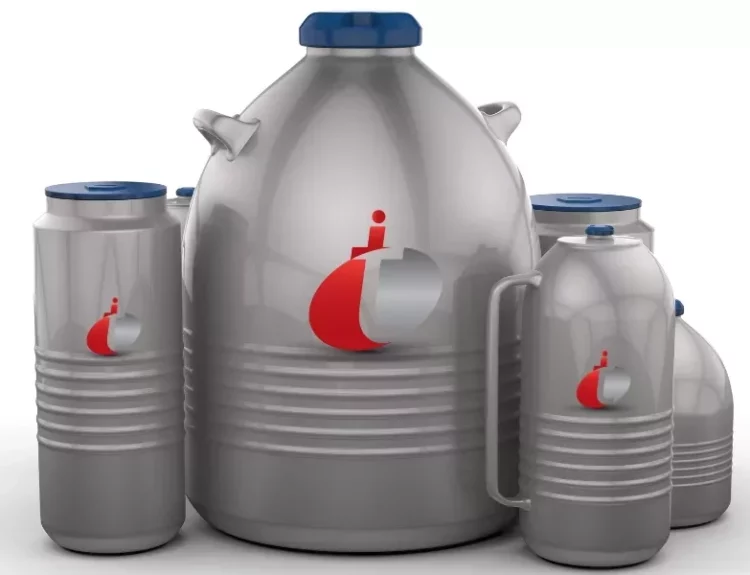



Dewar vessels are important components in scientific research and industrial engineering systems where maintaining stable temperature conditions is essential. Their double-walled construction and vacuum-insulated design reduce heat transfer between the internal storage space and the external surroundings. The choice of construction material is a key factor in these vessels’ performance, reliability, and service life. Stainless steel is commonly selected because it offers a combination of mechanical strength, corrosion resistance, fabrication flexibility, and suitability for a wide range of operating temperatures.
Nevertheless, stainless steel is not a single material. Different grades contain varying proportions of chromium, nickel, molybdenum, and other alloying elements. These compositional differences produce variations in mechanical behavior, thermal conductivity, microstructure, and resistance to environmental exposure. Among commonly investigated grades, SS304 and SS316 are particularly relevant to Dewar vessel manufacturing.
SS304 is an austenitic stainless steel known for its general corrosion resistance, good formability, and balanced mechanical properties. SS316 contains molybdenum, which improves its resistance to certain corrosive environments. Although both grades are widely used in engineering applications, their differences may influence vessel fabrication, structural performance, and thermal behavior.
A key consideration is that a Dewar vessel’s thermal performance depends on more than the stainless steel grade. Vacuum quality, radiation shielding, neck geometry, wall thickness, and structural connections also contribute significantly to the overall insulation performance. Therefore, understanding the relationship between stainless steel grade and vessel design is essential for selecting suitable materials for scientific and industrial Dewar applications.
Stainless Steel Grades Used in Dewar Vessel Manufacturing
Stainless steel grades are selected according to the mechanical, thermal, environmental, and manufacturing requirements of the intended application.
SS304 Stainless Steel
SS304 is one of the most commonly used austenitic stainless steel grades in industrial fabrication.
Its principal characteristics include:
- Good corrosion resistance in many ordinary environments.
- High ductility and formability.
- Suitable weldability.
- Good mechanical strength.
- Stable austenitic microstructure.
- Relatively low thermal conductivity compared with many conventional structural metals.
These properties make SS304 suitable for fabricating cylindrical vessels, inner containers, outer shells, and supporting structural components.
Its availability and manufacturing flexibility also make it a practical choice for general-purpose Dewar vessels.
SS316 Stainless Steel
SS316 is another widely used austenitic stainless-steel grade.
Its composition includes molybdenum, which improves its resistance to localized corrosion, particularly in environments containing chloride ions.
Its major characteristics include:
- Improved resistance to certain corrosive environments.
- Good mechanical strength.
- Good formability and weldability.
- Stable austenitic structure.
- Suitability for demanding industrial environments.
SS316 may be preferred where the vessel is exposed to more aggressive external environments or where improved corrosion resistance is required.
Comparison of SS304 and SS316
| Property | SS304 | SS316 |
| Chromium content | Approximately 18–20% | Approximately 16–18% |
| Nickel content | Approximately 8–10.5% | Approximately 10–14% |
| Molybdenum content | Generally absent | Approximately 2–3% |
| Corrosion resistance | Good | Generally improved in chloride-containing environments |
| Formability | Excellent | Excellent |
| Weldability | Good | Good |
| Thermal conductivity | Grade- and temperature-dependent | Grade- and temperature-dependent |
| Common application | General-purpose vessel construction | More demanding corrosive environments |
The values are representative composition ranges for common standard grades, not guaranteed specifications for every product or supply condition. Importantly, SS316 should not automatically be considered thermally superior to SS304. Their thermal conductivities are relatively close, and the actual difference depends on temperature, material condition, and manufacturing history.
Influence of Stainless Steel Grade on Structural Properties
A Dewar vessel’s structural performance depends on its material’s ability to withstand external pressure, internal loading, thermal contraction, vibration, and mechanical stresses during operation.
The choice of stainless steel grade affects several key structural characteristics.
Mechanical Strength and Structural Stability
SS304 and SS316 both offer good mechanical strength and ductility. Their austenitic microstructures provide useful fabrication characteristics and allow complex vessel geometries.
In Dewar vessel construction, mechanical strength is particularly important because the outer shell of an evacuated double-walled vessel may experience external atmospheric pressure.
The structural design must therefore prevent excessive deformation, buckling, or collapse.
Important considerations include:
- Stainless steel grade and material condition.
- Sheet thickness and vessel diameter.
- Welding quality and joint configuration.
- External pressure resistance.
- Supporting structures and reinforcement.
- Manufacturing tolerances.
Select the material grade based on the vessel’s intended dimensions and operating conditions.
Resistance to External Pressure
Vacuum-insulated Dewar vessels operate with reduced pressure in the space between their inner and outer walls. This creates a pressure difference across the vessel walls. The outer shell must withstand external atmospheric pressure without undergoing unacceptable deformation.
Both SS304 and SS316 can be used for such construction when the design, thickness, geometry, and fabrication quality are appropriate.However, material selection alone cannot guarantee structural safety. Engineering assessment of external-pressure stability, weld quality, and vessel geometry is essential.
Thermal Expansion and Contraction
Temperature variations cause dimensional changes in stainless steel. During low-temperature operation, the inner vessel experiences contraction, while the outer shell may remain closer to ambient temperature.
This difference can introduce mechanical stresses at connecting points, support structures, and welded regions. The thermal expansion behavior of SS304 and SS316 is relatively similar, although actual values depend on temperature and material condition.
The National Institute of Standards and Technology (NIST) provides temperature-dependent material property information for both grades, including Young’s modulus, thermal conductivity, and linear expansion.
Weldability and Fabrication Quality
Welding plays an important role in Dewar vessel manufacturing because it determines the integrity of joints between the inner container, outer shell, neck, and supporting components. SS304 and SS316 are both suitable for many conventional fabrication and welding processes.
Nevertheless, differences in filler material selection, welding parameters, heat input, and post-weld cleaning can influence the final material condition.
Poor welding may introduce:
- Distortion of vessel geometry.
- Localized structural weaknesses.
- Incomplete joint penetration.
- Surface contamination.
- Unwanted leakage paths.
For vacuum-insulated vessels, weld integrity is especially important because leakage can gradually reduce the insulation system’s effectiveness.
Influence of Stainless Steel Grade on Thermal Properties
Thermal performance is a primary consideration in Dewar vessel design. The double-walled construction minimizes heat transfer between the internal storage space and the surrounding environment.
The stainless steel grade influences heat conduction through the vessel walls and structural connections. However, the vacuum space, surface emissivity, insulation arrangement, and neck configuration also determine overall thermal performance.
Thermal Conductivity
Thermal conductivity describes how readily heat moves through a material. A lower thermal conductivity can help reduce heat transfer through the solid metallic components of a vessel. Both SS304 and SS316 have relatively low thermal conductivity compared with highly conductive metals such as copper.
Published stainless steel property data indicate that the thermal conductivity of SS304 and SS316 is relatively close under comparable conditions. The exact values vary with temperature and material condition. British Stainless Steel Association+2 This means selecting SS316 instead of SS304 does not automatically improve a Dewar vessel’s insulation performance. The design of the vacuum space and thermal bridges may have a more substantial influence.
Heat Transfer Through Vessel Walls
Heat can move through solid stainless steel walls that connect different temperature regions. The thickness, geometry, and material properties of these walls influence the amount of heat transferred.
In double-walled Dewar vessels, an evacuated space separates the inner and outer shells. This arrangement significantly reduces heat transfer through the space between the walls. However, metallic connections, support structures, and the neck region can still provide pathways for heat conduction. Consequently, material grade selection should be considered together with the complete vessel configuration.
Low-Temperature Thermal Behavior
Dewar vessels are frequently designed for low-temperature applications.
At low temperatures, the physical properties of stainless-steel change, including:
- Thermal conductivity.
- Specific heat capacity.
- Elastic modulus.
- Thermal expansion.
- Yield strength and deformation behavior.
These changes must be considered during the design and evaluation of vessels intended for cryogenic service. NIST provides dedicated property datasets for SS304 and SS316 covering temperatures from about 4 K to 300 K. These datasets help explain the temperature-dependent behavior of the two materials. Thermodynamics Research Center+2
Surface Emissivity and Reflective Properties
Heat transfer through an evacuated space can occur through thermal radiation. The surface condition of the stainless steel therefore becomes an important design consideration.
Polished, reflective, oxidized, and differently treated stainless steel surfaces can exhibit different radiative characteristics. Suitable reflective surfaces or multilayer insulation can help reduce radiative heat transfer. Therefore, surface treatment may significantly influence thermal performance, regardless of the selected stainless steel grade.
Comparative Evaluation of SS304 and SS316 in Dewar Vessels
The following comparison summarizes the engineering considerations associated with both materials.
| Evaluation parameter | SS304 | SS316 |
| General corrosion resistance | Good | Very good |
| Resistance to chloride exposure | More limited | Generally better |
| Fabrication suitability | Excellent | Excellent |
| Weldability | Good | Good |
| Low-temperature suitability | Good, subject to design qualification | Good, subject to design qualification |
| Thermal conductivity | Relatively low | Relatively low |
| Thermal expansion behaviour | Similar to SS316 | Similar to SS304 |
| Material availability | Widely available | Widely available |
| Material cost | Generally lower | Generally higher |
The comparison indicates that the selection between SS304 and SS316 should be based on the operating environment, structural design, fabrication requirements, and expected service conditions. For general-purpose Dewar vessel construction, SS304 may offer a suitable combination of performance and manufacturing economy.
Where greater resistance to chloride-containing environments is required, SS316 may be a better choice. Neither grade is universally superior for all Dewar vessel applications.
Factors Affecting the Overall Thermal Efficiency of Dewar Vessels
The stainless steel grade is only one element of a complete Dewar vessel insulation system. Several additional factors influence the vessel’s thermal performance.
Vacuum Quality
The evacuated space between the inner and outer walls reduces heat transfer by gas. Maintaining suitable vacuum conditions is essential for effective thermal insulation.
If the vacuum deteriorates due to leakage or material outgassing, gaseous heat transfer may increase, reducing the vessel’s thermal efficiency.
Wall Thickness
Wall thickness influences structural strength and heat conduction through the metallic material.
Increasing wall thickness may improve certain structural characteristics but can also affect the amount of heat conducted through metallic connections.
Therefore, select the thickness based on the required structural and thermal performance.
Neck Design
The neck connects the inner vessel to the external structure and can act as a significant thermal bridge. Its geometry, length, thickness, and material selection influence the heat transferred into the internal storage space.
Optimized neck design is therefore important for reducing thermal losses.
Multilayer Insulation
Multilayer insulation consists of reflective layers separated by low-conductivity spacers. It is used in many advanced vacuum-insulated systems to reduce radiative heat transfer.
Its effectiveness depends on layer arrangement, installation quality, vacuum conditions, and the surrounding structural design.
Surface Finish
The surface finish of the inner and outer walls can influence radiative heat exchange.
Reflective surface treatments may help reduce heat transfer within the evacuated region.
Surface cleanliness and consistency are also important during manufacturing.
Characterization Techniques for Stainless Steel Dewar Vessels
Experimental characterization is necessary to understand how different stainless steel grades influence the structural and thermal performance of Dewar vessels.
The following techniques can support comparative research.
| Characterization technique | Research application |
| X-ray Diffraction (XRD) | Identifies crystalline phases and structural changes |
| Energy Dispersive Spectroscopy (EDS) | Evaluates elemental composition |
| Tensile Testing | Evaluates mechanical strength and ductility |
| Hardness Testing | Examines material hardness |
| Thermal Conductivity Testing | Evaluates heat conduction characteristics |
| Thermal Imaging | Observes temperature distribution and thermal irregularities |
| Vacuum Leak Testing | Evaluates vacuum system integrity |
| Pressure Testing | Assesses vessel structural performance under specified conditions |
| Thermal Cycling | Evaluates performance under repeated temperature changes |
Microstructural Analysis Using SEM
SEM provides detailed information about stainless steel surface morphology and microstructure.
It can examine grain boundaries, surface defects, welding regions, and fabrication-related changes.
Comparative SEM analysis of SS304 and SS316 can help identify differences in their microstructural characteristics.
X-ray Diffraction Analysis
XRD is useful for examining crystalline phases and identifying structural changes in stainless steel. It can help investigate how manufacturing processes, welding, and thermal exposure affect the material’s crystalline structure.
Thermal Performance Testing
Thermal testing is necessary to evaluate the effectiveness of different Dewar vessel configurations.
A comparative experimental investigation can assess temperature stability, heat leakage, and thermal performance under controlled environmental conditions.
The testing should maintain consistent vessel dimensions, vacuum conditions, surface treatments, and operating procedures to make the comparison meaningful.
Vacuum Integrity Testing
Vacuum integrity is a major consideration in double-walled Dewar construction. Leak testing can help identify imperfections in welded joints, connections, and sealed regions. Maintaining stable vacuum conditions is essential for achieving consistent insulation performance.
Experimental Research Approach for Comparing SS304 and SS316
A comparative experimental study can investigate how stainless steel grade affects Dewar vessel performance. The study may involve two vessels manufactured using SS304 and SS316, respectively.
Both vessels should have comparable dimensions, wall thickness, neck configuration, surface finish, and vacuum insulation arrangement.
The research can be organized into the following stages.
Stage 1: Material Selection
Select certified SS304 and SS316 materials and verify their chemical composition through material test certificates or suitable elemental analysis.
Stage 2: Vessel Fabrication
Manufacture comparable double-walled Dewar vessels using controlled fabrication and welding procedures.
Stage 3: Structural Characterization
Evaluate mechanical strength, dimensional stability, weld quality, and resistance to external pressure.
Stage 4: Thermal Evaluation
Assess temperature stability, thermal losses, and the influence of different surface conditions.
Stage 5: Vacuum Assessment
Evaluate vacuum integrity and monitor changes in insulation performance during controlled testing.
Stage 6: Comparative Analysis
Compare the observations obtained from both vessels and identify the influence of material grade, fabrication quality, and vessel configuration.
This approach would help distinguish the contribution of stainless steel grade from other factors affecting Dewar vessel performance.
Research Challenges and Future Developments
Several research opportunities remain in developing advanced stainless steel Dewar vessels.
Material optimization
Further comparative research can investigate the suitability of different stainless steel grades for specific operating environments.
Improved vacuum insulation
Developing more reliable vacuum systems and minimizing vacuum degradation can improve long-term thermal performance.
Advanced surface treatments
Research into reflective coatings and surface finishing can help reduce radiative heat transfer.
Structural design optimization
Improved neck geometry, supporting structures, and wall configurations can help minimize thermal bridges while maintaining structural stability.
Cryogenic material characterization
More detailed investigations into temperature-dependent mechanical and thermal properties can support better material selection.
Welding and fabrication improvements
Advanced joining methods and improved quality-control procedures can help minimize defects and maintain vacuum integrity.
Long-term performance assessment
Investigating the effects of repeated temperature changes, external loading, and environmental exposure can provide valuable information about vessel durability.
Industrial and Scientific Applications
Cryogenic Storage Systems
Dewar vessels store low-temperature materials under controlled thermal conditions. Stainless steel construction provides mechanical durability and suitable fabrication characteristics.
Industrial Gas Systems
Vacuum-insulated vessels are used in industrial systems requiring controlled storage and transfer of cryogenic fluids.
Scientific Research Equipment
Dewar vessels are used in experimental setups that require stable low-temperature environments.
Temperature-Controlled Engineering Systems
Specialized Dewar configurations are used in thermal testing, material characterization, and low-temperature engineering investigations.
Transportation and Storage Equipment
Large vacuum-insulated stainless steel vessels are designed to transport and store materials that require controlled temperature conditions.
Conclusion
The selection of stainless steel grade plays an important role in determining the structural reliability, durability, and thermal characteristics of Dewar vessels. S304 and SS316 are both suitable austenitic stainless steel grades for many vessel manufacturing applications. SS304 offers a balanced combination of mechanical strength, corrosion resistance, fabrication flexibility, and cost-effectiveness. SS316 provides improved resistance to certain corrosive environments due to its molybdenum content.
From a thermal engineering perspective, the differences in thermal conductivity between these grades are relatively modest under comparable conditions. Therefore, a Dewar vessel’s overall insulation performance depends more on vacuum quality, wall configuration, surface emissivity, neck geometry, and insulation-system effectiveness. Structural properties such as mechanical strength, dimensional stability, thermal contraction, and weld integrity must also be considered when selecting construction materials.
Advanced characterization techniques, including SEM, XRD, EDS, thermal conductivity testing, and vacuum leak testing, provide valuable information for evaluating the performance of different stainless steel grades.
Overall, selecting the appropriate stainless steel grade requires an integrated understanding of material properties, structural design, fabrication quality, and thermal insulation requirements. Continued research in these areas can support the development of more reliable and efficient Dewar vessels for advanced scientific and industrial applications.