

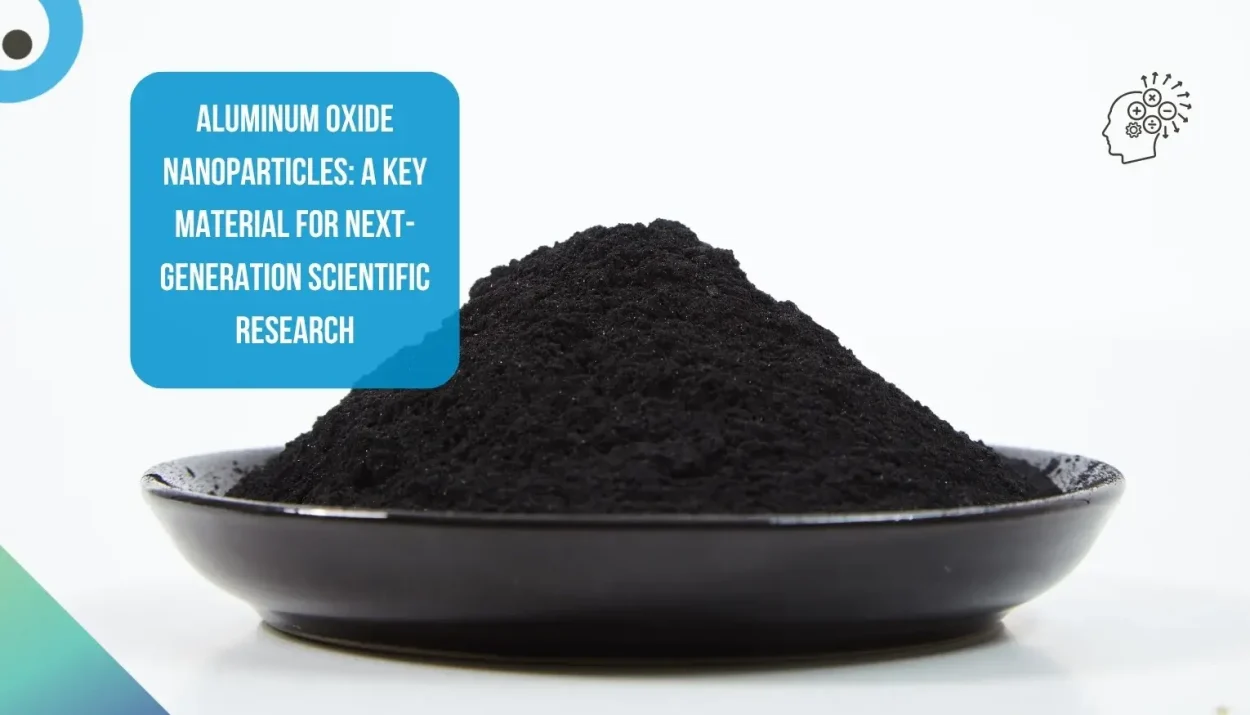
Scientific breakthroughs often depend on materials that quietly improve experimental precision, reliability, and performance. Aluminum Oxide Nanoparticles (Al₂O₃ Nanoparticles) are one such material. Although they appear as a fine white powder, their impact spans disciplines ranging from nanotechnology and catalysis to biomedical engineering, electronics, and advanced ceramics.
What distinguishes aluminum oxide nanoparticles from their bulk counterpart is the new set of properties that emerge at the nanoscale. Their exceptionally high surface area, excellent thermal stability, chemical inertness, and mechanical strength have made them indispensable to researchers developing next-generation technologies.
As laboratories push the boundaries of materials science, aluminum oxide nanoparticles have become a platform for innovation.
Understanding Aluminum Oxide at the Nanoscale
Aluminum oxide, commonly known as alumina, has long been recognized as one of the most durable ceramic materials. When engineered into nanoparticles, typically measuring between a few nanometres and several tens of nanometres, alumina exhibits significantly enhanced surface activity while retaining its excellent thermal and chemical stability.
The reduction in particle size dramatically increases the surface-area-to-volume ratio, allowing more atoms to participate in chemical and physical interactions. This characteristic makes aluminum oxide nanoparticles particularly valuable in applications where catalytic activity, surface modification, adsorption, or reinforcement are essential.
Rather than simply serving as a smaller version of conventional alumina, these nanoparticles offer researchers new opportunities to design advanced materials and functional systems.
Why Researchers Choose Aluminum Oxide Nanoparticles
Researchers across multiple scientific disciplines value aluminum oxide nanoparticles for their durability and versatility in practical research settings.
High Surface Area for Enhanced Performance
One of the defining advantages of nanoparticles is their enormous active surface area. Aluminum oxide nanoparticles provide abundant reactive sites, improving catalysis, adsorption, and composite material development.
Outstanding Thermal Stability
Many laboratory processes involve elevated temperatures that would degrade conventional materials. Aluminum oxide nanoparticles maintain their structural integrity under demanding thermal conditions, making them suitable for high-temperature synthesis, coatings, and ceramic processing.
Excellent Chemical Resistance
These nanoparticles remain stable in many chemically aggressive environments, enabling researchers to perform experiments involving acids, solvents, and reactive compounds with reduced material degradation.
Superior Mechanical Properties
When incorporated into polymers, ceramics, or metal matrices, aluminum oxide nanoparticles enhance hardness, wear resistance, and structural durability without substantially increasing weight.
Excellent Electrical Insulation
Unlike many nanomaterials that focus on conductivity, aluminum oxide nanoparticles offer excellent dielectric properties, making them valuable in electronic packaging, insulating coatings, and advanced electronic devices.
Applications Across Modern Scientific Research
Nanocomposite Development
One of the fastest-growing applications of aluminum oxide nanoparticles is the fabrication of advanced nanocomposites. By dispersing nanoparticles into polymers, metals, and ceramics, researchers can significantly improve mechanical strength, thermal conductivity, abrasion resistance, and long-term durability.
These reinforced materials are increasingly investigated for aerospace, automotive, and structural engineering applications.
Catalyst Support Materials
Catalytic reactions often depend on the support material’s surface area.
Aluminum oxide nanoparticles provide stable, high-surface-area platforms for depositing active catalytic metals used in petrochemical processing, environmental remediation, hydrogen production, and sustainable chemical synthesis.
Advanced Ceramic Research
Researchers developing technical ceramics frequently incorporate nano-alumina to improve densification, grain refinement, fracture toughness, and mechanical performance.
Applications include:
- Structural ceramics
- Cutting tools
- Biomedical ceramics
- Wear-resistant components
- High-temperature engineering materials
Biomedical Engineering
Although biomedical applications require rigorous evaluation, aluminum oxide nanoparticles continue to be investigated for:
- Drug delivery systems
- Tissue engineering
- Implant coatings
- Dental materials
- Biomedical ceramics
Their chemical stability and biocompatibility in selected applications make them promising materials for future healthcare technologies.
Surface Coatings
Researchers formulate nano-alumina coatings to improve:
- Scratch resistance
- Corrosion protection
- Thermal insulation
- Wear resistance
- Surface hardness
Such coatings are valuable in industrial machinery, optical components, and precision engineering.
Electronics and Semiconductor Research
Aluminum oxide nanoparticles contribute to the development of electronic materials by providing excellent electrical insulation, thermal management, and dimensional stability.
They are studied for applications including:
- Electronic packaging
- Dielectric layers
- Thermal interface materials
- Semiconductor processing
- Microelectronic devices
Advantages Over Conventional Alumina
Bulk aluminum oxide has long been valued as an engineering ceramic, but nanoscale alumina offers additional advantages that better support advanced research.
Compared with conventional alumina, nanoparticles provide:
- Higher specific surface area
- Increased chemical activity
- Improved dispersion in composite materials
- Enhanced catalytic performance
- Better reinforcement efficiency
- Greater interaction with surrounding materials
These advantages enable researchers to design materials with improved functionality at relatively low nanoparticle concentrations.
Selecting the Right Aluminum Oxide Nanoparticles
Choosing suitable nanoparticles requires consideration of several technical parameters.
Researchers should evaluate:
- Particle size
- Particle size distribution
- Surface area
- Crystal phase (Alpha, Gamma, or other forms)
- Purity
- Agglomeration level
- Surface modification
- Bulk density
- Morphology
Selecting the correct specification helps ensure reproducible results and improves the performance of experimental systems.
Best Practices for Laboratory Handling
Because nanoparticles possess high surface activity, careful handling is essential.
Researchers should:
- Store materials in airtight containers.
- Prevent moisture absorption and contamination.
- Minimize airborne particle generation during handling.
- Wear appropriate laboratory protective equipment.
- Use suitable dispersion techniques before incorporation into formulations.
- Characterize each batch when consistency is critical for research.
Following good laboratory practices helps maintain material quality and improves experimental reproducibility.
The Future of Aluminum Oxide Nanoparticles
The demand for advanced nanomaterials continues to increase as industries pursue lighter, stronger, and more efficient technologies.
Emerging research areas include:
- Solid-state batteries
- Hydrogen energy systems
- Additive manufacturing
- Nano-engineered ceramics
- Smart protective coatings
- Quantum materials
- Environmental remediation
- Sustainable catalyst development
- High-performance thermal management systems
As synthesis methods become more refined and scalable, aluminum oxide nanoparticles are expected to play an even greater role in scientific discovery and industrial innovation.
Conclusion
Aluminum oxide nanoparticles show how controlling matter at the nanoscale can unlock new possibilities in science and engineering. Their combination of thermal stability, chemical resistance, mechanical strength, electrical insulation, and high surface area makes them indispensable in research laboratories worldwide.
From reinforcing advanced composites and supporting catalytic reactions to improving ceramic performance and enabling next-generation electronic materials, nano-alumina continues to drive innovation across diverse scientific disciplines.
For researchers seeking reliable, high-performance nanomaterials, aluminum oxide nanoparticles represent more than a laboratory material—they provide a foundation for developing the technologies that will define the future of materials science and continue to support scientific innovation.