
While some materials dazzle with hype, graphene nanoplatelets steadily revolutionize industries. GNPs’ unique ability to enhance strength, conductivity, and efficiency is subtly but meaningfully changing how materials are engineered across sectors.
Graphene nanoplatelets, often called GNPs, are ultra-thin stacks of graphene sheets with nanoscale thickness and extremely high surface area. Unlike single-layer graphene, which is difficult and expensive to produce in large quantities, GNPs provide a practical balance between performance, scalability, and cost. This is one of the reasons they have become highly attractive for industrial and research applications worldwide.
What Makes Graphene Nanoplatelets Special?
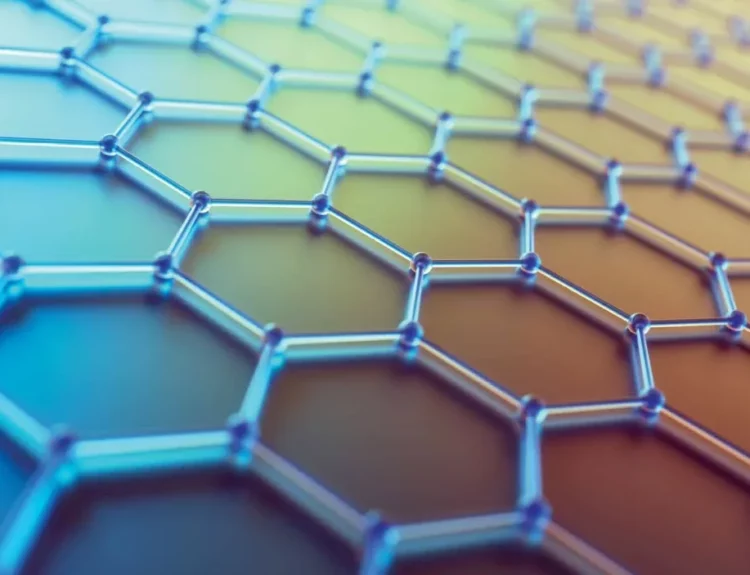
At their core, graphene nanoplatelets are made entirely of carbon atoms arranged in a honeycomb lattice. Even though they are incredibly thin, they exhibit remarkable physical properties that conventional materials struggle to achieve.
A small quantity of GNPs can significantly improve:
- Mechanical strength
- Electrical conductivity
- Thermal conductivity
- Barrier resistance
- Lubrication performance
- Chemical stability
- This unusual combination allows engineers to upgrade ordinary materials into multifunctional high-performance systems.
- For example, when graphene nanoplatelets are added to polymers, the resulting composite can become lighter yet stronger, electrically conductive yet flexible, and thermally stable without increasing bulk weight.
A Material Designed for Modern Engineering
Traditional fillers, such as carbon black or metal powders, often require high loadings to achieve conductivity or reinforcement. Graphene nanoplatelets work differently. Because of their extremely high aspect ratio and large surface interaction, even low concentrations can produce noticeable improvements.
This efficiency is particularly valuable in industries where weight, flexibility, and energy efficiency matter.
In Electronics
GNPs are increasingly used in:
- Conductive inks
- EMI shielding materials
- Flexible circuits
- Printed electronics
- Antistatic coatings
- Their ability to form conductive networks makes them ideal for lightweight electronic applications where metals may be too heavy or rigid.
In Energy Storage
Battery and supercapacitor manufacturers are exploring graphene nanoplatelets to improve:
- Electron transport
- Heat dissipation
- Charging speed
- Electrode durability
- The material’s conductivity helps reduce internal resistance, thereby enhancing overall device performance.
In Thermal Management
One of the most exciting applications of GNPs lies in heat transfer systems. Modern electronics generate enormous amounts of heat in compact spaces. Graphene nanoplatelets help dissipate this heat efficiently when incorporated into thermal interface materials, coatings, and composite structures.
As electronic devices continue to shrink and become more powerful, thermal management has become just as important as electrical performance.
Why Industries Prefer GNPs Over Pure Graphene
Although single-layer graphene often receives more scientific attention, graphene nanoplatelets offer a more industrially practical solution.
They are:
- Easier to disperse
- More economical
- Available in bulk quantities
- Compatible with existing manufacturing methods
- Suitable for large-scale applications
- This practicality has accelerated their adoption across automotive, aerospace, coatings, and polymer industries.
- Manufacturers can integrate GNPs into conventional production systems with fewer modifications, making commercialization far more realistic.
Challenges That Researchers Continue to Solve
Like many nanomaterials, graphene nanoplatelets also present technical challenges.
One major issue is dispersion. Because nanoplatelets naturally tend to agglomerate, achieving uniform distribution inside polymers or liquids requires careful processing techniques. Poor dispersion can reduce conductivity and mechanical benefits.
- Researchers are also working on:
- Surface functionalization
- Better compatibility with resins
- Cost-effective large-scale synthesis
- Environmentally sustainable production
- Despite these challenges, rapid advancements in nanotechnology continue to improve the reliability and commercial viability of GNP-based materials.
The Future of Graphene Nanoplatelets
Graphene nanoplatelets are no longer limited to laboratory experiments. They are steadily moving into real-world manufacturing and product development.
Future applications may include:
- Smart textiles
- Lightweight electric vehicles
- Transparent conductive films
- Wearable sensors
- Advanced aerospace composites
- Next-generation flexible displays
- High-efficiency solar devices
- As industries demand materials that are lighter, smarter, and more energy-efficient, graphene nanoplatelets are expected to become a foundational building block of modern materials science.
Conclusion
Graphene nanoplatelets represent a powerful example of how nanotechnology can improve everyday engineering materials. Their combination of strength, conductivity, lightweight structure, and scalability makes them one of the most promising carbon-based materials available today.
Rather than replacing traditional materials entirely, GNPs enhance them — turning ordinary plastics, coatings, and composites into advanced multifunctional systems capable of meeting the demands of future technologies.
In many ways, graphene nanoplatelets are not just another nanomaterial. They are a bridge between scientific discovery and industrial reality.