
Fluorine-Doped Tin Oxide (FTO) Coated Glass is a transparent conductive substrate widely used in scientific research, renewable energy technologies, and advanced electronic devices. By combining excellent electrical conductivity with high optical transparency, FTO glass serves as an essential material for applications where light transmission and electrical performance are equally important.
Due to its chemical stability, thermal resistance, and cost-effectiveness, FTO-coated glass has become one of the most preferred conductive glass materials in laboratories, universities, research institutes, and industrial manufacturing facilities worldwide.
What is FTO Coated Glass?
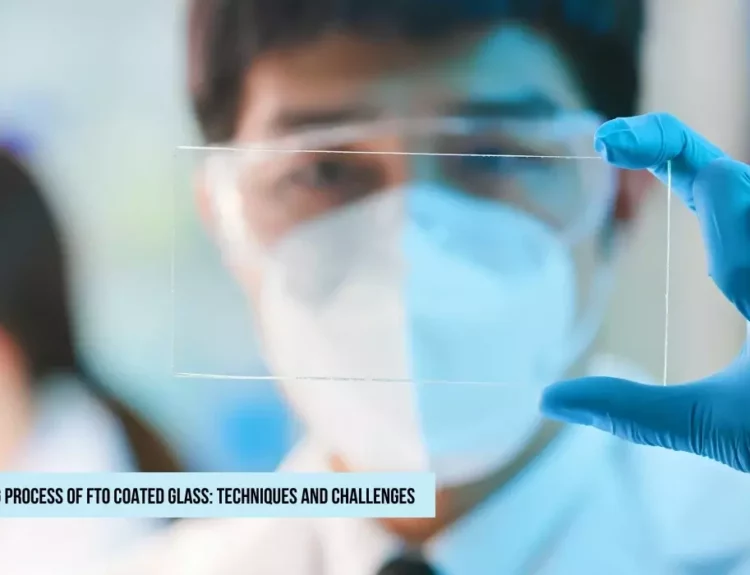
FTO Coated Glass is a specially manufactured glass substrate coated with a thin layer of fluorine-doped tin oxide (SnO₂). The fluorine doping increases the electrical conductivity of the tin oxide layer while maintaining high transparency in the visible light spectrum.
Unlike conventional glass, FTO glass can conduct electricity across its surface without significantly obstructing light transmission. This unique combination makes it suitable for applications that require transparent electrodes.
How FTO Coated Glass is Manufactured
The conductive coating is typically deposited onto float glass using a high-temperature chemical vapor deposition (CVD) process. During manufacturing, fluorine atoms are introduced into the tin oxide structure, enhancing its conductivity.
The resulting coating is:
- Uniform and durable
- Highly transparent
- Electrically conductive
- Resistant to high temperatures
- Chemically stable under various operating conditions
The coating becomes permanently bonded to the glass surface, ensuring long-term performance and reliability.
Key Features of FTO Coated Glass
Excellent Electrical Conductivity
FTO glass provides low sheet resistance, allowing efficient movement of electrical charges across the surface.
High Optical Transparency
The material allows a large percentage of visible light to pass through, making it ideal for optoelectronic devices and solar technologies.
Superior Thermal Stability
Unlike some conductive coatings, FTO remains stable at elevated temperatures, making it suitable for processes involving heat treatment and high-temperature fabrication.
Strong Chemical Resistance
FTO-coated glass exhibits excellent resistance to moisture, solvents, and many chemicals commonly used in laboratories and manufacturing environments.
Durable Coating
The conductive layer is mechanically robust and strongly adhered to the glass substrate, reducing the risk of coating degradation.
Typical Specifications
Although specifications vary by manufacturer, FTO-coated glass generally offers:
| Parameter | Typical Value |
| Sheet Resistance | 7–15 Ω/sq |
| Light Transmission | 80–85% |
| Thickness | 1.1 mm – 3 mm |
| Surface Finish | Smooth Conductive Coating |
| Conductive Layer | Fluorine-Doped Tin Oxide |
| Operating Temperature | High Temperature Resistant |
Applications of FTO Coated Glass
Solar Cells
FTO glass is extensively used in photovoltaic technologies, including:
- Dye-Sensitized Solar Cells (DSSC)
- Perovskite Solar Cells
- Thin-Film Solar Cells
Its transparency allows sunlight to reach the active layer while simultaneously collecting electrical current.
Electrochemical Research
Researchers frequently use FTO glass as a conductive substrate for:
- Electrochemical sensors
- Electrode fabrication
- Corrosion studies
- Energy storage research
Smart Windows
FTO-coated glass plays a vital role in smart window technologies that regulate light transmission and energy efficiency in buildings.
Thin Film Deposition
Many laboratories use FTO substrates for depositing nanomaterials, metal oxides, semiconductors, and catalytic coatings.
Gas Sensors
The conductive and stable surface of FTO glass makes it suitable for developing advanced gas-sensing devices.
Display Technologies
Transparent conductive electrodes are essential components in various display and touch-screen applications.
FTO Glass vs ITO Glass
FTO and ITO (Indium Tin Oxide) are both transparent conductive materials, but they differ in several ways.
| Property | FTO Glass | ITO Glass |
| Conductivity | Good | Excellent |
| Temperature Resistance | Higher | Lower |
| Chemical Stability | Excellent | Good |
| Cost | Lower | Higher |
| Durability | High | Moderate |
| Research Applications | Extensive | Extensive |
For applications involving high-temperature processing, FTO glass is often preferred because of its superior thermal stability.
Advantages of Using FTO Coated Glass
- High transparency and conductivity
- Excellent thermal resistance
- Long operational life
- Strong adhesion of conductive coating
- Suitable for research and industrial applications
- Cost-effective alternative to some conductive materials
- Reliable performance under demanding conditions
Handling and Storage Recommendations
To maintain the quality of FTO-coated glass:
- Handle using gloves to avoid fingerprints.
- Store in a clean, dry environment.
- Avoid scratching the conductive surface.
- Clean with suitable laboratory-grade solvents when necessary.
- Protect from mechanical impact during transportation and storage.
Future Outlook
As renewable energy technologies and advanced electronics continue to grow, demand for transparent conductive materials is increasing rapidly. FTO-coated glass remains a critical component in emerging technologies such as next-generation solar cells, transparent electronics, smart devices, and advanced sensors.
Continuous improvements in coating technology are expected to enhance conductivity, transparency, and durability, further expanding the range of applications for FTO coated glass.
Conclusion
FTO Coated Glass is a highly versatile transparent conductive material that combines optical clarity, electrical conductivity, thermal stability, and chemical resistance. Its widespread use in solar cells, electrochemical research, sensors, smart windows, and thin-film technologies demonstrates its importance in modern scientific and industrial applications.
With its balance of performance, durability, and affordability, FTO-coated glass continues to be a preferred substrate for researchers, engineers, and manufacturers developing innovative technologies for the future.