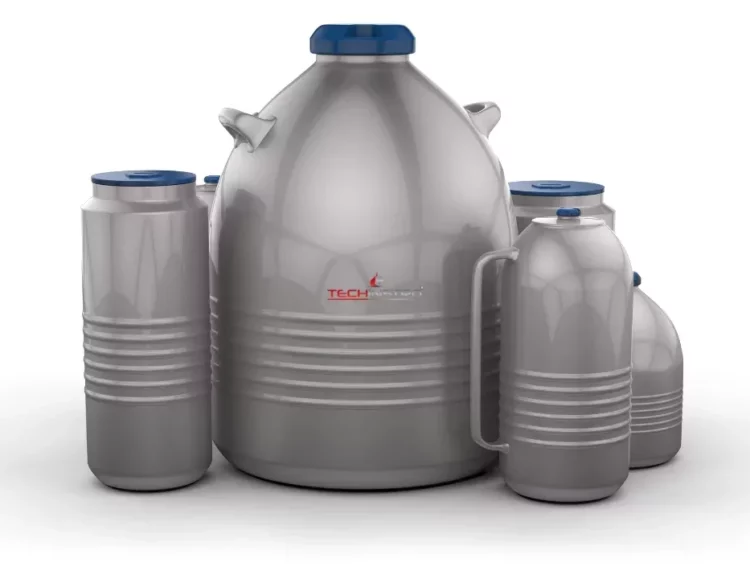



A Dewar flask may look like a simple laboratory container. Still, its real purpose is much more important: to control heat transfer when working with very cold or very hot materials. In research centers, where temperature stability can directly influence experimental results, a Dewar flask provides a practical way to maintain the temperature of stored materials for longer periods.
From cryogenic experiments to sample preservation and low-temperature chemical studies, Dewar flasks are widely used wherever thermal insulation is essential.
What Is a Dewar Flask?
A Dewar flask is a specially insulated vessel designed to minimize heat exchange between its contents and the surrounding environment. It typically consists of an inner vessel surrounded by an insulating space, often incorporating a vacuum between the walls.
The reduced heat transfer helps maintain the temperature of the material inside the flask.
Depending on the design, a Dewar flask can be used for:
- Liquid nitrogen storage and handling
- Cryogenic sample work
- Low-temperature experiments
- Cold-trap applications
- Laboratory cooling
- Chemical and materials research
- Temperature-sensitive sample handling
Why Dewar Flasks Are Important in Research Centers
Research experiments often require controlled temperature conditions. Even a small temperature change can affect reaction rates, material properties, sample stability, or measurement results.
A Dewar flask helps researchers reduce unwanted heat exchange and maintain the desired temperature for longer.
This is particularly valuable in cryogenic research, where substances such as liquid nitrogen must be kept at extremely low temperatures.
Working Principle of a Dewar Flask
The basic concept behind a Dewar flask is to reduce the three primary methods of heat transfer:
Conduction → Convection → Radiation
The insulated or vacuum space between the walls significantly reduces heat transfer through conduction and convection. Some designs also use reflective surfaces or specialized materials to reduce radiative heat transfer.
As a result, the contents remain closer to their original temperature for longer.
Dewar Flask for Cryogenic Research
One of the most common research applications of Dewar flasks is handling cryogenic liquids.
Liquid nitrogen, for example, has a boiling point of approximately −196°C at atmospheric pressure. When exposed to the warmer laboratory environment, it naturally absorbs heat and gradually evaporates.
A properly designed Dewar flask reduces this heat transfer and therefore helps minimize the rate of evaporation.
Research centers may use cryogenic Dewars for:
- Sample cooling
- Biological material preservation
- Materials research
- Cryogenic experiments
- Cooling during laboratory procedures
- Low-temperature reaction studies
Applications in Research Laboratories
- Sample Preservation
Certain biological and scientific samples need to be maintained at very low temperatures. Dewar flasks can provide temporary cryogenic storage or facilitate the transfer and handling of cryogenic materials used for preservation.
Researchers can use appropriately designed vessels to maintain suitable conditions during laboratory workflows.
- Materials Science Research
Low temperatures can dramatically change materials’ physical properties. Researchers may investigate conductivity, mechanical behavior, phase transitions, magnetic properties, or other characteristics at cryogenic temperatures.
A Dewar flask can provide an insulated environment for cryogenic experiments.
- Chemical Research
Some chemical experiments require controlled cooling or cryogenic liquids. Dewar flasks can contain cooling media and support low-temperature experimental setups.
Their insulated construction helps reduce unnecessary temperature fluctuations.
- Cold-Trap Applications
Dewar vessels can also be incorporated into laboratory cold-trap systems. By maintaining a low-temperature environment, they can help condense or capture vapors during processes such as vacuum operations, solvent recovery, or specialized chemical experiments.
- Physics and Cryogenic Research
Research involving superconductivity, low-temperature physics, detector development, and other cryogenic technologies may require reliable thermal insulation.
In such environments, Dewar technology becomes an important part of the experimental setup.
Safe Handling in Research Centers
Cryogenic Dewars require careful handling. Researchers should use appropriate personal protective equipment and follow laboratory safety procedures.
When working with liquid nitrogen or other cryogenic substances, particular attention should be given to:
- Avoiding direct skin contact
- Using suitable cryogenic gloves and face protection
- Maintaining adequate ventilation
- Avoiding sealed containers for cryogenic liquids
- Inspecting the Dewar for damage before use
- Handling and transferring cryogens carefully
Adequate ventilation is especially important because evaporating cryogenic liquids can displace oxygen in poorly ventilated areas.
Choosing the Right Dewar for Research
The best Dewar flask depends on the specific experimental requirement. A small laboratory Dewar may be sufficient for short-duration cooling experiments, while a larger vessel may be more appropriate for repeated cryogenic operations.
Before selecting a vessel, research teams should consider:
What material will be stored?
What temperature is required?
How long must the temperature be maintained?
How frequently will the vessel be opened?
What capacity is required?
How will the material be transferred?
Answering these questions helps ensure that the selected Dewar is suitable for the intended laboratory application.
Conclusion
A Dewar flask is a fundamental piece of equipment for research environments where temperature control and thermal insulation matter. Its ability to reduce heat transfer makes it particularly valuable for cryogenic liquids, low-temperature experiments, sample handling, cold traps, and materials research.
For a research center, a Dewar flask’s value goes beyond simple storage. It supports the controlled movement and use of temperature-sensitive materials while helping researchers maintain more consistent experimental conditions.
Whether used for liquid nitrogen, cryogenic sample handling, or specialized low-temperature experiments, a properly selected Dewar flask can become an essential component of a reliable laboratory research setup.