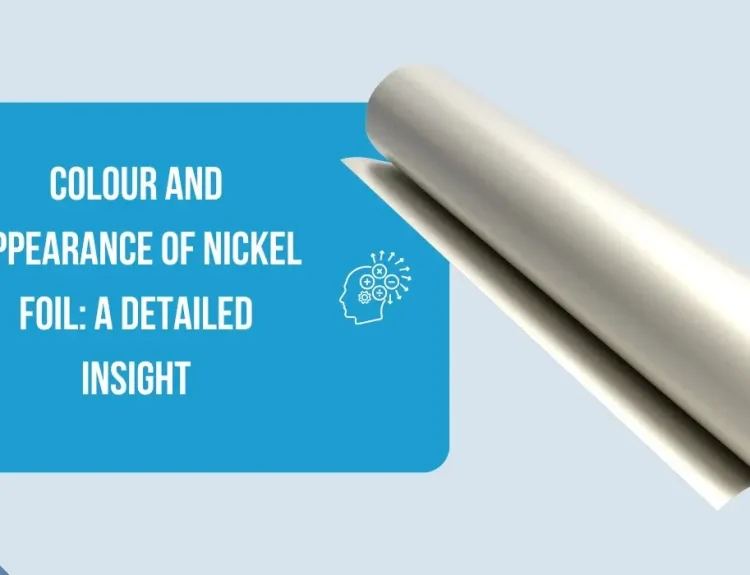



What Is Lithium Foil?
Lithium foil is produced by forming metallic lithium into a thin, relatively uniform sheet. Researchers select its thickness, dimensions, purity and surface condition according to the requirements of a particular electrochemical or materials-science application.
Because metallic lithium reacts readily with moisture and air, the foil is normally supplied in protective packaging. Product specifications commonly include:
- Lithium purity
- Foil thickness
- Foil width and length
- Surface condition
- Dimensional uniformity
- Packaging and storage requirements
These characteristics are important when experiments require repeatable electrode dimensions, controlled lithium quantities or consistent interfacial conditions.
Why Is Lithium Foil Important in Research?
Lithium has a very low atomic mass and a highly negative standard electrode potential. These properties make metallic lithium especially important in electrochemical and high-specific-energy battery research.
Lithium foil is commonly associated with research involving:
- Lithium-ion battery materials
- Lithium-metal batteries
- Solid-state batteries
- Electrochemical cells
- Energy-storage materials
- Electrode-electrolyte interfaces
- Advanced electrode materials
For research teams, foil provides a convenient and well-defined source of metallic lithium for laboratory-scale experiments.
Lithium Foil in Battery Research
Battery research is one of the most important uses of lithium foil. Depending on the experimental cell design, the foil may function as an active electrode or as a counter/reference electrode. This allows researchers to evaluate the electrochemical behavior of another electrode material under controlled conditions.
For example, a team developing a cathode or anode material may assemble a laboratory half-cell using lithium metal and evaluate:
- Charge-discharge behavior
- Specific capacity
- Cycling stability
- Voltage characteristics
- Interfacial behavior
- Coulombic efficiency
This approach makes lithium foil valuable during the early stages of battery-material screening and development. Results from a lithium half-cell, however, should be interpreted within the limits of that test configuration and should not automatically be treated as full-cell performance.
Applications in Lithium-Metal Battery Research
Lithium-metal batteries are an active area of advanced energy-storage research. Unlike conventional lithium-ion cell configurations that store lithium within a host material at the negative electrode, lithium-metal systems investigate metallic lithium as an active electrode.
Research centers may use lithium foil to study:
- Lithium deposition and stripping
- Dendrite formation and growth
- Solid-electrolyte interphase behavior
- Electrolyte compatibility
- Coulombic efficiency
- Cycle life and degradation
- Separator and interface stability
These studies help researchers understand the performance, reliability and safety challenges associated with lithium-metal battery systems.
Role in Solid-State Battery Research
Solid-state batteries use solid electrolyte materials in place of, or alongside, conventional liquid electrolytes. Lithium foil can be incorporated into laboratory cells to evaluate interactions between metallic lithium and a solid electrolyte.
Researchers may investigate the lithium-solid-electrolyte interface and examine how pressure, temperature, surface preparation, current density and electrolyte composition influence cell behavior. These experiments contribute to the development of next-generation energy-storage technologies.
Lithium Foil for Materials-Science Research
Lithium foil is not limited to battery testing. It may also serve as a lithium source in controlled materials-science experiments. Researchers can investigate lithium’s interaction with different materials and monitor changes in:
- Crystal structure
- Surface chemistry
- Electrochemical properties
- Phase composition
- Electrical behavior
- Interfacial characteristics
Such work can support the development of new electrode materials, protective interlayers, electrolytes and electrochemical systems.
Why Lithium Foil Thickness Matters
Foil thickness is an important experimental parameter. Consistent thickness helps researchers control the geometry and quantity of lithium incorporated into a cell. It may also influence excess-lithium inventory, cell pressure, handling and the interpretation of cycling results.
Different projects require different thicknesses according to cell format, test objectives and electrochemical conditions. Researchers should therefore select lithium foil thickness as a functional parameter rather than treating it as a purely dimensional specification.
Why Surface Condition Affects Results
The surface condition of lithium foil can significantly influence experimental results. Metallic lithium reacts with its surrounding environment, forming surface layers that can affect interfacial resistance, wetting and electrochemical behavior.
Relevant factors include:
- Surface cleanliness
- Oxide or reaction-layer formation
- Handling environment
- Storage duration and history
- Surface-preparation method
Documented, consistent handling and preparation procedures can improve reproducibility when comparing experimental results.
Lithium Foil in Laboratory Cell Assembly
A simplified research workflow may follow this sequence:
Lithium foil → Electrode preparation → Cell assembly → Electrochemical testing → Data analysis
Trained researchers may prepare foil to the required dimensions and incorporate it into an experimental cell under controlled conditions. The exact procedure depends on the electrode materials, electrolyte, separator, cell format and research objective.
Because lithium metal is highly reactive, all preparation and assembly work must follow the laboratory’s approved procedure, the supplier’s safety data sheet and the controls identified in the project’s risk assessment.
Key Parameters for Selecting Lithium Foil
| Parameter | Why It Matters |
| Purity | Helps maintain experimental consistency |
| Thickness | Determines electrode dimensions and lithium quantity |
| Size | Must match the experimental cell design |
| Surface condition | Can influence interfacial behavior |
| Packaging | Protects reactive lithium during storage |
| Handling requirements | Important for laboratory safety |
- Electrochemical cells
- Energy-storage materials
- Battery interfaces
- Advanced electrode materials
For researchers, lithium foil provides a convenient and well-defined metallic lithium source for laboratory-scale experiments.
Safe Handling and Storage of Lithium Foil
Lithium foil is a reactive laboratory material and must not be handled like an ordinary metal foil. Contact with water or moisture can produce heat, flammable hydrogen and corrosive reaction products. Only trained personnel using suitable facilities and an approved procedure should handle it.
General safety considerations include:
- Review the current supplier safety data sheet before use.
- Protect the material from water, moisture and unnecessary air exposure.
- Use the engineering controls, tools and personal protective equipment required by the laboratory risk assessment.
- Store the foil in its compatible protective packaging and under the conditions specified by the supplier.
- Segregate lithium from incompatible materials.
- Use an approved Class D extinguishing medium and emergency procedure appropriate for lithium-metal fires; never apply water.
- Collect and dispose of lithium-containing waste through an approved hazardous-waste process.
Local regulations and institutional procedures take precedence. Researchers should consult their laboratory safety officer when defining storage, handling, spill-response and waste-management controls.
Why Lithium Foil Is Valuable for R&D
The principal advantage of lithium foil in a research environment is experimental control. A defined metallic lithium surface can be integrated into laboratory-scale electrochemical systems, helping researchers compare variables such as:
- Electrolyte formulations
- Cathode and anode materials
- Solid electrolytes
- Separators
- Protective coatings and surface treatments
- Cell configurations and operating conditions
Instead of immediately developing a complete commercial battery, research teams can use controlled laboratory experiments to isolate and understand individual material interactions.
From Laboratory Research to Energy Technology
Many energy-storage developments begin with small laboratory cells. At this early stage, lithium foil provides a consistent metallic lithium component for electrochemical testing. Data from these experiments can support improvements in battery materials, interfaces, cell architectures and, after extensive validation, larger-scale energy-storage technologies.
Frequently Asked Questions
What is lithium foil used for in battery research?
Lithium foil may be used as an active lithium-metal electrode or as a counter/reference electrode in laboratory cells. Researchers use it to study new electrode materials, electrolytes, interfaces and cell configurations.
Why is lithium foil used in half-cell testing?
In many laboratory half-cells, lithium metal supplies lithium ions while acting as a counter/reference electrode. This configuration helps researchers examine the behavior of another electrode material, although its results do not directly represent full-cell performance.
How should lithium foil thickness be selected?
Thickness should be matched to the cell format, desired lithium inventory, test duration, mechanical constraints and research objective. The supplier’s tolerances and the laboratory’s preparation capabilities should also be considered.
Why must lithium foil be protected from moisture?
Metallic lithium reacts with water and moisture, potentially generating heat, flammable hydrogen and corrosive products. Suitable protective packaging, controlled handling and approved storage procedures are therefore essential.
What specifications should be checked before purchasing lithium foil?
Researchers should review purity, thickness and tolerance, width and length, surface condition, packaging, storage requirements and the supplier’s safety documentation.
Conclusion
Lithium foil is a specialized research material that gives laboratories a practical form of metallic lithium for controlled electrochemical and materials-science experiments. It is particularly valuable in battery-material testing, lithium-metal systems, solid-state batteries and advanced energy-storage research.
For research centers, lithium foil offers more than a conductive metal surface. It provides a defined material platform for investigating lithium behavior, electrode interfaces, electrolyte compatibility and next-generation battery concepts.
As energy-storage research continues to target higher specific energy, longer cycle life and safer cell architectures, lithium foil will remain an important laboratory material for exploring the fundamental science behind these technologies.