
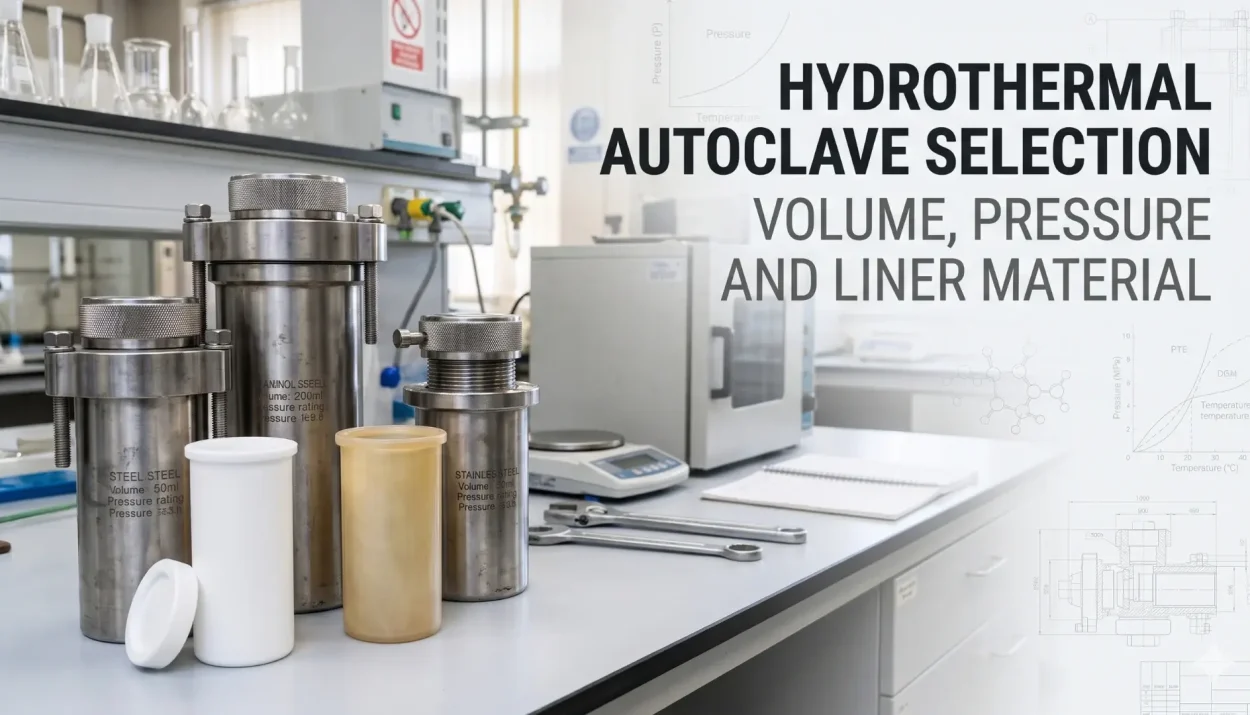
Hydrothermal autoclaves are essential tools for synthesizing nanomaterials, zeolites, and crystals under high-temperature, high-pressure conditions. With dozens of models available, choosing the right one comes down to three core factors: the volume your application needs, the pressure and temperature the reaction demands, and the liner material that can withstand the chemicals involved. The right size, liner material, pressure, and temperature ratings are essential for safe, reliable hydrothermal reactions. The wrong choice may cause poor reaction results, sample contamination, or equipment failure.
What Size Autoclave Is Right for the Application?
Autoclave volume should match the reaction scale, not the lab budget. Pick a size based on future needs, not just the current project. This can save the cost of buying a second unit later. The table below shows common volume ranges and their uses.
| Volume Range | Typical Use | Best Suited For |
| 25 mL – 100 mL | Small test batches while a method is still being worked out | Research labs |
| 200 mL – 500 mL | Larger sample yields, repeated runs | Labs that need steady, repeatable results |
| 1000 mL and above | Bulk production and scale-up trials | Industrial and pilot-scale work |
Do not fill the vessel past 80% of its rated capacity. This leaves room for the liquid to expand as heat and pressure rise, so the vessel is less likely to overpressure or be damaged.
What Pressure and Temperature Ratings Are Required?
Pressure and temperature ratings decide which reactions a vessel can safely handle. Every buyer should check both the working pressure and working temperature limits before choosing a unit. The working pressure is the pressure limit specified for routine operation, while the maximum or safety limit is the upper limit that should not be exceeded during use.
Temperature rating and temperature control are also different. The temperature rating is the maximum temperature the vessel and liner are designed to withstand. Temperature control refers to how accurately the heating system or controller maintains the selected reaction temperature.
| Rating Type | Common Range | What It Affects |
| Working Pressure | Up to 200 bar (standard models) | Sets the safe upper limit for routine use |
| High-Pressure Models | 200–350 bar or higher | Required for demanding zeolite and nanomaterial synthesis. |
| Working Temperature | Up to 220°C (standard PTFE-lined units) | Limits how hot the reaction can run without damaging the liner |
| High-Temperature Models | 250°C and above (metal or specialty liners) | Required for reactions that need higher thermal energy |
Pressure and temperature ratings vary across hydrothermal autoclaves. For example, manufacturer specifications for PTFE-lined models commonly list working pressures around 3 MPa. PTFE temperature ratings also vary by design, with some models specified at 200°C and others at 220°C or higher. Some specialty liners such as PPL are specified for higher temperatures. Always check the exact manufacturer’s specifications for the selected model.
Which Liner Material Is Best for the Reaction?
The liner protects the vessel from the chemicals inside it, so the right choice depends entirely on what the reaction involves. PTFE, often known as Teflon, is the most common option and works well for acids, bases, and general hydrothermal synthesis. However, its temperature limit depends on the specific autoclave and manufacturer. Many PTFE-lined hydrothermal vessels are rated around 200–220°C, while some models are specified differently.
Polypropylene-lined vessels offer higher temperature resistance than standard PTFE and are used for higher-temperature applications, around 260–280°C. However, you still need to check chemical compatibility for the specific reaction.
Stainless steel liners suit high-temperature and high-pressure reactions, but only with chemicals that are compatible with the specific stainless steel grade, since strong acids can damage the metal over time. Parr Instrument Company, for example, notes that stainless steel can corrode under certain acid or alkaline hydrothermal conditions and uses PTFE to protect the sample environment in those applications.
Graphite liners resist high temperatures and chemicals but can break easily. Choose a liner that suits your chemicals, operating temperature, and pressure limits to avoid failed reactions or equipment damage.
Features and Safety Checks Before You Buy
Features and safety checks that affect day-to-day performance are listed below:
- Sealing mechanism: A good seal stops leaks and keeps pressure in control during long reactions.
- Heating method: Some autoclaves use an outside oven. Others have built-in heating. Choose what best fits your lab setup.
- Temperature control: Look for a digital controller. It helps keep the reaction at a steady, exact temperature. This is different from the temperature rating, which specifies the maximum temperature the vessel and liner can safely withstand.
- Safety relief valve: This automatically releases excess pressure. It lowers the risk of an accident if pressure gets too high.
- Outer body quality: Stainless steel bodies last longer and resist rust better than cheaper metals.
- Cleaning: A removable liner makes cleaning quick and lowers the risk of contamination between uses.
- Warranty and support: A good warranty and easy access to support can save money on repairs later.
- Safety certification and testing: Before choosing an autoclave, check whether it has been tested and certified according to recognized safety standards. Also, look at the manufacturer’s safety information and testing records.
Before buying, review the product specifications and manufacturer’s safety information as provided by the supplier.
Planning the Budget for a Hydrothermal Autoclave
Price mostly comes down to three things: size, pressure rating, and liner material. Working out a rough budget before you start shopping makes it easier to avoid paying for features you don’t actually need.
- A small lab unit, around 25–100 mL with a standard PTFE liner, costs the least and works fine for basic research or early testing.
- Mid-size units in the 200–500 mL range cost a bit more, but they hold up well for labs that run the same test repeatedly.
- As pressure and temperature requirements increase, autoclave prices also go up. This is mainly because high-pressure and high-temperature units need stronger materials and better safety features.
- Special liners such as graphite or stainless steel also add to the cost, though they are worth it for reactions that need strong chemical resistance.
- Digital controls, safety features, and extended warranties may increase the initial cost but can reduce future repair expenses.
Key Takeaways
Before buying a hydrothermal autoclave, check the vessel size, working pressure, temperature range, and liner type. These should suit the reactions you plan to carry out. A poor match can affect test results and may damage the equipment. Price is only one part of the decision. Check the build quality, safety features, and materials used. The right autoclave for your lab can help reduce equipment problems, avoid wasted samples, and keep experiments running smoothly. Need a hydrothermal autoclave built for your lab’s exact needs? Visit Shilpent to explore autoclaves built for safety, durability, and reliable performance.