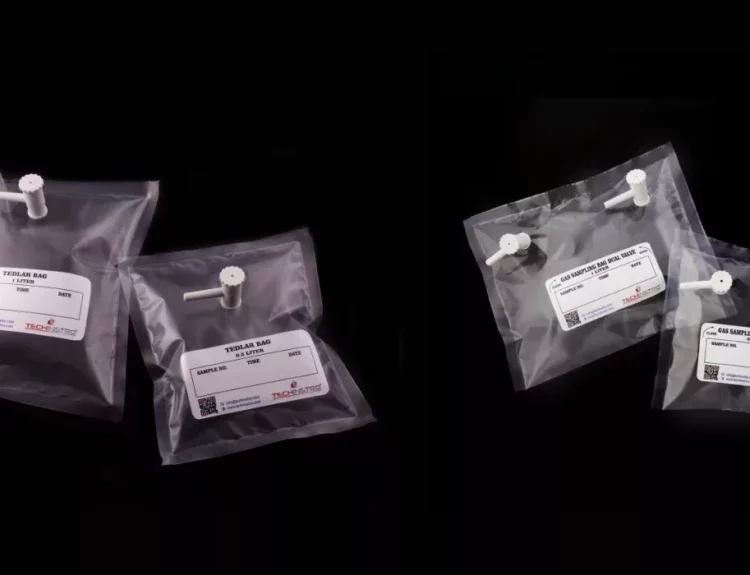


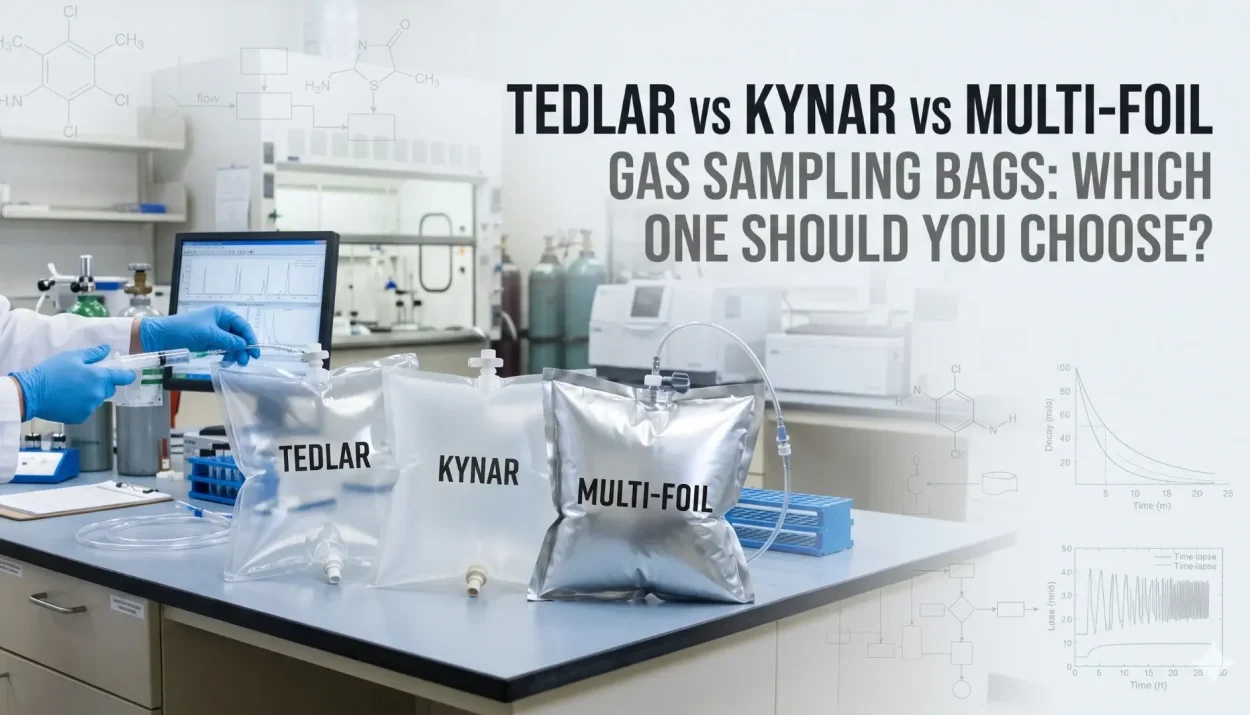
The quality of a gas analysis depends heavily on the quality of the sample collected. Between collection and analysis, the sampling bag can affect how well it preserves the sample. Gas can slowly pass through the bag substrate; some compounds may interact with the inner surface, and storage conditions can also affect the sample. This is why choosing the right gas sampling bag matters.
Tedlar, Kynar, and Multi-Foil are three commonly used gas sampling bags. Each has a different construction and offers specific benefits. The right choice depends on the gas being collected, chemical compatibility, storage time, and the level of sample protection required.
Shilpent supplies all three types, so customers can choose the bag that best fits their sampling requirements.
Tedlar vs Kynar vs Multi-Foil: At a Glance
The simplest way to understand the difference is to look at the material and its main strength.
| Feature | Tedlar | Kynar | Multi-Foil |
| Material | Fluoropolymer film | PVDF film | Multi-layer film with foil barrier |
| Flexibility | High | High | Moderate |
| Chemical resistance | Good | High | Depends on inner layer |
| Barrier performance | Good | Good | Very high |
| Moisture protection | Moderate | Moderate | Strong |
| Benefits | General-purpose sampling | Chemical resistance | Strong sample retention |
| Limitation | Permeation during extended storage | Higher cost | Requires careful handling |
These differences do not make one bag universally better than the others. But each material suits different sampling needs.
Tedlar: A Good Choice for Routine Sampling
Tedlar bags are widely used for general gas sampling because they are flexible, easy to handle, and suitable for many routine applications. They can be considered for environmental monitoring, air-quality testing, odor sampling, workplace monitoring, and industrial gas sampling. One advantage of Tedlar is its flexibility. The clear film also makes it easier to observe the approximate fill level and any visible condensation inside the bag.
- Tedlar is a suitable option when:
- The application involves routine gas sampling.
- The sample will be analyzed within a controlled period.
- Easy handling is important.
- The gas is compatible with the bag material.
- A general-purpose sampling bag is required.
However, Tedlar is not an unlimited barrier. Some gases can slowly permeate through the film, particularly during longer storage. Certain compounds can also interact with the bag surface. For low-level or sensitive analysis, proper bag preparation and blank testing can therefore be important.
Kynar: When Chemical Resistance Matters
Kynar bags are often used in applications where the gas may react with or affect the bag material. Made from PVDF film, they are a good option for samples that require strong chemical resistance. Compared with a general-purpose bag, they can be useful for more chemically complex samples and applications where the gas may interact with the bag material.
Kynar can be considered for:
- Chemically demanding gas samples
- Applications requiring higher chemical resistance
- Trace-level sampling
- Samples where material interaction is a concern
- Applications requiring a flexible and durable bag
Kynar is still a single-film construction. Therefore, if the main concern is very low permeability and longer retention of certain gases, a Multi-Foil bag may be a more suitable option.
Multi-Foil: For Stronger Barrier Protection
Multi-Foil bags have a multi-layer construction that includes a foil barrier. This gives them stronger resistance to gas and moisture movement compared with single-film bags. They help keep samples stable and uncontaminated during storage or transport.
Multi-Foil bags can be considered for:
- Permanent gases
- Moisture-sensitive samples
- Samples requiring stronger barrier protection
- Longer storage or transportation
- Applications where light protection is important
However, Multi-Foil bags need careful handling. Sharp folds and excessive creasing can damage the barrier layers and potentially lead to leaks. They should therefore be handled and stored carefully. Another important point is chemical compatibility. Because the gas contacts the inner polymer layer, the inner material should be suitable for the sample being collected.
Which Gas Sampling Bag Should You Choose?
The choice becomes easier when you start with the actual sampling requirement.
| Application requirement | Bag | Main reason |
| Routine gas sampling | Tedlar | Flexible and suitable for general applications |
| General environmental sampling | Tedlar | Easy to handle and widely used |
| Chemically demanding samples | Kynar | Higher chemical resistance |
| Trace-level applications | Kynar | Suitable when material contact may affect the sample |
| Permanent gases | Multi-Foil | Strong barrier performance |
| Longer storage | Multi-Foil | Helps reduce gas movement |
| Moisture-sensitive samples | Multi-Foil | Stronger moisture barrier |
| Light-sensitive samples | Multi-Foil | Opaque construction |
Always consider the actual gas composition, concentration, temperature, storage time, and analytical method before making a final selection.
Four Factors to Consider Before Buying a Gas Sampling Bag
Gas Composition
Start by identifying what you are collecting. Different gases and compounds can behave differently when stored in a polymer bag. If chemical compatibility is the main concern, Kynar may be worth considering. If gas retention is the priority, Multi-Foil may be a better fit.
Storage Time
A sample that goes to the laboratory shortly after collection has different requirements from one that must be transported and stored for several days.
As storage time increases, permeation and other interactions can become more important. For longer storage, stronger barrier protection may be useful.
Required Detection Level
For trace-level testing, even small amounts of contamination or sample loss can affect the result.
If the analysis requires very low detection limits, pay close attention to bag cleanliness, material compatibility, sample preparation, and storage conditions.
Testing Method
Always check the applicable laboratory, environmental, customer, or regulatory method before selecting a bag.
If a particular method specifies a sampling material or holding condition, those requirements should take priority.
Handling Tips
Using the correct material matters, but proper handling matters just as much.
- Prepare bags according to the sampling method.
- Keep bags away from heat and direct sunlight.
- Test samples as soon as possible after collection.
- Check bags for leaks or damage before use.
- Clean reused bags and test them for leftover gas.
- Handle Multi-Foil bags carefully to avoid damaging the foil layer.
For trace-level applications, fresh bags may be preferable where cross-contamination could affect the result.
Conclusion
Tedlar, Kynar, and Multi-Foil gas sampling bags each help with different sampling needs. Tedlar suits routine sampling, Kynar is worth considering when chemical resistance matters, and Multi-Foil offers stronger barrier protection for samples that need better retention during storage or transport. Before choosing a bag, check the gas type, material compatibility, storage time, and testing method.
Shilpent supplies Tedlar, Kynar, and Multi-Foil gas sampling bags to meet different sampling requirements. Contact us to find a suitable bag for your application.