

Imagine investing months in designing an experiment, collecting field data, and preparing samples for analysis—only to discover that the results are unreliable because the gas sample changed before it reached the laboratory.
In gas analysis, accuracy doesn’t begin with the analytical instrument. It begins the moment the sample is collected.
Whether monitoring urban air pollution, studying industrial emissions, evaluating indoor air quality, or conducting advanced research in environmental science, the integrity of a gas sample determines the reliability of every conclusion drawn from it. This is why scientists and laboratories around the world trust Tedlar Bags—not simply as storage containers, but as guardians of sample integrity.
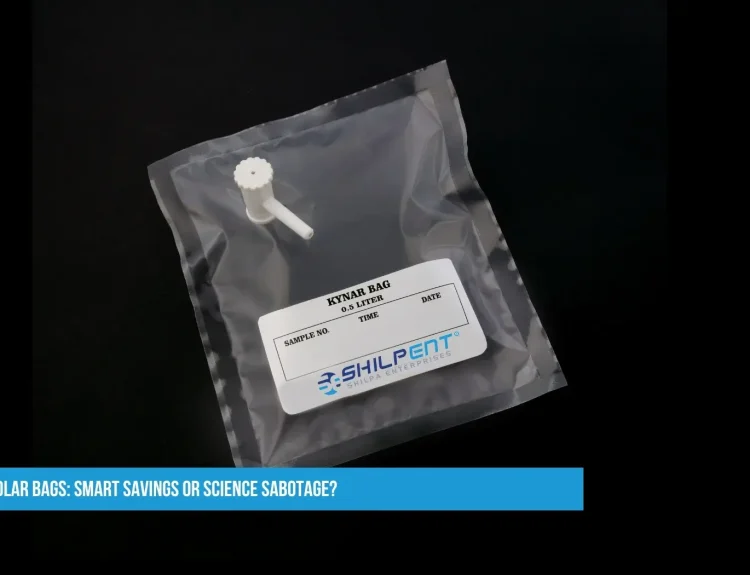
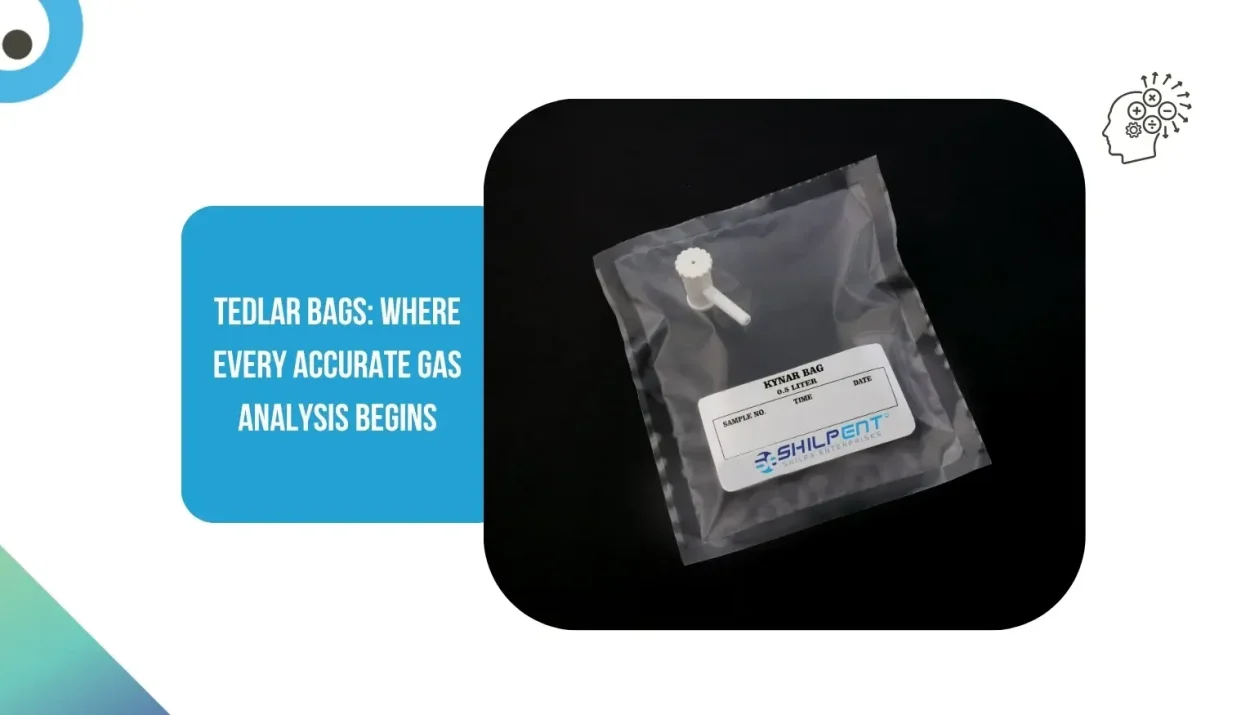
Designed specifically for collecting, transporting, and temporarily storing gas samples, Tedlar bags have become one of the most reliable tools in analytical science. Their ability to preserve the original composition of gases has made them indispensable across research laboratories, environmental monitoring agencies, industrial facilities, and quality control laboratories.
More Than a Sampling Bag
At first glance, a Tedlar bag appears to be a simple flexible container. However, behind its lightweight design lies decades of engineering focused on one objective—preserving gas samples as accurately as possible.
Manufactured from polyvinyl fluoride (PVF) film, Tedlar bags are specifically developed to minimize contamination, reduce gas permeability, and resist chemical interactions that could alter the composition of collected samples.
Unlike ordinary plastic containers that may absorb gases or release contaminants, Tedlar bags are engineered to maintain the integrity of air and gas samples until they are analyzed with sophisticated laboratory instruments such as gas chromatographs, mass spectrometers, and environmental analyzers.
Why Sample Integrity Matters
Every gas sample represents a moment in time.
The concentration of pollutants in factory emissions, the composition of indoor air in a hospital, the gases released during a chemical reaction, or the atmospheric conditions during an environmental survey all exist only at the instant the sample is collected.
If oxygen enters the container, volatile compounds escape, moisture alters the chemistry, or contaminants are introduced during transportation, the laboratory no longer analyses the original sample—it analyses a modified version.
This can lead to inaccurate conclusions, failed experiments, regulatory non-compliance, or costly repetition of fieldwork.
Tedlar bags are designed to reduce these risks, allowing researchers to focus on analyzing data rather than questioning sample quality.
Why Researchers Continue to Choose Tedlar Bag
Scientific research demands consistency. Across universities, environmental laboratories, and industrial R&D centers, Tedlar bags have earned a reputation for dependable performance.
Reliable Chemical Compatibility
Tedlar film is compatible with a wide range of gases used in environmental, industrial, and research applications. Its chemical resistance helps preserve sample composition during temporary storage.
Low Background Contamination
Sensitive analytical techniques often detect compounds at extremely low concentrations. Tedlar bags are valued for their minimal background interference, which helps researchers obtain cleaner analytical results.
Lightweight and Field-Friendly
Environmental scientists frequently collect dozens of samples during a single field campaign. Tedlar bags are lightweight, portable, and easy to transport, making them ideal for on-site sampling in remote or industrial locations.
Flexible Sampling Solution
Available in multiple capacities and valve configurations, Tedlar bags adapt to diverse laboratory protocols and sampling systems, from small-scale research projects to industrial monitoring programs.
Applications Across Scientific Research
Environmental Monitoring
Researchers use Tedlar bags to investigate outdoor and indoor air quality, atmospheric pollutants, greenhouse gases, and industrial emissions. The collected samples provide valuable insights into environmental health and pollution control.
Volatile Organic Compound (VOC) Studies
Many laboratories analyze volatile organic compounds to understand air pollution, industrial processes, and occupational exposure. Tedlar bags help preserve these samples before analysis by gas chromatography or mass spectrometry.
Industrial Hygiene
Monitoring workplace air quality is essential for protecting employee health. Tedlar bags are widely used to collect breathing-zone air samples and evaluate exposure to potentially hazardous gases.
Process and Emission Monitoring
Manufacturing facilities rely on accurate gas sampling to optimize production, improve efficiency, and comply with environmental regulations. Tedlar bags provide a practical solution for collecting process gases and stack emissions.
Academic Research
Universities use Tedlar bags in studies involving atmospheric chemistry, combustion science, catalytic reactions, hydrogen technologies, carbon capture, and renewable energy systems.
In each case, the reliability of the research depends on preserving the original composition of the collected gas.
Selecting the Right Tedlar Bag
Choosing the appropriate sampling bag involves more than selecting a size.
Researchers should consider:
- Sample volume requirements
- Gas compatibility
- Valve configuration
- Sampling method
- Expected storage duration
- Instrument compatibility
- Environmental conditions during transport
Selecting the correct Tedlar bag helps reduce sampling errors and improves the overall quality of analytical data.
Best Practices for Accurate Gas Sampling
Even the highest-quality sampling bag performs best when used correctly.
Laboratory professionals recommend:
- Conditioning new bags before critical applications when required.
- Avoiding overfilling to reduce stress on seams and valves.
- Protecting bags from sharp objects and excessive pressure.
- Clearly labeling each sample immediately after collection.
- Storing samples away from direct sunlight and high temperatures.
- Performing analysis as soon as practical after sampling.
- Inspecting valves and fittings before every use.
Following these practices helps maximize sample integrity and ensures reliable laboratory results.
Supporting the Future of Environmental and Industrial Research
The demand for accurate gas analysis continues to increase as industries adopt cleaner technologies, governments strengthen environmental regulations, and researchers explore emerging fields such as hydrogen energy, carbon capture, indoor air quality, and atmospheric science.
While analytical instruments continue to become faster and more sensitive, their accuracy still depends on the quality of the sample they are presented with.
Tedlar bags remain an essential link between field sampling and laboratory analysis, ensuring that scientific conclusions are based on representative and reliable samples.
Conclusion
In analytical science, precision begins long before a sample reaches the laboratory. It starts with collecting and preserving gases that accurately reflect real-world conditions.
Tedlar bags have earned the confidence of researchers, environmental scientists, industrial hygienists, and analytical laboratories because they protect the integrity of gas samples from collection to analysis. Their chemical resistance, low background contamination, portability, and dependable performance make them far more than simple sampling containers—they are an essential part of the scientific process.
As environmental monitoring, industrial quality control, and advanced research continue to evolve, Tedlar bags will remain a trusted solution for ensuring that every gas sample accurately reflects the environment from which it was collected.