

Scientific research often involves analyzing gases that exist in trace concentrations or are highly reactive. In such studies, the accuracy of laboratory results depends as much on the quality of sample collection as it does on the analytical instrument itself. A contaminated or chemically altered sample can compromise an entire experiment, regardless of the sophistication of the subsequent analysis.
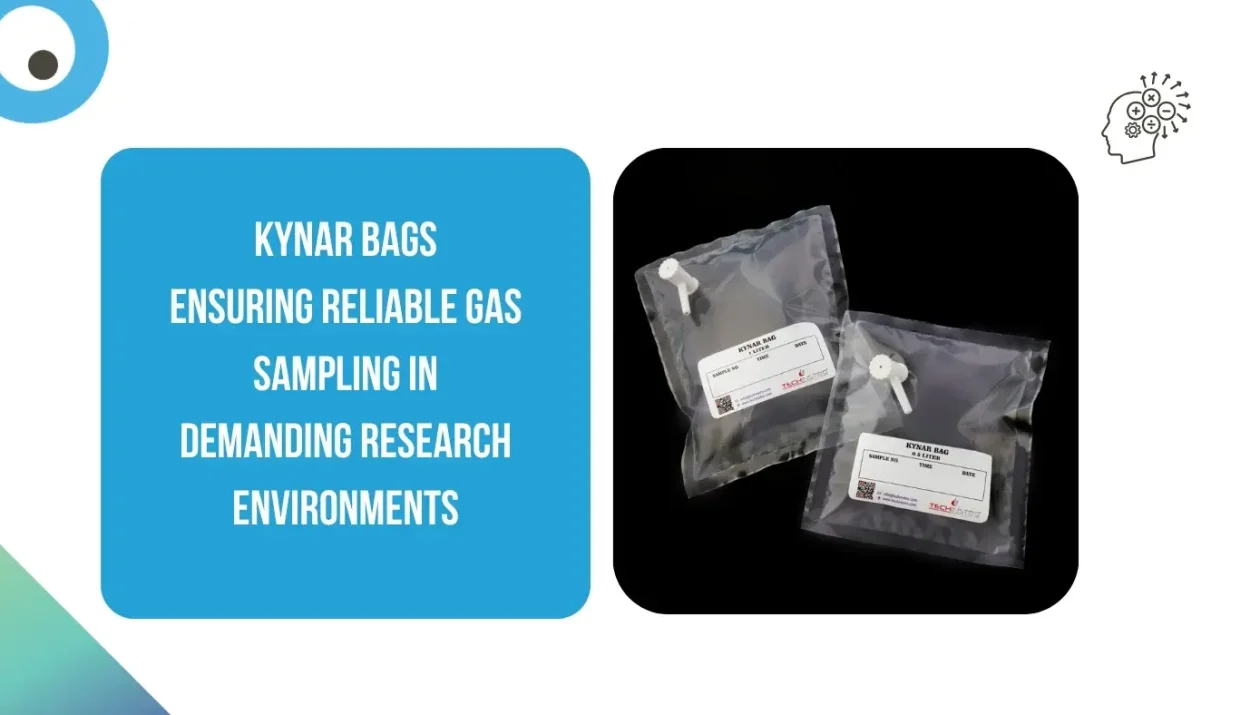
For researchers working with aggressive chemicals, industrial emissions, and reactive gases, Kynar Bags have become an indispensable sampling solution. Manufactured from polyvinylidene fluoride (PVDF) film, these gas sampling bags are designed to withstand challenging environments while helping to preserve the composition of collected gases from sampling to laboratory analysis.
Why Researchers Choose Kynar Bag
Not all gas samples behave the same way. Certain compounds can react with container surfaces, while others may be absorbed or degraded during storage. Research involving corrosive gases, acidic vapors, and industrial emissions requires sampling materials that are both chemically resistant and mechanically durable.
Kynar bags address these challenges by offering excellent resistance to a broad range of chemicals, making them suitable for applications where conventional gas sampling materials may not provide adequate performance.
For research laboratories, this translates into greater confidence that analytical results truly represent the original sample collected in the field.
Supporting Advanced Environmental Research
Environmental scientists rely on accurate gas sampling to understand air quality, industrial pollution, greenhouse gas emissions, and atmospheric chemistry. Kynar bags provide a dependable method for collecting gas samples from industrial facilities, waste treatment plants, environmental monitoring stations, and field research locations.
Collected samples can be transported to laboratories for analysis using techniques such as Gas Chromatography (GC), Gas Chromatography–Mass Spectrometry (GC-MS), Fourier Transform Infrared Spectroscopy (FTIR), and other advanced analytical systems.
Because maintaining sample integrity is essential, chemically resistant sampling bags play an important role in producing reliable environmental data.
Applications Across Research Disciplines
The versatility of Kynar bags allows them to support investigations across a wide range of scientific fields.
Air Pollution and Emission Studies
Researchers monitoring industrial emissions, combustion processes, and atmospheric pollutants use Kynar bags to collect representative gas samples for laboratory evaluation.
Chemical Engineering Research
Experimental reactors, catalytic systems, and process development laboratories often require temporary collection and transfer of gaseous reaction products. Kynar bags provide a convenient sampling option during laboratory investigations.
Renewable Energy Research
Hydrogen production, biogas optimization, landfill gas studies, and waste-to-energy projects all require accurate gas characterization. Reliable sampling is fundamental for evaluating process efficiency and gas composition.
Materials Science and Catalysis
Scientists investigating catalyst performance frequently analyze gases produced during chemical reactions. Kynar bags enable safe collection of reaction gases prior to instrumental analysis.
Industrial Process Development
Research teams developing new manufacturing technologies monitor process gases to improve efficiency, reduce emissions, and validate production methods.
Advantages for Research Laboratories
Research institutions often select Kynar bags because they offer several practical benefits for demanding analytical work.
Key advantages include:
- Excellent chemical resistance
- Suitable for reactive and corrosive gases
- Low interaction with many gaseous compounds
- Strong mechanical durability
- Lightweight and portable
- Available in multiple capacities
- Easy integration with laboratory sampling systems
- Compatible with various analytical instruments
These characteristics make Kynar bags valuable for both laboratory experiments and field-based environmental studies.
Maintaining Sample Quality
Reliable analytical results begin with proper sampling practices. Researchers typically use clean sampling equipment, avoid cross-contamination, protect collected samples from unnecessary environmental exposure, and analyze gases within recommended holding periods.
By combining good laboratory practices with chemically resistant sampling bags, scientists can significantly improve the accuracy and reproducibility of experimental data.
An Important Tool for Modern Research
As analytical instruments become increasingly sensitive, the quality of gas sampling materials becomes even more important. Whether measuring trace contaminants, evaluating industrial emissions, or studying advanced chemical processes, researchers require sample containers that preserve gas composition without introducing unwanted variables.
Kynar bags help meet these expectations by providing dependable performance in applications where chemical compatibility and sample integrity are essential.
Looking Ahead
Research in environmental science, clean energy, industrial safety, and advanced chemical processing continues to expand. These emerging fields demand reliable gas sampling solutions that support increasingly sophisticated analytical techniques.
Kynar bag will continue to play an important role by helping researchers collect representative gas samples that underpin accurate scientific observations, regulatory studies, and technological innovation.
Conclusion
Scientific discoveries depend on trustworthy data, and trustworthy data begins with reliable sampling. Kynar bags provide research laboratories with a chemically resistant, durable, and practical solution for collecting and transporting gaseous samples across a wide range of applications.
From environmental monitoring and process engineering to renewable energy and analytical chemistry, Kynar bags enable researchers to preserve sample integrity and generate results that support confident scientific decision-making. In modern research, they are not simply sample containers—they are a critical part of the analytical process.