

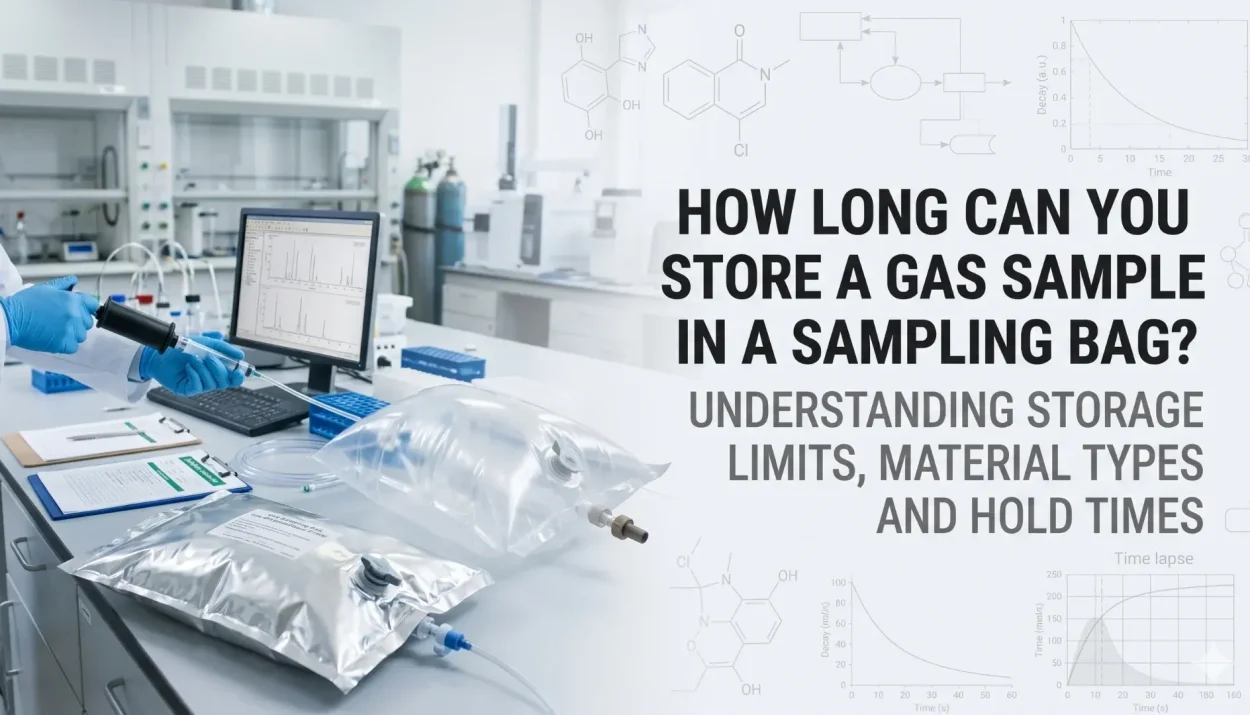
A gas sample does not remain unchanged indefinitely after collection. Storage time depends on the gas being sampled, the sampling bag material, the concentration of the target compound, and the conditions during storage and transport.
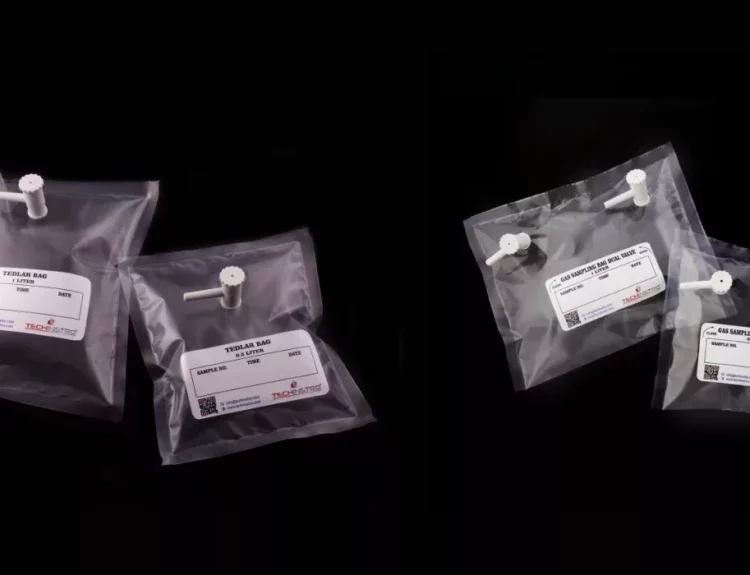
For many routine gas-sampling applications, samples collected in Tedlar bags are commonly analyzed within 24 to 72 hours. However, this is not a universal holding time. Some reactive compounds may need to be analyzed much sooner, while certain samples may remain stable for longer when the bag material and storage conditions have been properly evaluated.
If there is a delay between collection and laboratory analysis, the key question is not simply how many hours have passed. You also need to consider whether the tedlar bag material suits the compound and whether the sample has been stored correctly.
What Determines Gas Sample Holding Time?
Several factors affect how long a gas sample remains suitable for analysis.
Target compound
Different gases behave differently inside a sampling bag. Some compounds can pass through the bag wall, while others may attach to the inner surface or react with other compounds in the sample. Reactive compounds and some VOCs may require shorter storage times than more stable gases.
Bag material
The bag material affects how easily compounds interact with its film. Tedlar® (PVF), Kynar® (PVDF), and foil-based bags have different properties and should not be treated as interchangeable.
Sample concentration
Sample loss depends on the target compound concentration. A small loss may not matter much in a high-concentration sample. But it can affect results when the concentration is low.
Temperature
Temperature changes during storage or transport can affect sample stability. Repeated heating and cooling may also cause condensation, especially in samples that contain moisture.
Humidity
Moisture can affect certain compounds and may contribute to condensation when the temperature changes. For wet gas samples, consider moisture when selecting the bag and planning storage.
Bag fill volume
How much you fill the bag can affect sample stability. Fill the bag adequately without over-pressurizing it, following the manufacturer’s recommended fill volume.
Storage conditions
Heat, temperature changes, and physical damage can all affect the sample. Proper storage is especially important when the sample will not be analyzed immediately.
Applicable test method
For regulatory or method-specific testing, follow the required holding time and handling instructions.
Typical Storage Times by Gas Sampling Bag Material
Tedlar® (PVF)
Widely used for routine gas sampling, with many samples analyzed within 24–72 hours; reactive or low-level compounds may require shorter holding times.
Kynar® (PVDF)
It offers good chemical resistance for certain reactive gases. Storage stability depends on the compound, concentration, temperature, and holding time.
MultiFoil bags
These bags provide strong protection against permeation and contamination. This makes them useful for sensitive samples; actual holding time still depends on the gas and testing method.
Why Do Gas Samples Degrade During Storage?
A sampling bag is not an absolute barrier to gas exchange. Over time, the sample can change through several processes.
Permeation
Some gas molecules can slowly pass through the bag film. The rate depends on the compound and the material used to make the bag. Permeation becomes more important when samples are stored for longer periods or when measuring compounds at low concentrations.
Adsorption
Some compounds may stick to the inside of the bag instead of remaining in the gas phase. This can reduce the amount of the compound reaching the analytical instrument and may result in a lower reported concentration.
Background Contamination and Off-Gassing
Sampling bags may contain small amounts of other compounds or release trace materials into the sample. These can show up during testing and may be mistaken for compounds from the original gas.
Chemical Reactions
Some compounds can react with other substances present in the sample. Moisture, oxygen, and other gases can sometimes contribute to changes in sample composition. This is one reason the same storage period cannot apply to every gas.
Moisture Changes
Moisture condenses inside the sample bag, potentially altering the gas composition and affecting test results.
Light exposure
Direct sunlight and strong UV exposure can affect certain reactive compounds and may also contribute to bag material deterioration. Storing sampling bags away from direct light is a simple way to reduce this risk.
Leaks
A damaged bag, valve, or connection can allow gas to escape. A slow leak can change the concentration of the remaining sample and make it less representative of the original gas.
Troubleshooting a Delayed Sample
A delayed sample may not be unusable, but you should check its condition before relying on the results.
Lower-than-Expected Readings
A lower result may mean that some of the compound was lost through permeation or adsorption. If possible, compare the result with a reference or spiked sample stored under the same conditions. This can show whether storage affected the sample.
Unexpected Peaks
Unexpected compounds in the chromatogram or other analysis may come from background contamination or material released by the bag. A blank bag of the same material and similar age can help identify whether the bag is contributing to the result.
A Visibly Deflated Bag
A deflated bag may indicate a leak. Check the bag, valve, and connections using the manufacturer’s recommended leak-check procedure or another suitable method before deciding whether to use the sample.
Condensation inside the Bag
Condensation can occur when a wet sample experiences temperature changes. Preventing large temperature changes during transport can also reduce the risk of condensation.
Poor Recovery
If a known compound shows poor recovery after storage, the sample may have experienced loss during the holding period. For important testing, recovery checks can provide useful evidence about whether a particular bag material and storage period are suitable for the compound being measured.
Practices That Extend Usable Storage Life
- Store sampling bags away from direct sunlight and strong heat sources.
- Keep samples at a stable temperature and avoid unnecessary temperature cycling.
- Fill the bag according to the manufacturer’s recommended fill volume.
- Do not over-pressurize the bag.
- Select the bag material before sampling based on the target compound.
- Label each bag with the collection date and time.
- Process samples in a first-in, first-out order where possible.
- Follow the storage and transport requirements of the applicable analytical method.
- Inspect the bag, valve, and connections before analysis if the sample has been stored or transported for an extended period.
How to Choose the Right Gas Sampling Bag for Storage
| Sampling Requirement | Recommendation |
| Routine short-term sampling | Tedlar® |
| Reactive or challenging gases | Kynar® |
| Strong barrier protection | MultiFoil bags |
| VOC analysis | Check recovery, adsorption, and permeation |
| Trace-level analysis | Use clean bags and perform blank checks |
Conclusion
Gas sample holding time depends on the bag material, target gas, and storage conditions. For many routine applications, 24–72 hours are a practical guide for Tedlar®-type bags, but always follow method-specific requirements.
Need the right gas sampling bag for your application? Contact Shilpent to discuss your sampling requirements and find a suitable bag material.