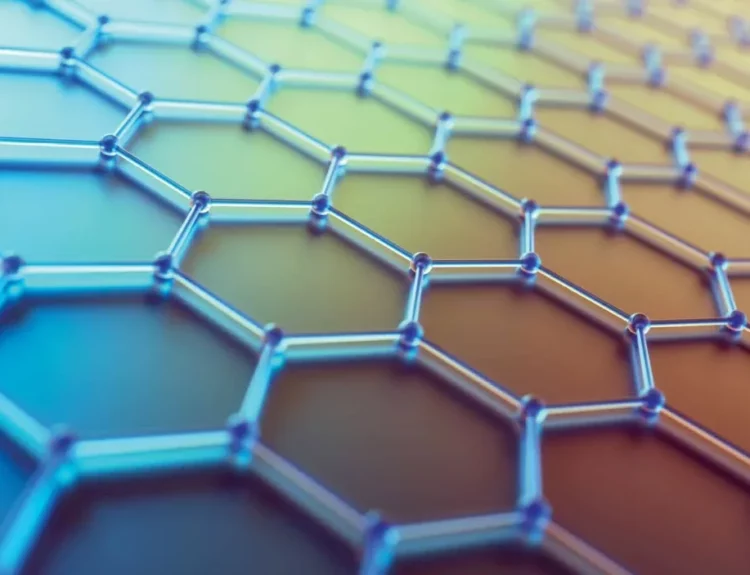

Graphene has attracted considerable attention in advanced materials research because of its distinctive two-dimensional structure, high specific surface area, excellent mechanical strength, and remarkable electrical and thermal properties. However, the practical utilization of graphene nanomaterials can be influenced by their tendency to aggregate due to strong interactions between individual graphene sheets.
One approach to modifying these characteristics is surface functionalization. Among different functionalization strategies, the introduction of amine functional groups has emerged as an important area of investigation. Amine functionalization involves incorporating nitrogen-containing chemical groups onto graphene surfaces or edges to modify their chemical interactions, surface characteristics, and compatibility with different surrounding materials.
Amine functional groups can influence the surface polarity, chemical reactivity, dispersion behavior, and interfacial interactions of graphene nanomaterials. These modifications provide opportunities for developing graphene-based materials with improved processability and application-specific properties.
Understanding the relationship between amine functionalization and the physical and chemical behavior of graphene is therefore important for advanced nanomaterial research.
Understanding Amine Functionalization of Graphene
Amine functionalization refers to the chemical modification of graphene by introducing amine-containing groups onto its structure. These functional groups contain nitrogen and hydrogen atoms and can interact with surrounding molecules through different chemical and intermolecular interactions. Depending on the functionalization method, amine groups may be attached to graphene edges, defect sites, or modified surface regions.
The resulting material is commonly described as amine-functionalized graphene or amine-modified graphene. Unlike pristine graphene, which primarily consists of a carbon-based hexagonal lattice, functionalized graphene contains additional chemical groups that influence its surface behavior.The degree of functionalization and the distribution of nitrogen-containing groups are important factors determining the resulting material properties.
Influence of Amine Functional Groups on Surface Chemistry
Surface chemistry plays a major role in determining how graphene nanomaterials interact with their surrounding environment. The introduction of amine functional groups can modify several surface characteristics.
Surface Polarity
Pristine graphene generally exhibits a relatively nonpolar surface. Introducing amine-containing groups can increase the polar character of the modified surface.
This change can influence interactions with polar solvents and other functional materials.
Improved compatibility with selected polar environments may support more effective dispersion and processing.
Chemical Reactivity
Amine functional groups provide chemically active sites that can participate in different interactions with surrounding molecules and functional materials.
These sites can be useful for further surface modification, chemical attachment, and the development of graphene-based composite structures.
The availability of reactive groups depends on the functionalization method, surface coverage, and chemical environment.
Surface Charge Characteristics
Amine groups can influence the surface charge behavior of graphene nanomaterials.
Depending on the surrounding environment, amine groups may undergo protonation, changing the electrostatic interactions between graphene sheets and nearby particles.
These interactions can influence aggregation tendencies and dispersion stability.
Surface Energy and Interfacial Interactions
Amine functionalization can modify graphene’s surface energy and interaction behavior.
The additional functional groups may improve compatibility with selected polymers, solvents, and other material systems.
This is particularly relevant when graphene is incorporated into composite materials where strong interfacial interactions are desirable.
Effect of Amine Functionalization on Graphene Dispersibility
One of the major challenges associated with graphene nanomaterials is their tendency to form aggregates during processing and storage.
The high surface area and strong interactions between individual graphene sheets can encourage restacking and reduce the uniformity of graphene dispersions.
Amine functionalization can influence this behavior by changing the chemical characteristics of the graphene surface.
Improved Interaction with Polar Solvents
Introducing nitrogen-containing functional groups can increase interactions between graphene surfaces and selected polar solvents.
Depending on the solvent system and functionalization level, this may improve the distribution of graphene sheets throughout the liquid medium.
However, dispersion performance is not determined by functionalization alone. Solvent polarity, pH, temperature, concentration, and processing conditions also contribute.
Reduction in Sheet Aggregation
Surface functional groups can influence the interactions between neighboring graphene sheets.
Changes in electrostatic interactions and surface compatibility may help reduce aggregation under suitable conditions.
The effectiveness of this behavior depends on the distribution and density of functional groups across the graphene structure.
Dispersion Stability
Dispersion stability refers to the ability of graphene sheets to remain distributed throughout a liquid medium over a defined period.
Amine-functionalized graphene may demonstrate improved dispersion stability in selected solvent systems compared with untreated graphene.
Nevertheless, the result depends on the preparation method, solvent composition, concentration, and environmental conditions.
Influence of Functionalization Density
The concentration and distribution of amine functional groups can significantly influence dispersibility.
Insufficient functionalization may not produce a substantial improvement in surface interactions.
On the other hand, extensive chemical modification may introduce structural defects and influence the original electrical or mechanical properties of graphene.
Therefore, controlling the level of functionalization is an important consideration in material development.
Influence on Electrical and Thermal Properties
Although amine functionalization can improve certain surface characteristics, it may also influence the intrinsic properties of graphene.
Electrical Properties
Introducing functional groups can alter the electronic structure of the graphene framework.
Chemical modification may introduce defects or change the electronic environment of carbon atoms, potentially influencing electrical conductivity and charge transport.
The extent of these changes depends on the functionalization method, nitrogen bonding configuration, and degree of structural modification.
Therefore, balancing surface functionality with electrical performance is an important research consideration.
Thermal Properties
The thermal behavior of amine-functionalized graphene can differ from that of pristine graphene because of additional chemical groups.
These groups may influence thermal stability and decomposition behavior under elevated temperatures.
TGA and differential scanning calorimetry can be used to investigate thermal characteristics and compare different functionalization conditions.
Role of Amine-Functionalized Graphene in Composite Material Development
Amine-functionalized graphene offers interesting possibilities for developing advanced composite materials.
The presence of chemically active amine groups can improve interactions between graphene surfaces and selected polymer matrices.
Improved Polymer Compatibility
Graphene sheets may interact with compatible polymer structures through chemical and intermolecular interactions.
Amine functionalization can improve compatibility in selected polymer systems, potentially supporting more uniform graphene distribution within the composite.
Interfacial Bonding
The functional groups present on graphene surfaces can provide additional interaction sites between the nanomaterial and the surrounding matrix.
Improved interfacial compatibility may contribute to more effective stress transfer and better structural integration in selected composite systems.
Functional Composite Development
Amine-functionalized graphene can be investigated as a reinforcing or functional additive in polymer-based composites.
Its contribution depends on the concentration, dispersion quality, functionalization level, and compatibility with the selected matrix.
Experimental Factors Influencing Dispersibility
For a meaningful scientific investigation, several experimental parameters should be considered when evaluating the dispersion behavior of amine-functionalized graphene.
- Solvent Selection: Different solvents interact differently with functionalized graphene surfaces. Solvent compatibility can influence dispersion quality and stability.
- pH Conditions: The chemical environment can influence amine-group protonation and alter electrostatic interactions between graphene sheets.
- Functionalization Level: The density and distribution of amine groups influence surface polarity, chemical interactions, and aggregation behavior.
- Ultrasonication Conditions: Sonication can help separate graphene aggregates and distribute sheets throughout a solvent. However, excessive sonication may damage or fragment graphene structures.
- Graphene Concentration: Higher concentrations can increase the possibility of sheet-to-sheet interactions and aggregation.
- Storage Conditions: Temperature, light exposure, and storage duration may influence dispersion stability depending on the solvent and material characteristics.
Careful control of these parameters is necessary to obtain reproducible and comparable experimental results.
Research Opportunities and Future Developments
- Amine-functionalized graphene continues to offer opportunities for investigating the relationship between surface chemistry and nanomaterial performance.
- Future research can focus on optimizing functionalization techniques to achieve controlled nitrogen incorporation while minimizing unwanted structural damage.
- Another important direction involves studying the relationship between amine group distribution and long-term dispersion stability across different solvent environments.
- Researchers can also investigate how different functionalization levels influence surface charge, interfacial bonding, electrical conductivity, and thermal stability.
- Combining advanced surface characterization with systematic dispersion studies may provide a better understanding of how chemical modification influences graphene behavior.
- Developing reproducible functionalization processes will remain important for producing graphene nanomaterials with consistent properties and predictable performance.
Conclusion
Amine functionalization represents an important approach for modifying the surface chemistry and dispersibility of graphene nanomaterials. Introducing nitrogen-containing functional groups can influence surface polarity, chemical reactivity, surface charge behavior, and interactions with surrounding materials.These modifications may improve compatibility with selected polar solvents and polymer matrices, supporting more uniform dispersion and advanced composite development.
However, the overall performance of amine-functionalized graphene depends on several interconnected factors, including functionalization density, structural integrity, solvent compatibility, and processing conditions. Analytical techniques such as FTIR, XPS, Raman spectroscopy, SEM, TEM, and TGA provide valuable insights into the chemical, structural, and thermal characteristics of modified graphene.
Continued investigation of surface functionalization and dispersion behavior will help develop advanced graphene-based materials with controlled properties and improved processing characteristics.