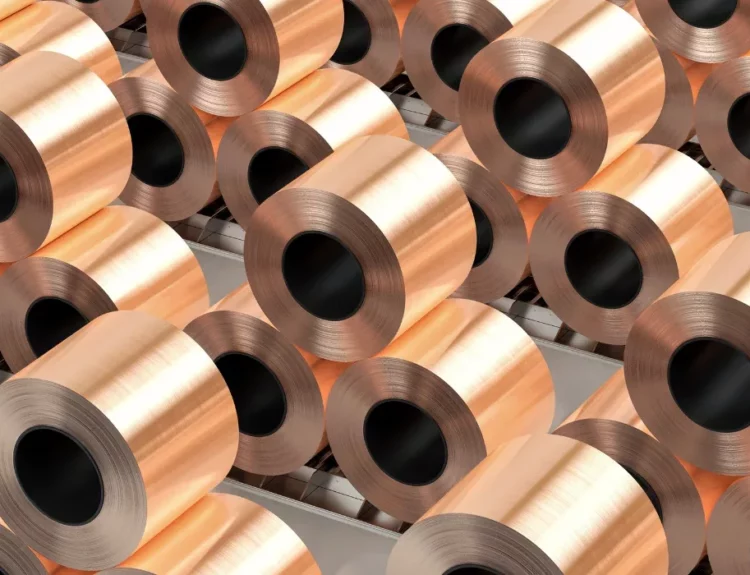

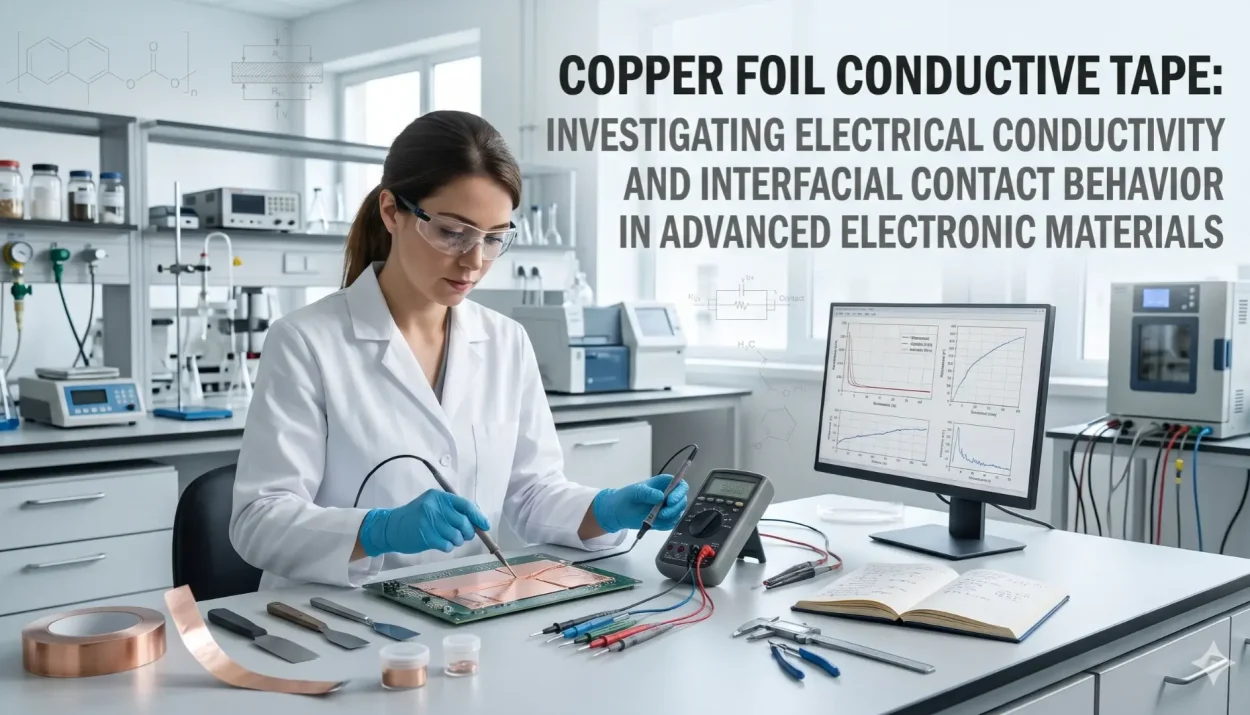
Copper foil conductive tape is an important functional material used in electronic assemblies, electrical connections, grounding structures, and electromagnetic interference (EMI) shielding systems. It generally consists of a thin copper foil layer with an adhesive backing, providing a convenient way to establish conductive pathways and electrical contact between different surfaces.
Copper is widely used in advanced electronic materials because of its excellent electrical conductivity, thermal performance, and relatively good mechanical workability. When incorporated into adhesive tape structures, copper foil offers additional flexibility in installation, surface integration, and electrical connection design.
From a scientific research perspective, the performance of copper foil conductive tape depends on several interconnected material properties, including copper foil thickness, surface condition, adhesive characteristics, contact resistance, and interfacial stability.
Understanding the relationship between electrical conductivity and interfacial contact behavior is particularly important for improving the reliability of conductive connections in modern electronic systems.
Material Composition and Structural Characteristics
Copper foil conductive tape typically contains two primary functional components: a copper foil layer and an adhesive layer. Depending on the product construction, it may also include a protective release liner.
Copper Foil Layer
The copper foil acts as the primary conductive component. Its electrical characteristics are influenced by material purity, thickness, grain structure, surface finish, and manufacturing conditions’ Uniformity of the copper foil is important for consistent electrical performance. Surface imperfections, contamination, and oxidation may influence the quality of electrical contact between connected surfaces.
Adhesive Layer
The adhesive layer provides mechanical attachment to the selected substrate. Depending on the tape design, the adhesive may be electrically conductive or electrically insulating. This distinction is important in scientific evaluation because not every copper foil tape provides electrical conductivity through its adhesive thickness.
Conductive adhesive formulations may contain conductive particles or other functional components that establish electrical pathways. In contrast, standard pressure-sensitive adhesives primarily provide mechanical bonding.
Single-Sided and Double-Sided Copper Foil Tape
Copper foil conductive tapes are available in different structural configurations.
- Single-sided copper foil tape: Adhesive is present on one side of the copper foil.
- Double-sided copper foil tape: The construction provides adhesive surfaces on both sides, depending on the product design.
- Conductive adhesive copper tape: Designed to support electrical continuity through the adhesive interface.
- Non-conductive adhesive copper tape: Provides mechanical attachment, while electrical contact generally depends on direct contact with the copper foil.
Tape construction influences its suitability for different electrical and material engineering applications.
Electrical Conductivity of Copper Foil
Electrical conductivity is one of the most important properties of copper foil conductive tape. Copper offers high electrical conductivity, making it suitable for applications requiring low-resistance conductive pathways. However, the actual electrical performance of a finished tape assembly is influenced by more than the conductivity of the copper material itself. Several parameters contribute to its overall electrical behavior.
Copper Foil Thickness: Foil thickness influences the electrical resistance and current-carrying characteristics of the conductive layer. Thicker copper foil generally provides a lower-resistance pathway when other conditions are comparable.
Material Purity: Impurities and structural variations can affect electron transport within the copper material.
Surface Condition: Oxidation, contamination, scratches, and surface irregularities can affect electrical contact quality.
Contact Pressure: The pressure applied between the copper foil and the contact surface influences the actual contact area and can affect measured contact resistance.
Connection Geometry: Overlap length, contact area, and connection arrangement contribute to the electrical behavior of the assembled structure.
These factors should be considered when evaluating copper foil conductive tape for precision electronic applications.
Interfacial Contact Behavior and Electrical Resistance
Interfacial contact behavior describes how effectively two materials establish electrical contact at their joining surfaces. In copper foil conductive tape, electrical performance is influenced by the interface between the copper foil, adhesive layer, and the substrate onto which the tape is applied. Even when copper foil has excellent intrinsic conductivity, the complete assembly may exhibit higher resistance due to imperfect electrical contact.
Real Contact Area
At the microscopic level, material surfaces are not perfectly smooth. They contain small irregularities, peaks, and valleys.
When two surfaces come into contact, actual electrical contact occurs primarily at microscopic contact regions rather than across the entire apparent surface.
Surface roughness, applied pressure, and material deformation can influence the distribution of these contact regions.
Influence of Surface Oxidation
Copper surfaces can gradually develop oxide layers when exposed to environmental conditions.
These surface layers may influence electrical contact resistance, particularly where direct metal-to-metal contact is required.
Surface preparation, storage conditions, and environmental exposure are therefore important considerations in maintaining consistent electrical performance.
Adhesive Interface Characteristics
The adhesive layer plays a significant role in determining the contact behavior of copper foil tape.
In electrically conductive adhesive systems, the distribution and contact of conductive components influence electrical continuity through the adhesive layer.
In non-conductive adhesive systems, electrical continuity through the adhesive should not be assumed. The electrical connection may instead rely on exposed copper surfaces and suitable connection arrangements.
Understanding this difference is essential when selecting copper foil tape for experimental and engineering applications.
Experimental Characterization of Electrical Properties
Scientific characterization methods help researchers evaluate the electrical behavior of copper foil conductive tape under controlled conditions.
Four-Point Probe Measurement
The four-point probe technique is commonly used to investigate the electrical properties of conductive thin materials.
It reduces the influence of contact resistance associated with conventional two-terminal measurements and can provide useful information about the sheet resistance of copper foil samples.
The method is particularly useful when comparing different foil thicknesses, surface conditions, or manufacturing batches.
Four-Terminal Contact Resistance Measurement
Four-terminal electrical measurements can evaluate contact resistance between copper foil and selected conductive substrates.
This technique helps distinguish the resistance of the contact interface from the resistance of the connecting leads.
It is useful for investigating the influence of surface preparation, applied pressure, contact area, and adhesive construction.
Surface and Microstructural Characterization
Microscopic analysis can help establish a relationship between surface structure and electrical performance.
Scanning Electron Microscopy (SEM) can be used to examine surface defects, structural irregularities, and adhesive morphology.
Energy Dispersive X-ray Spectroscopy (EDS) can provide information about the elemental composition of selected surface regions.
Atomic Force Microscopy (AFM) can provide nanoscale information about surface topography and roughness.
Combining these techniques with electrical measurements enables a more detailed understanding of copper foil material behavior.
Influence of Mechanical Conditions on Electrical Performance
Copper foil conductive tape is frequently applied to surfaces that may experience vibration, bending, handling, or repeated mechanical loading. Such conditions can influence the electrical stability of the assembled connection.
Mechanical deformation may change the copper foil structure, adhesive contact, or the tape-substrate interface.
Important research parameters include:
- Bending-induced changes in electrical resistance.
- Adhesive bonding stability under repeated loading.
- Copper foil deformation and crack formation.
- Contact resistance variations under different pressure conditions.
- Electrical continuity following repeated attachment and removal.
Controlled mechanical testing can help determine the relationship between structural integrity and electrical performance.
Thermal Behavior and Electrical Stability
Copper has favorable thermal conductivity, making copper foil useful in applications involving heat transfer and temperature distribution.
In conductive tape assemblies, the thermal behavior depends on copper thickness, adhesive composition, substrate properties, and contact quality.
Temperature variations can also influence adhesive flexibility, bonding strength, and electrical contact stability.
Researchers can investigate these effects through controlled temperature exposure followed by electrical resistance and adhesion measurements.
Such studies can help identify the operating limitations and material stability of copper foil conductive tape under different environmental conditions.
Electromagnetic Interference Shielding Characteristics
Copper foil conductive tape is also used in electromagnetic interference shielding applications.
Its conductive metallic layer can help reduce unwanted electromagnetic coupling when incorporated into an appropriately designed shielding structure.
The effectiveness of shielding depends on several factors, including:
- Copper foil thickness.
- Electrical continuity across the shielding surface.
- Contact quality at overlapping sections.
- Surface coverage and structural gaps.
- Grounding arrangements.
- Frequency of the electromagnetic signal.
For scientific evaluation, shielding effectiveness can be investigated using a vector network analyzer and suitable electromagnetic test fixtures.
It is important to recognize that the shielding performance of an individual tape cannot be determined solely from its copper content. The complete shielding configuration and connection quality also matter.
Research Applications in Advanced Electronic Materials
Copper foil conductive tape provides a useful material platform for several areas of electronic and materials engineering research.
Electronic Grounding Systems: It can establish conductive connections between selected surfaces and grounding structures.
Electromagnetic Shielding: Copper foil tape can be incorporated into shielding assemblies to investigate ways to reduce electromagnetic interference.
Flexible Electronic Assemblies: Its thin, adaptable construction makes it useful for studying conductive connections in compact, flexible structures.
Electrical Contact Research: Researchers can use copper foil tape to investigate contact resistance, interface behavior, and conductive bonding.
Thermal Management Studies: The copper layer can be evaluated for heat spreading and temperature distribution in selected material assemblies.
Conductive Surface Engineering: It offers a practical platform for studying surface preparation, adhesion, and electrical interface characteristics.
Challenges and Future Research Directions
Despite its useful electrical and mechanical characteristics, copper foil conductive tape presents several research challenges.
Maintaining consistent electrical contact across different substrates remains an important consideration. Surface oxidation, adhesive aging, mechanical deformation, and variations in contact pressure can influence the stability of electrical connections.
Future investigations can focus on developing improved conductive adhesive systems, optimizing copper foil surface treatments, and understanding how interfacial structure relates to electrical resistance.
Another promising research direction involves evaluating the long-term performance of copper foil tape under repeated bending, temperature cycling, and environmental exposure.
Combining microscopic characterization, electrical measurements, and mechanical testing can provide valuable insights for developing more reliable conductive materials.
Conclusion
Copper foil conductive tape represents a versatile functional material for investigating electrical conductivity and interfacial contact behavior in advanced electronic materials. Although copper provides excellent intrinsic electrical conductivity, the performance of a complete tape assembly depends on several additional factors, including foil thickness, surface morphology, adhesive properties, contact pressure, and substrate characteristics.
Scientific characterization techniques such as four-point probe measurements, four-terminal contact resistance testing, SEM, EDS, AFM, and controlled mechanical evaluations can help researchers understand these interconnected properties.
A systematic investigation of electrical conductivity and interfacial behavior can improve conductive connections, enhance shielding structures, and support better material selection for advanced electronic engineering applications.