

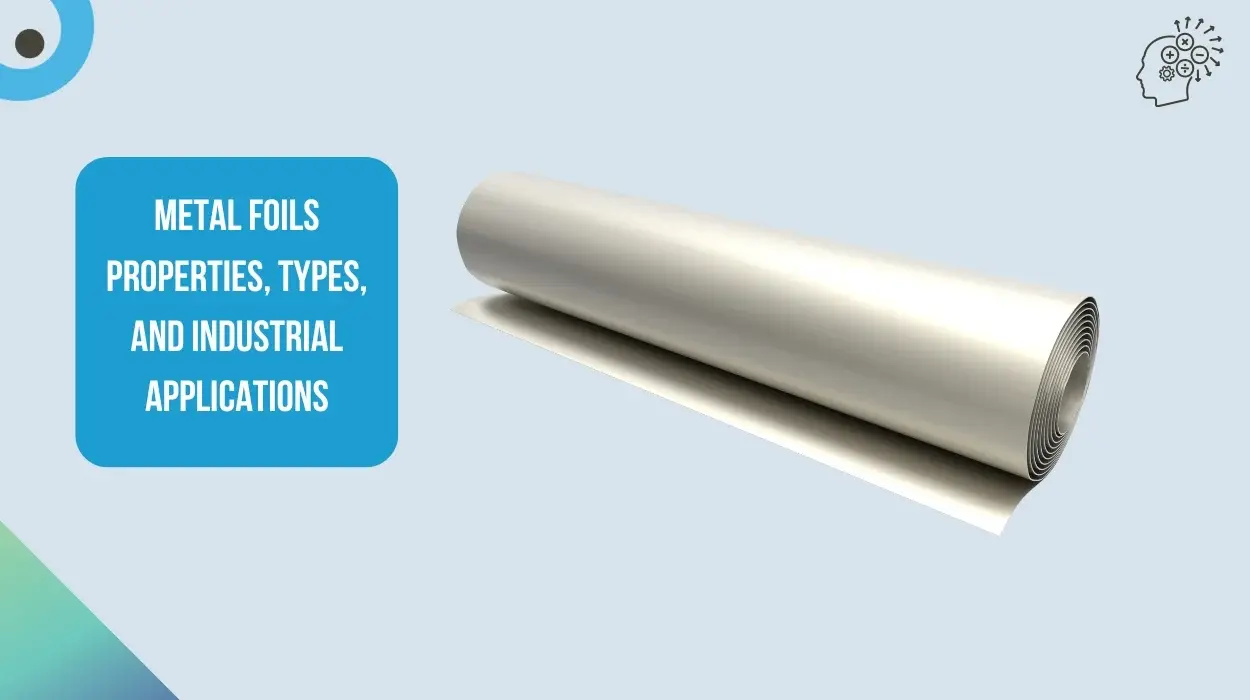
Metal foil is a thin sheet of metal with thicknesses typically ranging from a few microns to a few millimeters. Due to their flexibility, conductivity, and high surface area, metal foils are widely used across industries such as electronics, energy, packaging, and research.
What are Metal Foil?
Metal foil are produced by rolling or hammering metal into extremely thin layers. These materials retain the intrinsic properties of the base metal while offering advantages such as lightweight structure, ease of fabrication, and high surface uniformity.
Key Properties of Metal Foil
- High Electrical Conductivity: Suitable for electrical and electronic applications
- Thermal Conductivity: Efficient heat transfer capabilities
- Flexibility: Can be bent, shaped, or laminated without breaking
- Corrosion Resistance: Depending on the metal type
- Uniform Thickness: Ensures consistent performance in precision applications
Types of Metal Foil
Copper Foil
Known for excellent electrical conductivity and flexibility, copper foil is widely used in printed circuit boards (PCBs), batteries, and electromagnetic shielding.
Aluminum Foil
Lightweight and corrosion-resistant, aluminum foil is commonly used in packaging, insulation, and thermal applications.
Nickel Foil
Offers high corrosion resistance and stability at elevated temperatures, making it suitable for batteries and chemical processing.
Titanium Foil
Characterized by high strength-to-weight ratio and corrosion resistance, titanium foil is used in aerospace, medical, and advanced engineering applications.
Tungsten Foil
With an extremely high melting point, tungsten foil is ideal for high-temperature environments and specialized industrial processes.
Lithium Foil
Primarily used in battery research and energy storage systems due to its electrochemical properties.
Manufacturing Process
Metal foils are typically manufactured through cold rolling processes where metal sheets are passed through rollers to reduce thickness. Advanced techniques ensure precise thickness control, smooth surface finish, and uniform mechanical properties.
Applications of Metal Foil
Electronics and Electrical Industry
- Printed circuit boards
- Flexible electronics
- Conductive layers and shielding
Energy Sector
- Lithium-ion batteries
- Fuel cells
- Solar panels
Industrial and Chemical Applications
- Heat exchangers
- Catalysts and membranes
- Corrosion-resistant linings
Packaging and Insulation
- Food packaging (aluminum foil)
- Thermal insulation systems
Research and Development
- Thin film deposition
- Laboratory experiments
- Nanotechnology applications
Advantages of Metal Foils
- Lightweight and easy to handle
- High performance in electrical and thermal applications
- Versatile across multiple industries
- Customizable in thickness, size, and material
Selection Considerations
When choosing metal foil, consider the following factors:
- Material type and purity
- Thickness and dimensional tolerance
- Electrical and thermal requirements
- Environmental resistance
- Application-specific needs
Conclusion
Metal foils are essential materials that support a wide range of modern technologies. Their unique combination of conductivity, flexibility, and durability makes them indispensable in industries from electronics to energy and beyond. Selecting the right type of metal foil ensures optimal performance and reliability for specific applications.