
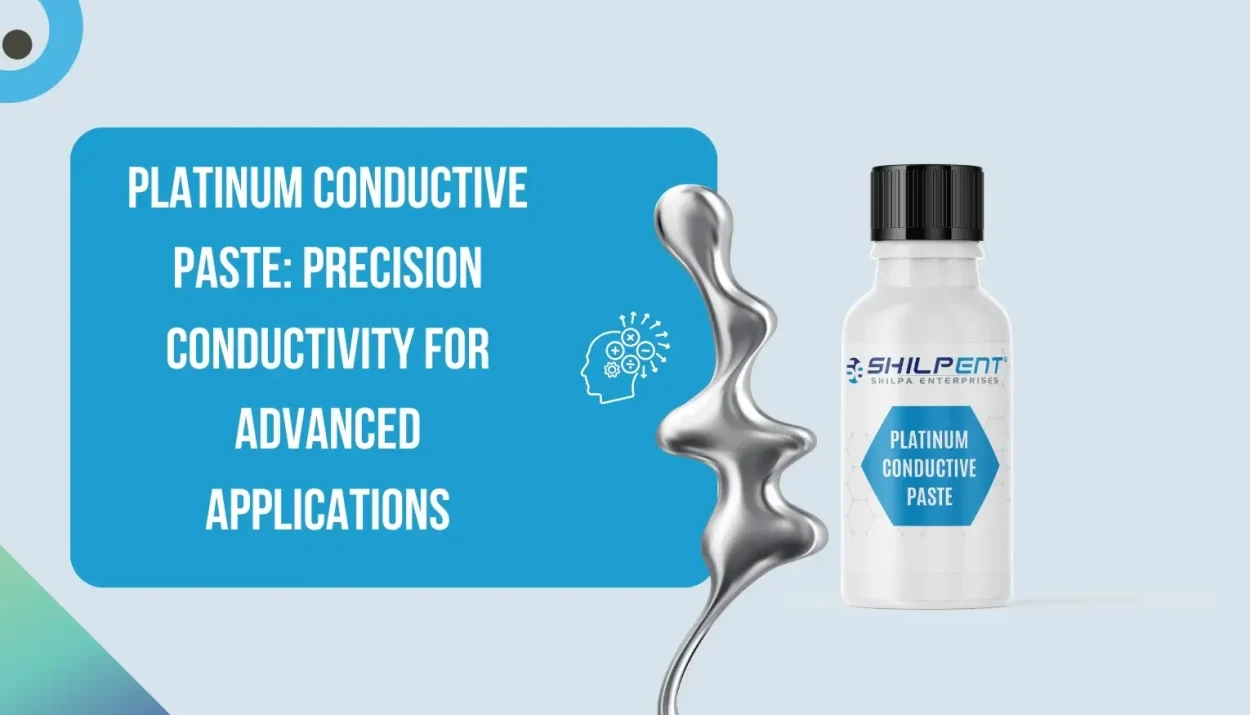
Platinum conductive paste is a high-performance material designed for applications that demand exceptional electrical conductivity, thermal stability, and chemical resistance. Built around finely dispersed particles of Platinum, this paste is widely used in electronics, sensors, and high-temperature environments where reliability is critical.
What is Platinum Conductive Paste?
Platinum conductive paste is a formulation consisting of:
- Fine platinum powder or nanoparticles
- Organic binders and solvents
- Additives to control viscosity and adhesion
When applied to a surface and cured at elevated temperatures, the paste forms a durable, conductive platinum film that adheres strongly to substrates such as ceramics, glass, and metals.
Composition and Structure
The effectiveness of platinum conductive paste lies in its carefully engineered composition:
- Platinum Particles
Provide stable and consistent electrical conductivity - Binder System
Ensures adhesion during application and burns off during curing - Solvent Medium
Controls flow properties for printing or coating - Additives
Improve dispersion, printability, and film uniformity
After curing, the organic components are removed, leaving behind a continuous metallic network.
Key Properties
Platinum conductive paste stands out due to its unique combination of properties:
- Excellent Electrical Conductivity
Maintains performance even under extreme conditions - High (Thermal Stability)
Operates effectively at temperatures exceeding 800°C - Outstanding Chemical Resistance
Resistant to oxidation, acids, and harsh environments - Strong Adhesion
Bonds well to ceramic and glass substrates - Long-Term Reliability
Minimal degradation over time
Application Techniques
Platinum conductive paste can be applied using various methods depending on the requirement:
- Screen Printing
Most common method for creating precise conductive patterns - Brush or Manual Coating
Suitable for small-scale or repair work - Dispensing Systems
Used in automated production environments
After application, the paste is dried and fired in a furnace to achieve the desired conductivity and adhesion.
Major Applications
Platinum conductive paste plays a critical role in high-performance and specialized fields:
Sensors and Electrodes
Used in gas sensors, biosensors, and electrochemical devices due to its stability and accuracy
Thick Film Circuits
Forms conductive tracks on ceramic substrates in hybrid electronics
Heating Elements
Used in applications requiring stable resistive heating at high temperatures
Laboratory and Analytical Equipment
Ideal for environments where contamination and corrosion must be avoided
Fuel Cells and Energy Devices
Acts as a catalyst-supporting conductive layer
Advantages Over Other Conductive Pastes
Compared to silver or copper-based pastes, platinum offers:
- Better performance at high temperatures
- Superior resistance to oxidation and corrosion
- Greater chemical inertness
- Longer lifespan in harsh environments
While it is more expensive, its reliability often justifies the cost in critical applications.
Handling and Storage
To maintain performance and usability:
- Store in a cool, dry place
- Keep containers tightly sealed to prevent solvent evaporation
- Mix thoroughly before use to ensure uniform dispersion
- Avoid contamination during application
Limitations
Despite its advantages, there are some considerations:
- High Cost due to platinum content
- Requires controlled firing conditions
- Not always necessary for low-temperature or non-critical applications
Conclusion
Platinum conductive paste is a premium material engineered for precision, durability, and performance in demanding environments. Its ability to maintain conductivity under extreme thermal and chemical conditions makes it indispensable in advanced electronics, sensing technologies, and energy systems.
For applications where reliability cannot be compromised, platinum conductive paste remains a trusted and powerful solution.