
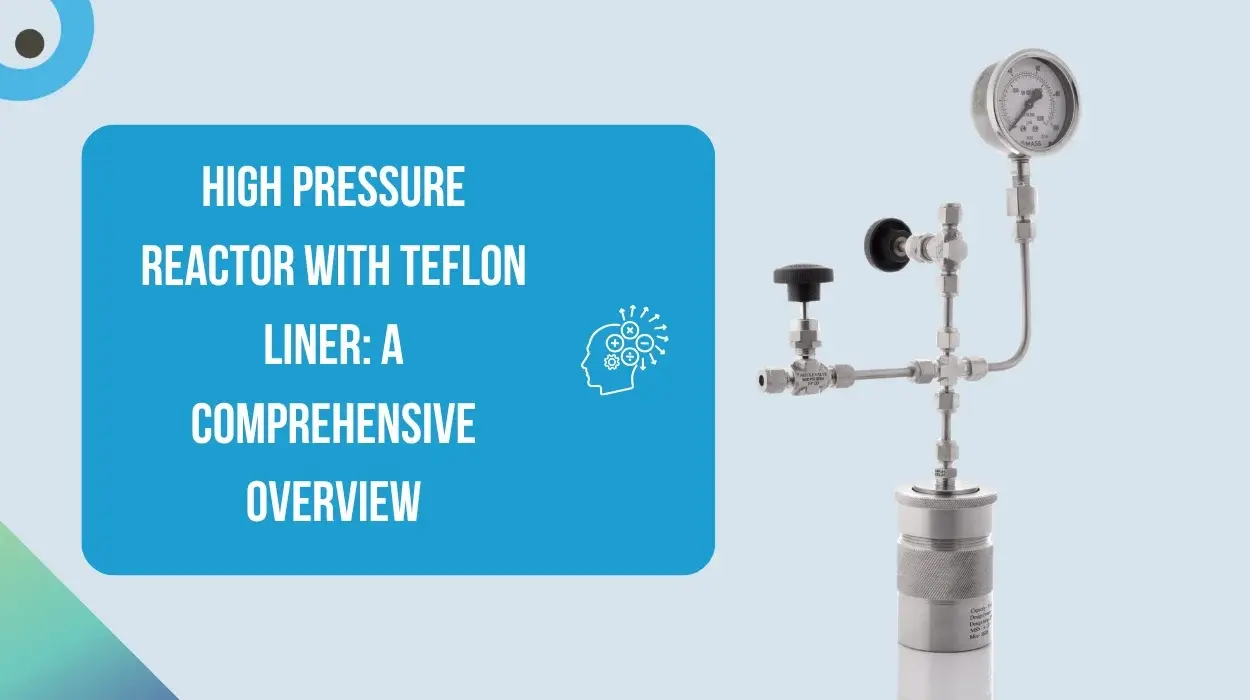
High pressure reactors with Teflon liner is a essential tools in modern laboratories and industrial processes, especially where reactions must occur under elevated pressure and temperature while maintaining chemical resistance and purity. These reactors are widely used in chemical synthesis, material research, and hydrothermal processing.
What is a High Pressure Reactor with Teflon Liner?
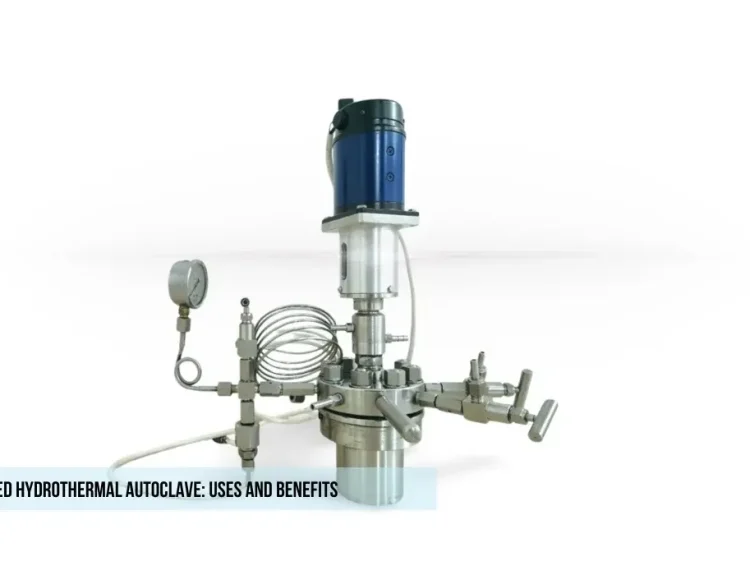
A high pressure reactor is a sealed vessel designed to carry out reactions under controlled high-pressure conditions. When equipped with a Teflon liner, typically made from Polytetrafluoroethylene, the reactor gains enhanced resistance to corrosive chemicals and contamination.
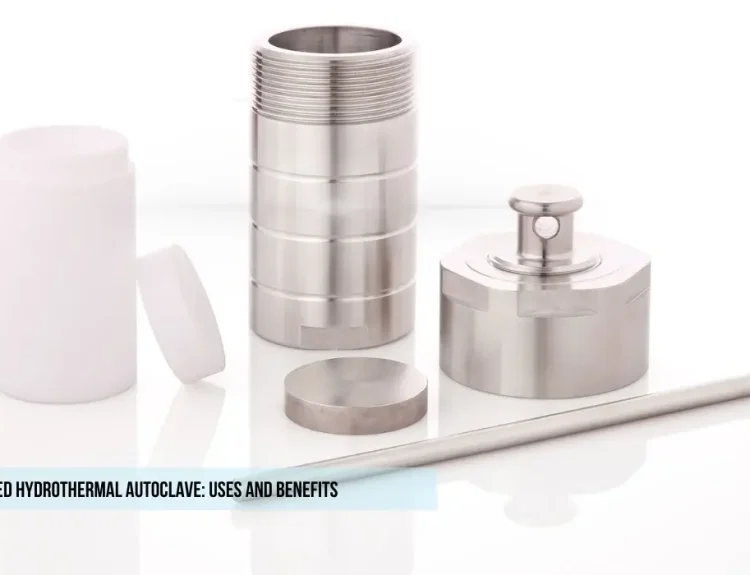
The outer body is usually made of stainless steel for strength, while the inner Teflon chamber ensures a chemically inert reaction environment.
Key Components
A typical high pressure reactor with a Teflon liner consists of:
- Outer Vessel (Shell)
Made from stainless steel to withstand high pressure and temperature - Teflon (PTFE) Liner
Inner container that holds the reaction mixture and prevents metal contamination - Sealing System
Ensures leak-proof operation under extreme conditions - Closure Mechanism
Screw cap or bolted lid for secure sealing - Safety Valve (in advanced models)
Prevents over-pressurization
Working Principle
The reactor operates by sealing reactants inside the Teflon-lined chamber and heating it externally. As temperature rises, pressure builds up inside the vessel, enabling reactions that would not occur under normal conditions.
The Teflon liner plays a crucial role by:
- Providing a non-reactive environment
- Preventing corrosion of the metal body
- Maintaining purity of the reaction
Advantages of Teflon Lining
Using a Teflon liner significantly enhances reactor performance:
- Excellent Chemical Resistance
Resistant to strong acids, bases, and solvents - Non-Stick Surface
Easy to clean and prevents residue buildup - High Thermal Stability
Can withstand temperatures up to ~200–260°C (depending on grade) - Contamination-Free Reactions
Ideal for sensitive experiments
Applications
High pressure reactors with Teflon liners are used across various domains:
Hydrothermal and Solvothermal Synthesis
Widely used for crystal growth, nanomaterials, and advanced materials research
Chemical Reactions
Suitable for reactions involving corrosive or high-purity chemicals
Pharmaceutical Research
Used in drug synthesis where contamination must be minimized
Material Science
Preparation of ceramics, catalysts, and nanostructures
Environmental Testing
Used for digestion of samples in analytical chemistry
Operating Conditions
Typical parameters vary based on design, but generally include:
- Temperature Range: Up to 200–300°C
- Pressure Range: Can exceed several MPa
- Volume Capacity: From small lab-scale (25 ml) to larger industrial units
Safety Considerations
Operating under high pressure requires strict safety measures:
- Always follow manufacturer pressure and temperature limits
- Ensure proper sealing before heating
- Avoid overfilling (typically 70–80% capacity)
- Use protective equipment and shielding
- Allow the reactor to cool before opening
Maintenance and Care
To ensure long service life:
- Clean the Teflon liner after each use
- Avoid scratching or damaging the liner
- Inspect seals and threads regularly
- Store in a dry and safe environment
Conclusion
A high pressure reactor with a Teflon liner is a powerful and reliable solution for conducting complex chemical reactions under controlled extreme conditions. Its combination of mechanical strength and chemical inertness makes it indispensable in laboratories and research facilities.
By ensuring safety, precision, and purity, these reactors continue to play a vital role in advancing science and industrial innovation.