
Scientific discoveries often begin with the right materials. Whether researchers are developing next-generation solar cells, investigating nanomaterials, fabricating biosensors, or studying electrochemical reactions, the choice of substrate can significantly influence experimental outcomes. Among the various conductive substrates available today, ITO Coated Glass (Indium Tin Oxide Coated Glass) has established itself as one of the most trusted materials in research laboratories and innovation centers worldwide.
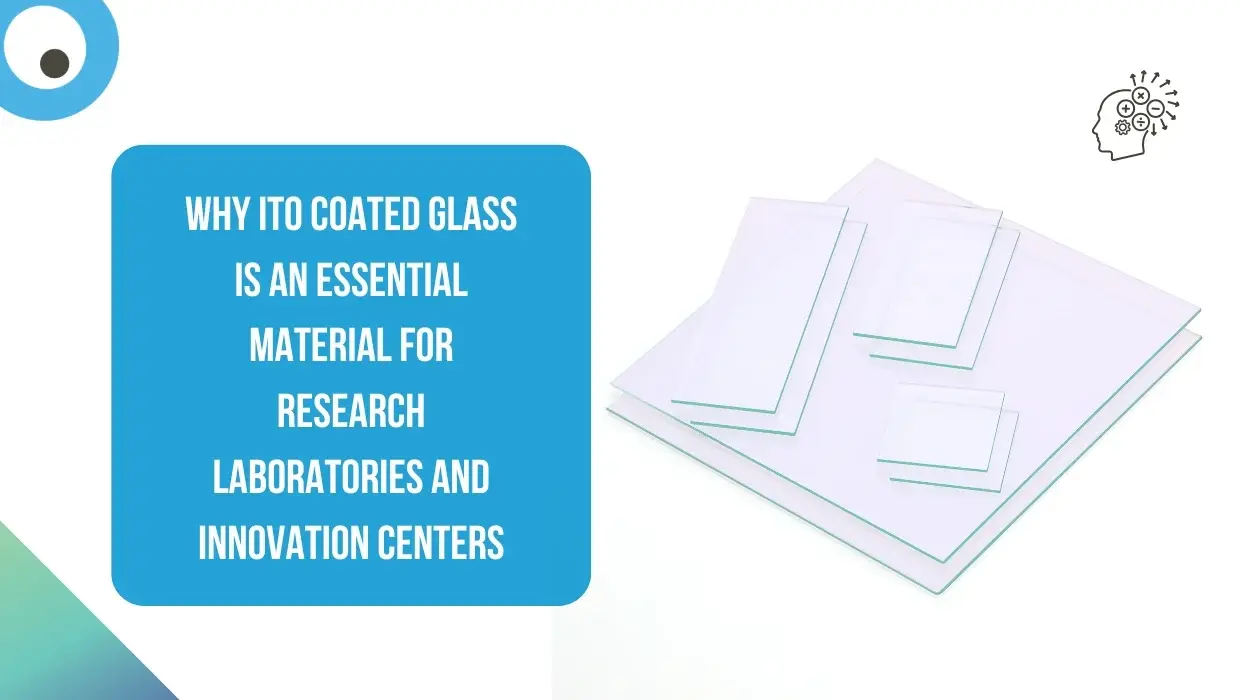
Unlike ordinary glass, ITO coated glass combines two critical properties—high optical transparency and electrical conductivity. This unique combination enables scientists to observe, measure, and manipulate physical and chemical processes without compromising visibility or electrical performance.
A Platform for Scientific Innovation
Research laboratories require materials that offer consistency, repeatability, and compatibility with advanced experimental techniques. ITO-coated glass provides a stable conductive surface that supports a wide range of scientific investigations, making it a preferred substrate in universities, government laboratories, and industrial R&D facilities.
Its smooth surface and excellent conductivity allow researchers to deposit thin films, fabricate microstructures, and develop advanced functional coatings with high precision.
Supporting Advanced Research Across Multiple Disciplines
Thin Film and Surface Engineering
ITO-coated glass is widely used as a substrate for depositing metal oxides, semiconductors, dielectric materials, and nanostructured coatings. Researchers can evaluate optical, electrical, and structural properties while maintaining excellent transparency for characterization techniques.
Electrochemical Research
Electrochemists utilize ITO-coated glass as a transparent working electrode in studies involving redox reactions, corrosion analysis, electrocatalysis, and energy storage materials. Its conductive surface allows precise electrical measurements while enabling optical observation of reactions.
Solar Energy Research
In photovoltaic laboratories, ITO-coated glass serves as a transparent electrode for the development of dye-sensitized solar cells, perovskite solar cells, organic photovoltaics, and thin-film solar technologies. It allows maximum light transmission while efficiently collecting electrical charge.
Biosensors and Medical Diagnostics
Biomedical researchers employ ITO-coated glass in the fabrication of biosensors, immunosensors, DNA detection platforms, and microfluidic devices. The material supports surface functionalization and provides reliable electrical performance for sensitive biological measurements.
Nanotechnology Research
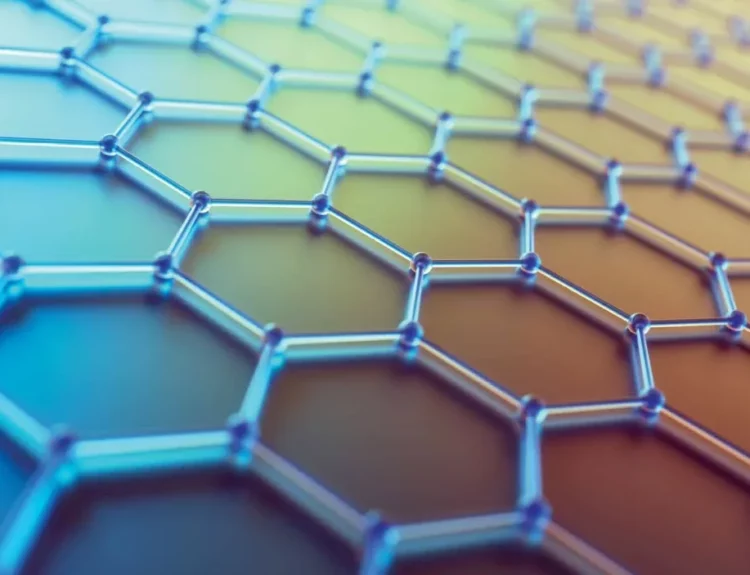
Scientists working with graphene, carbon nanotubes, quantum dots, metal nanoparticles, and two-dimensional materials frequently select ITO-coated glass because it provides a conductive platform for assembling and characterizing nanoscale structures.
Why Research Laboratories Prefer ITO Coated Glass
Research institutions require materials that yield reliable, reproducible experimental results. ITO-coated glass offers several advantages that align with these requirements:
- Excellent optical transparency for microscopy and spectroscopy
- Stable electrical conductivity for accurate measurements
- Uniform conductive coating across the substrate
- Compatibility with vacuum deposition and spin coating techniques
- Chemical stability under controlled laboratory conditions
- Availability in multiple sheet resistance values and dimensions
- Suitable for repeated experimental use
These properties enable researchers to focus on innovation rather than variability in substrate performance.
Compatible with Modern Characterization Techniques
ITO-coated glass integrates seamlessly with many analytical instruments commonly found in research laboratories, including:
- UV-Visible Spectroscopy
- Raman Spectroscopy
- Fluorescence Microscopy
- Electrochemical Workstations
- Atomic Force Microscopy (AFM)
- Scanning Electron Microscopy (SEM)
- X-ray Diffraction (XRD)
- Surface Profilometry
Its transparency and conductivity make it particularly valuable when electrical testing and optical analysis must be performed on the same sample.
Accelerating Innovation
Whether developing flexible electronics, transparent conductive devices, advanced sensors, or sustainable energy technologies, researchers depend on materials that simplify experimental design while delivering consistent performance. ITO-coated glass continues to meet these expectations, making it an indispensable component of modern research infrastructure.
As scientific challenges become more complex, the demand for reliable conductive substrates will continue to grow. ITO coated glass remains at the forefront of this progress, enabling researchers to transform ideas into practical technologies that shape the future.
Conclusion
ITO-coated glass is more than a transparent conductive substrate—it is a foundational material that supports innovation across physics, chemistry, materials science, biotechnology, electronics, and renewable energy research. By providing a combination of transparency, conductivity, and reliability, it empowers scientists to design experiments with confidence and accelerate the development of next-generation technologies.
For research institutions seeking reliable materials for advanced experimentation, ITO-coated glass remains one of the most versatile and trusted options.