

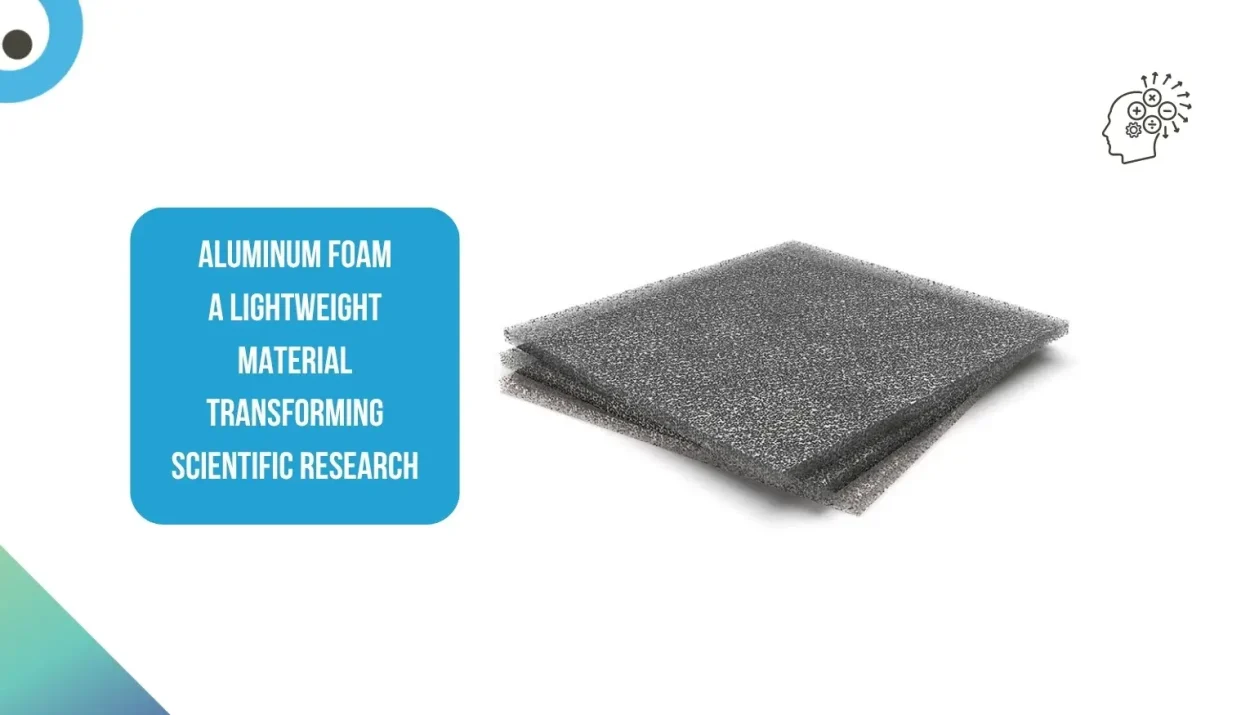
Aluminum foam is an advanced cellular material characterized by a network of pores or gas-filled cells distributed throughout an aluminum matrix. Combining the strength and durability of metal with the lightweight properties of foam, aluminum foam has gained significant attention in scientific laboratories, research institutions, and industrial applications. Its unique structure offers exceptional energy absorption, thermal insulation, acoustic damping, and low density, making it a valuable material for a wide range of experimental and engineering applications.
What is Aluminum Foam?
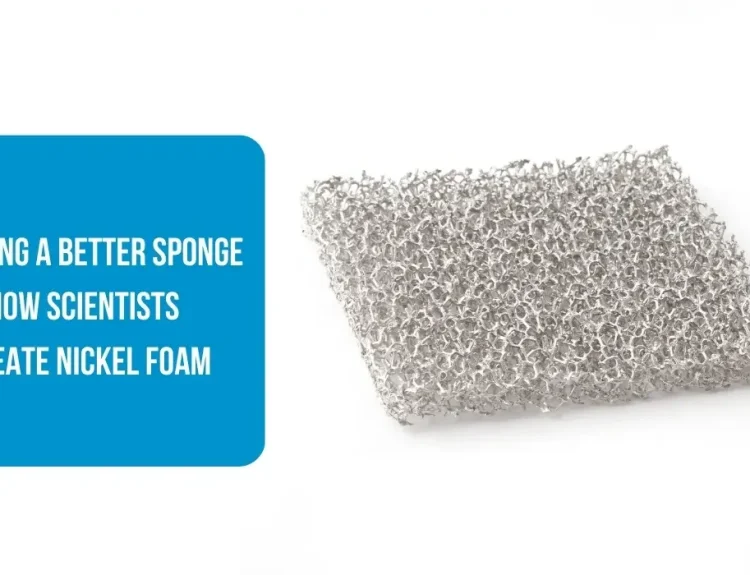
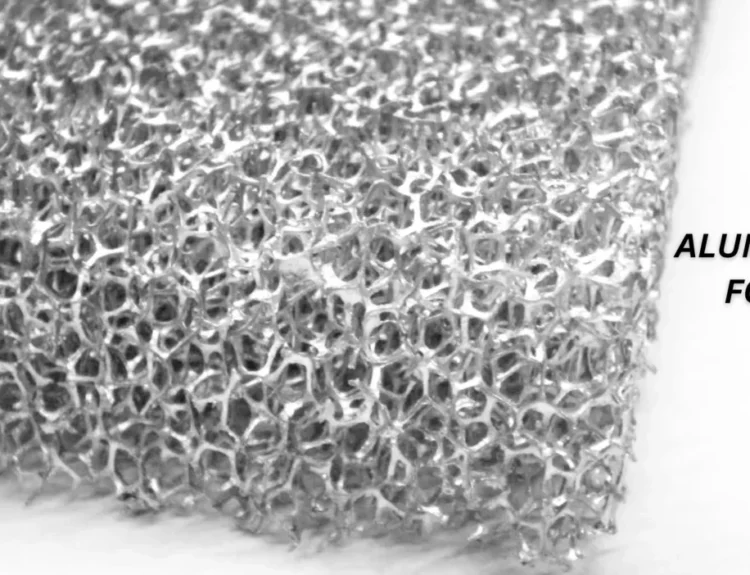
Aluminum foam is produced by introducing gas bubbles into molten aluminum or by using powder metallurgy techniques to create a porous structure. Depending on the manufacturing process, the foam can be either open-cell or closed-cell.
Open-cell aluminum foam contains interconnected pores that allow fluids and gases to pass through.
Closed-cell aluminum foam consists of sealed pores, providing an excellent strength-to-weight ratio and impact resistance.
The porosity of aluminum foam can range from 50% to 95%, significantly reducing its weight while retaining many of aluminum’s beneficial properties.
Key Properties of Aluminum Foam
Several unique characteristics make aluminum foam attractive for laboratory and research applications:
- Lightweight Structure The highly porous architecture dramatically reduces density, making the material much lighter than solid aluminum.
- High Energy Absorption Aluminum foam can absorb substantial amounts of impact energy, making it useful for shock and vibration studies.
- Thermal Insulation The trapped air within the pores reduces heat transfer, providing excellent thermal insulation.
- Sound Absorption Its cellular structure effectively dampens sound waves and vibrations.
- Corrosion Resistance Like conventional aluminum, aluminum foam exhibits good corrosion resistance in many environments.
- Fire Resistance Unlike polymer foams, aluminum foam is non-combustible and can withstand elevated temperatures.
Applications in Scientific Laboratories
Aluminum foam is increasingly used in research laboratories due to its versatile properties.
Material Science Research
Researchers use aluminum foam to study cellular metals, lightweight structural materials, and advanced manufacturing techniques. It serves as a model material for investigating mechanical behavior under compression, tension, and impact loading.
Thermal Conductivity Experiments
Because of its unique balance between thermal conductivity and insulation, aluminum foam is widely used in heat transfer studies. Scientists evaluate its performance in heat exchangers, cooling systems, and thermal management devices.
Acoustic Testing
Laboratories conducting sound absorption and noise reduction research use aluminum foam panels to assess acoustic damping and optimize noise-control solutions.
Filtration Studies
Open-cell aluminum foam is commonly used in fluid dynamics and filtration experiments. Its interconnected pore structure enables researchers to study the flow characteristics of liquids and gases.
Energy Absorption Testing
Engineering laboratories often use aluminum foam specimens in crashworthiness and impact-resistance studies. The material’s ability to absorb energy makes it ideal for evaluating protective structures and safety devices.
Benefits for Research and Development
The growing popularity of aluminum foam in laboratories is driven by several advantages:
- Enables development of lightweight engineering solutions.
- Supports sustainable material research due to recyclability.
- Offers a combination of mechanical strength and reduced weight.
- Facilitates the development of innovative designs for aerospace, automotive, and defense applications.
- Provides excellent experimental flexibility for thermal, acoustic, and mechanical studies.
Industrial Relevance
Scientific investigations involving aluminum foam frequently lead to practical industrial applications. Industries such as aerospace, automotive, construction, transportation, and renewable energy utilize aluminum foam for lightweight panels, crash absorbers, heat exchangers, and structural components.
Researchers continue to explore new methods for improving foam uniformity, mechanical performance, and manufacturing efficiency, expanding its potential applications across numerous fields.
Future Prospects
With increasing demand for lightweight, energy-efficient, and sustainable materials, aluminum foam is expected to play a significant role in next-generation engineering solutions. Ongoing research focuses on nano-enhanced foams, hybrid metal foams, and multifunctional structures that combine mechanical, thermal, and acoustic performance in a single material.
Conclusion
Aluminum foam represents a remarkable advancement in material science, offering a rare combination of light weight, strength, energy absorption, and thermal management capabilities. Its extensive use in scientific laboratories for material characterization, thermal studies, acoustic testing, and impact analysis highlights its importance in modern research. As technology continues to evolve, aluminum foam is poised to become an even more valuable material for both scientific innovation and industrial development.